Thursday, October 27, 2011

Wednesday, October 26, 2011
Real Historian Eviscerates Barton Book
Ed Brayton has the details here.
A taste (quoting Prof. Steven Green of Willamette University):
A taste (quoting Prof. Steven Green of Willamette University):
The presentation also fails to explore the other influences in the Founders’ lives that affected their worldviews and personal character. The members of the founding generation were widely read and drew their ideas for republican government from many sources: the common law, Whig political theories, classical republicanism, and Calvinism. Without question, however, the most influential ideological source was Enlightenment rationalism. The Founders were most influenced by the Enlightenment political writers of the previous two generations: John Locke, Baron Montesquieu, Hugo Grotius, Henry St. John, Lord Bolingbroke, and Jean-Jacques Rousseau, among others. Most of these writers were religious nonconformists or skeptics. Also influential were those writers of the so-called Scottish Enlightenment – Frances Hutcheson, David Hume, and Thomas Reid – whose “common sense” rationalism influenced many of the Founders including James Madison, John Adams, and James Wilson. Secular theories were more influential in forming the Founders’ ideas about natural law and civic virtue than was religion…
Second, the curriculum engages in “proof-texting,” a practice refuted by professional historians. The writers extract selected religious quotations of the various figures without explaining the larger context of the statements (and usually without providing a citation to authority). The curriculum then uses the statement as “proof” of the speaker’s sentiments, disregarding or omitting other likely influences. It fails to account for the sincerity of the speaker’s statement (such as whether the speaker was using irony or pandering to his audience) or whether the speaker likely intended that particular statement on the subject to represent his views, as opposed to other possible statements on the subject…
The additional problem with religious proof-texting is that it fails to explain the role of religious discourse during the founding period and early nineteenth century. As stated, religious rhetoric and imagery were ubiquitous in speeches and other writings because the Bible was one of the few generally available books. The narratives and allegories of the Bible were the stories that were most familiar to people. Unlike today, a person’s use of religious rhetoric during the eighteenth century tells little about his or her own religious devotion. That religiously heterodox figures such as Benjamin Franklin, Thomas Jefferson and Thomas Paine employed religious language should warn against drawing conclusions about a Founder’s personal piety from his statements.
Friday, October 21, 2011
William L. Anderson on Christian Nationalism
Very interesting outside the box thinking from an anti-statist evangelical.
A taste:
A taste:
We also hear that the USA was founded "as a Christian country," and I remember hearing a talk from someone who believed that had the authors of the U.S. Constitution made it clear that this country was "Christian," that somehow things would be different today. That really is nonsense; for that matter, a number of European countries at one time officially were "Christian" nations, and today none of those things matter, as no place in the world is as secular as Europe today.
However, the connection between historical Christianity and the effect it should have upon the actions of those that govern us was changed permanently in the United States during the 19th Century, first with Unitarianism and then with Progressivism. The political actions of both liberal and conservative "evangelicals" today are reflective of the secular, state-embracing political philosophies that rose during the 1800s and early 1900s, not the Christianity that was practiced by the Early Church, and certainly not of the Bible.
I cannot emphasize that point enough. When American evangelicals launch campaigns to deal with attempts to outlaw the "under God" portion of the Pledge of Allegiance, they are not preserving religious freedom, nor are not paying homage to the ideals of liberty that inspired many of the founders of this nation. Instead, they are endorsing a pledge created by a socialist who despised the founders of this country and who hated the views that the framers of the U.S. Constitution had on law and the state. Indeed, the Pledge of Allegiance is the antithesis of all of those ideals upon which conservative evangelicals claim to be supporting and it is collectivist and Progressivist to the core. Yet, because it has the phrase "under God," Christians are willing to engage in what only can be idolatry and pledge their troth to another god.
Having grown up in the conservative evangelical subculture and still being part of it, I have picked up some insights as to why people who believe in God and who hold to the inerrancy of the Bible have sold out to the State. The answers are more complicated and nuanced than one might expect to read in a publication like the New York Times, which treats evangelicals as though they were alien invaders who have no right even to exist in our society.
Because I am dealing with the modern evangelicals, I will not cover the influence of the Unitarians of the 19th Century, except to say that they were part of nearly every major advancement of State power, including the public school movement in Massachusetts, and the Civil War. Certainly, by the end of the 1800s, the Unitarian influence began to wane, as theological liberalism took hold in the major Protestant denominations.
Thursday, October 20, 2011
Ben Franklin's Proto-Mormonism
I was thinking of writing this post only to see that I had already written it in 2009.
I find it fascinating how (in 1728) Franklin, were he serious, thought a cold deistic all powerful God created the universe but that the warm theistic deity he would worship was the God of our solar system, created by the ultimate unknowable God.
So maybe God the Father is actually a created being. That answers the "what caused Him?" question.
I find it fascinating how (in 1728) Franklin, were he serious, thought a cold deistic all powerful God created the universe but that the warm theistic deity he would worship was the God of our solar system, created by the ultimate unknowable God.
So maybe God the Father is actually a created being. That answers the "what caused Him?" question.
Wednesday, October 19, 2011
Mormonism Isn't Orthodox, But The Founding Presidents Weren't Orthodox Either
[Note: I originally intended for this to be published at a notable right of center blog where I have an opportunity; but their vibe is currently too pro-Perry, anti-Romney for this. Rather than worry about getting it placed somewhere else, I'm just running it here.]
Conservative evangelicals Bryan Fischer and the Reverend Robert Jeffress recently controversially suggested that Mormonism is not Christianity, but rather a false cult, and that "Christians" should factor that in when deciding for whom to vote for public office.
Fischer and Jeffress stress Article 6, Clause 3 of the Constitution restricts government only from imposing formal religious tests. The point is true enough. Voters can vote for whomever they want, for whatever reasons, even very bad ones.
However, in a nation founded on ecumenical and non-sectarian religious principles, imposing a strictly orthodox private religious test seems a bad idea. But both Fischer and Jeffress appeal to the American Founding for their stance.
Their appeal is inapt. Attempting to justify his position, Jeffress referenced John Jay who wrote in 1816:
Though the term "cults" was not used during the American Founding era to describe non-Trinitarians, the "orthodox" then (especially clergy) did regard these "heretics" as not "Christian."
But whatever John Jay meant in the aforementioned quotation, America was not founded so that orthodox evangelical voters could put Presidential candidates through their strict private religious tests. (Ironically, Jay himself may not have passed the orthodox Trinitarian test for "mere Christianity" as evidence shows he doubted the content contained in his own church's Trinitarian creeds.)
Or, if it were, the experiment failed from the start; the early American Presidents were not "orthodox."
Most know that Thomas Jefferson, who served two terms as third President, was not an orthodox Trinitarian Christian. He did, interestingly, think of himself as a "Christian" while denying every single tenet of historic orthodoxy.
Fewer know that John Adams too, failed, and to quote history professor John Fea's masterful new book on the Christian Nation controversy, "fail[ed] miserably" the test for Christian orthodoxy. Adams, who identified as a "unitarian" his entire adult life, bitterly mocked the doctrines of the Trinity, which he termed a "sacerdotal imposture[]," and the Incarnation, which he said "stupified the Christian World."
And it's not as though George Washington and James Madison, respectively, the first and fourth American Presidents, the "father of America" and the "architect of the Constitution," were paragons of Christian orthodoxy. While not as overtly unitarian as the second and third American Presidents, Washington and Madison, from their own words, offer little to demonstrate their belief in Christian orthodoxy.
Indeed, Washington's own orthodox minister, the Reverend James Abercrombie, claimed Washington's systematic avoidance of communion meant he was not a "real Christian" because his actions "disregard[ed] an ordinance so solemnly enjoined by the divine Author of our holy religion, and considered as a channel of divine grace."
And well respected orthodox Episcopalian, William Meade, third Bishop of Virginia, well acquainted with Madison, claimed the fourth President's "political associations with those of infidel principles, of whom there were many in his day, if they did not actually change" his youthful, conventionally religious spirit, "subjected him to the general suspicion of it." (One prominent unitarian contemporary of James Madison, George Ticknor, founder of the Boston Public Library, claims Madison personally professed unitarianism to him during a dinner conversation.)
In all likelihood, the first American President who might pass Fischer and Jeffress's orthodox test for Christianity was seventh President Andrew Jackson!
The early American Presidents were not perfect, but they well led the newly formed nation. Their example shows little connection between belief in orthodox Trinitarian doctrine and Presidential leadership acumen.
Please keep that in mind when considering how Mitt Romney's Mormonism might impact his qualifications for the American Presidency.
Conservative evangelicals Bryan Fischer and the Reverend Robert Jeffress recently controversially suggested that Mormonism is not Christianity, but rather a false cult, and that "Christians" should factor that in when deciding for whom to vote for public office.
Fischer and Jeffress stress Article 6, Clause 3 of the Constitution restricts government only from imposing formal religious tests. The point is true enough. Voters can vote for whomever they want, for whatever reasons, even very bad ones.
However, in a nation founded on ecumenical and non-sectarian religious principles, imposing a strictly orthodox private religious test seems a bad idea. But both Fischer and Jeffress appeal to the American Founding for their stance.
Their appeal is inapt. Attempting to justify his position, Jeffress referenced John Jay who wrote in 1816:
Providence has given to our people the choice of their rulers, and it is the duty as well as the privilege and interest of our Christian nation to select and prefer Christians for their rulers.Hmm... Mitt Romney, as a Mormon, claims to be a "Christian" and accepts Jesus as the divine, resurrected Savior of mankind. So what is the problem? Space forbids me to detail all of the problems evangelicals have with Mormonism. But, at base, Mormonism denies historic orthodoxy as found in doctrines like the Nicene and Apostles' Creeds; to disbelieve in orthodox Trinitarianism, as it were, is to disbelieve in "Mere Christianity" as CS Lewis termed it. After the late Walter Martin, conservative evangelicals often term non-Trinitarian religionists, like the Mormons, Jehovah's Witnesses, and others, as "cults."
Though the term "cults" was not used during the American Founding era to describe non-Trinitarians, the "orthodox" then (especially clergy) did regard these "heretics" as not "Christian."
But whatever John Jay meant in the aforementioned quotation, America was not founded so that orthodox evangelical voters could put Presidential candidates through their strict private religious tests. (Ironically, Jay himself may not have passed the orthodox Trinitarian test for "mere Christianity" as evidence shows he doubted the content contained in his own church's Trinitarian creeds.)
Or, if it were, the experiment failed from the start; the early American Presidents were not "orthodox."
Most know that Thomas Jefferson, who served two terms as third President, was not an orthodox Trinitarian Christian. He did, interestingly, think of himself as a "Christian" while denying every single tenet of historic orthodoxy.
Fewer know that John Adams too, failed, and to quote history professor John Fea's masterful new book on the Christian Nation controversy, "fail[ed] miserably" the test for Christian orthodoxy. Adams, who identified as a "unitarian" his entire adult life, bitterly mocked the doctrines of the Trinity, which he termed a "sacerdotal imposture[]," and the Incarnation, which he said "stupified the Christian World."
And it's not as though George Washington and James Madison, respectively, the first and fourth American Presidents, the "father of America" and the "architect of the Constitution," were paragons of Christian orthodoxy. While not as overtly unitarian as the second and third American Presidents, Washington and Madison, from their own words, offer little to demonstrate their belief in Christian orthodoxy.
Indeed, Washington's own orthodox minister, the Reverend James Abercrombie, claimed Washington's systematic avoidance of communion meant he was not a "real Christian" because his actions "disregard[ed] an ordinance so solemnly enjoined by the divine Author of our holy religion, and considered as a channel of divine grace."
And well respected orthodox Episcopalian, William Meade, third Bishop of Virginia, well acquainted with Madison, claimed the fourth President's "political associations with those of infidel principles, of whom there were many in his day, if they did not actually change" his youthful, conventionally religious spirit, "subjected him to the general suspicion of it." (One prominent unitarian contemporary of James Madison, George Ticknor, founder of the Boston Public Library, claims Madison personally professed unitarianism to him during a dinner conversation.)
In all likelihood, the first American President who might pass Fischer and Jeffress's orthodox test for Christianity was seventh President Andrew Jackson!
The early American Presidents were not perfect, but they well led the newly formed nation. Their example shows little connection between belief in orthodox Trinitarian doctrine and Presidential leadership acumen.
Please keep that in mind when considering how Mitt Romney's Mormonism might impact his qualifications for the American Presidency.
Monday, October 17, 2011
Thomas Paine: America is a Protestant Nation
Thomas Paine was the Founding's most famous "deist-not Christian," but really, that's what he said, I kid thee not. You could look it up. In fact, I'll save you the trouble---I did a near-complete exegesis of Thomas Paine's famous "Common Sense" awhile back, almost line-by-line.
"Common Sense" actually a short pamphlet, sold over 500,000 copies in the colonies to a population of only 2,500,000, and Lord knows how many other people read it---or had it read to them---as it was passed around. Megamax historian Gordon S. Wood calls it "the most incendiary and popular pamphlet of the entire revolutionary era," a rather modest claim.
The funny thing is, it's not as Enlightenment as you might think from the Founding era's truest Deist; it's very Biblical. While it's true the colonists had many selfish economic reasons to favor independence---the "marxist" interpretation, if you will---it's pretty clear they needed to assuage their religious consciences that revolution was OK with God.

Divine Providence created America as a safe haven for Protestant dissenters? Yup. There you have it.
Now, since Thomas Paine later wrote "The Age of Reason" in the 1790s, where he rejected the Bible and Christian dogma [America liked it so much that only 6 people attended his funeral], he probably didn't believe this part of "Common Sense," probably. [Although you never know...]
But there it is, and there it was, in Paine's own words. Now relax, this isn't to say that the United States of America should be a Protestant Nation in 2011, or people thought that by the time they wrote the Constitution in 1787.
I will betcha, though, that not one person in a 100 knows that Thomas Paine, the Revolution's most famous deist, was saying it in 1776, in the most famous and popular essay of his times.
Because I didn't know, until I read the damn thing for meself. Read the whole thing here for yrself, or peek at this annotated version. History isn't dead, it's alive, if you dog it a little on your own.
"Common Sense" actually a short pamphlet, sold over 500,000 copies in the colonies to a population of only 2,500,000, and Lord knows how many other people read it---or had it read to them---as it was passed around. Megamax historian Gordon S. Wood calls it "the most incendiary and popular pamphlet of the entire revolutionary era," a rather modest claim.
The funny thing is, it's not as Enlightenment as you might think from the Founding era's truest Deist; it's very Biblical. While it's true the colonists had many selfish economic reasons to favor independence---the "marxist" interpretation, if you will---it's pretty clear they needed to assuage their religious consciences that revolution was OK with God.
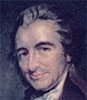
"Even the distance at which the Almighty hath placed England and America is a strong and natural proof that the authority of the one over the other, was never the design of Heaven. The time likewise at which the Continent was discovered, adds weight to the argument, and the manner in which it was peopled, encreases the force of it. The Reformation was preceded by the discovery of America: As if the Almighty graciously meant to open a sanctuary to the persecuted in future years, when home should afford neither friendship nor safety."
Divine Providence created America as a safe haven for Protestant dissenters? Yup. There you have it.
Now, since Thomas Paine later wrote "The Age of Reason" in the 1790s, where he rejected the Bible and Christian dogma [America liked it so much that only 6 people attended his funeral], he probably didn't believe this part of "Common Sense," probably. [Although you never know...]
But there it is, and there it was, in Paine's own words. Now relax, this isn't to say that the United States of America should be a Protestant Nation in 2011, or people thought that by the time they wrote the Constitution in 1787.
I will betcha, though, that not one person in a 100 knows that Thomas Paine, the Revolution's most famous deist, was saying it in 1776, in the most famous and popular essay of his times.
Because I didn't know, until I read the damn thing for meself. Read the whole thing here for yrself, or peek at this annotated version. History isn't dead, it's alive, if you dog it a little on your own.
Thursday, October 13, 2011
John Jay's Archive, Richard Gardiner & Creedal Christianity
John Jay's correspondence is available at Liberty Fund. There is a lot of great stuff there.
Jay is a Founder, generally conceded as orthodox Christian. And he does offer some quotations that sound "Christian Nation" like. Certainly, Christian Nationalists have used (abused?) those quotations from Jay. Rev. Robert Jeffress recently used Jay's quotation to justify why he would vote for the "Christian" Rick Perry over the "non-Christian" Mormon Mitt Romney.
John Jay was a lifelong Anglican, a church warden, and was involved in the reformation of Anglicanism to Episcopalianism.
While investigating the exact religious beliefs of as many American Founders I could, I began to think very hard about the concept of creedalism, and that various Founders, in some way affiliated with churches connected to doctrinally orthodox creeds, could disbelieve at least some of what their churches officially endorsed.
In this debate over who exactly believed what, we look for smoking guns to "settle" the issue. Some use, in the absence of smoking gun quotations, formal affiliation to churches and their official doctrines, as shorthand for what exactly a Founder believed. Indeed, if one held an official position in said churches -- church warden, vestryman, godfather, etc. -- then one probably DID swear and oath to said church's official doctrines.
Enter the concept of an "Anglican Whig." According to Anglicanism's official doctrines, the King of England was both head of church AND state. And when Anglican church MEMBERS swore oaths they swore to remain loyal to the Crown. There was a term for the oath and doctrinal fundamentalists in the Anglican Church in late 18th Century America: Tories.
In order to claim America's Founders as orthodox Christians via their church affiliation, Christian Nationalists have to turn them into oath fundamentalists and argue something like if you are not an oath fundamentalist, you are a liar or a hypocrite. See for instance, Christian Nationalist Richard Gardiner making this argument.
Accordingly, because they violated their high church Tory oaths when they rebelled against the Crown, Anglican Whigs such as Washington, Jefferson, Madison, Henry, Jay and others were "liars when they swore to God to adopt the confessions of their churches when they became members of these churches" to use Dr. Gardiner's exact words. (Again, I don't make that judgment; Christian Nationalists like Dr. Gardiner do.)
John Jay, unlike Washington and Madison, and like Jefferson was fairly explicit in detailing what he believed, religiously, in his private letters. (Jefferson, the good Anglican he [not!], rejected every single tenet of orthodox Christianity.)
As I've written before, John Jay, though more apparently "biblical" and "Christian" than other Founders, was no "oath fundamentalist" regarding his Anglicanism-Episcopalianism. Christian Nationalists may enjoy Jay's letter to Samuel Miller, Feb. 18, 1822, when he wrote:
"No creed but the Bible" may make Jay sound like a good late 18th Century Quaker, but it does not represent what orthodox Anglicanism or Episcopalianism stood for at that time. Anglicanism, and then Episcopalianism, in its official doctrines endorsed not just "the Bible" as revelation, but also the Athanasian Creed and 39 Articles.
And indeed, when the Bible is unmoored from orthodox Trinitarian creeds, heresy in the form of biblical non-Trinitarianism inevitably results as it did in Jay's case. In his private letters, Jay's endorsement of "the Bible" but no "creeds" led him to seem not only utterly unconcerned with Anglican doctrine, but also to doubt the Trinity, or at least the understanding of the Trinity as represented by the Athanasian Creed (what his church, what he took official oaths to, endorsed). From the same letter to Samuel Miller, Feb. 18, 1822:
Jay is a Founder, generally conceded as orthodox Christian. And he does offer some quotations that sound "Christian Nation" like. Certainly, Christian Nationalists have used (abused?) those quotations from Jay. Rev. Robert Jeffress recently used Jay's quotation to justify why he would vote for the "Christian" Rick Perry over the "non-Christian" Mormon Mitt Romney.
John Jay was a lifelong Anglican, a church warden, and was involved in the reformation of Anglicanism to Episcopalianism.
While investigating the exact religious beliefs of as many American Founders I could, I began to think very hard about the concept of creedalism, and that various Founders, in some way affiliated with churches connected to doctrinally orthodox creeds, could disbelieve at least some of what their churches officially endorsed.
In this debate over who exactly believed what, we look for smoking guns to "settle" the issue. Some use, in the absence of smoking gun quotations, formal affiliation to churches and their official doctrines, as shorthand for what exactly a Founder believed. Indeed, if one held an official position in said churches -- church warden, vestryman, godfather, etc. -- then one probably DID swear and oath to said church's official doctrines.
Enter the concept of an "Anglican Whig." According to Anglicanism's official doctrines, the King of England was both head of church AND state. And when Anglican church MEMBERS swore oaths they swore to remain loyal to the Crown. There was a term for the oath and doctrinal fundamentalists in the Anglican Church in late 18th Century America: Tories.
In order to claim America's Founders as orthodox Christians via their church affiliation, Christian Nationalists have to turn them into oath fundamentalists and argue something like if you are not an oath fundamentalist, you are a liar or a hypocrite. See for instance, Christian Nationalist Richard Gardiner making this argument.
Accordingly, because they violated their high church Tory oaths when they rebelled against the Crown, Anglican Whigs such as Washington, Jefferson, Madison, Henry, Jay and others were "liars when they swore to God to adopt the confessions of their churches when they became members of these churches" to use Dr. Gardiner's exact words. (Again, I don't make that judgment; Christian Nationalists like Dr. Gardiner do.)
John Jay, unlike Washington and Madison, and like Jefferson was fairly explicit in detailing what he believed, religiously, in his private letters. (Jefferson, the good Anglican he [not!], rejected every single tenet of orthodox Christianity.)
As I've written before, John Jay, though more apparently "biblical" and "Christian" than other Founders, was no "oath fundamentalist" regarding his Anglicanism-Episcopalianism. Christian Nationalists may enjoy Jay's letter to Samuel Miller, Feb. 18, 1822, when he wrote:
"In forming and settling my belief relative to the doctrines of Christianity, I adopted no articles from creeds, but such only as, on careful examination, I found to be confirmed by the Bible."
"No creed but the Bible" may make Jay sound like a good late 18th Century Quaker, but it does not represent what orthodox Anglicanism or Episcopalianism stood for at that time. Anglicanism, and then Episcopalianism, in its official doctrines endorsed not just "the Bible" as revelation, but also the Athanasian Creed and 39 Articles.
And indeed, when the Bible is unmoored from orthodox Trinitarian creeds, heresy in the form of biblical non-Trinitarianism inevitably results as it did in Jay's case. In his private letters, Jay's endorsement of "the Bible" but no "creeds" led him to seem not only utterly unconcerned with Anglican doctrine, but also to doubt the Trinity, or at least the understanding of the Trinity as represented by the Athanasian Creed (what his church, what he took official oaths to, endorsed). From the same letter to Samuel Miller, Feb. 18, 1822:
It appeared to me that the Trinity was a Fact fully revealed and substantiated, but that the quo modo was incomprehensible by human Ingenuity. According to sundry Creeds, the divine Being whom we denominate the second Person in the Trinity had before all worlds been so generated or begotten by the first Person in the Trinity, as to be his coeval, coequal and coeternal Son. For proof of this I searched the Scriptures diligently -- but without Success. I therefore consider the Position of being at least of questionable Orthodoxy.
Tuesday, October 11, 2011
Jeffress
The good Reverend is entitled to his opinion; but his religion is NOT the political theology of the American Founding and does not well mix with American politics, certainly NOT the American Presidency.
Monday, October 10, 2011
Benjamin Franklin's version of the Lord's Prayer
Like Thomas Jefferson, Benjamin Franklin was fascinated with the New Testament; Franklin had on occasion considered bringing out his own edited edition of the New Testament, but that idea, sadly, never came to fruition. Franklin did, however, edit the Lord's Prayer, commonly known as the Our Father, to better reflect what he thought the true meaning of the prayer was. Those who consider Franklin to be a deist would do well to ponder the words he chose to use in this prayer, words that indicate that God is both our provider and our judge:
1. Heavenly Father,
2. May all revere thee,
3. And become thy dutiful children and faithful subjects.
4. May thy laws be obeyed on earth, as perfectly as they are in heaven.
5. Provide for us this day, as thou hast hitherto daily done.
6. Forgive us our trespasses, and enable us to forgive those who offend us.
7. Keep us out of temptation, and deliver us from evil.Taken from In God We Trust: The Religious Beliefs and Ideas of the American Founding Fathers, edited by Norman Cousins (Harper & Brothers: 1958), pg. 21.
Catholicism, classical liberalism and the American Constitution
An interesting take on those topics can be found in this post over at the Ius Honorarium blog: Catholicized America. The author takes aim at theories that attempt to demonstrate that the federal Constitution is an embodiment of traditionalist natural law ideas, while at the same time noting that the framers of the Constitution were shaped by such ideas, even if the authors of the document were themselves often unaware of those those ideas influence on the text they were drafting. Here's a passage to inspire you to head over and read the whole thing:
I remain skeptical of the Catholic project of rehabilitating the Constitutional text in the hope of defeating the individualism and other excesses which many lament as a cancer on society. At the same time, an “originalist” approach to the Constitution is probably more likely to yield results favorable to traditionalist Catholics than otherwise. This is mainly because the Constitution, according to most originalists, does not contain binding prescriptions on many of the hot-button social and moral issues which concern Catholics. The “original Constitution,” generally speaking, leaves more room for the states to experiment and could, in theory, give rise to the type of localism which many traditionalist Catholics believe to be, on the basis of Catholic Social Teaching, more legitimate than our current, centralized form of government. But all of this still falls far short of turning the U.S. or any of its states into a confessional stronghold. Despite revisionist claims to the contrary, America was never on the verge of becoming a “Catholic country.” That fable, which seems to have some purchase amongst certain traditionalists, is more often deployed to decry Vatican II than paint an accurate picture of historical reality.The post also has a delightful little dig at libertarian constitutional theory at the end, which I consider an added bonus! Well worth a read.
Saturday, October 8, 2011
Thursday, October 6, 2011
North & McCloskey on Western Technological Advances
A fascinating passage:
THE BOURGEOIS ERA
There have been lots of reasons offered by economic historians for this transformation, but these have all been called into question by economic historian Dierdre McCloskey, who began working on this issue as Donald McCloskey three decades ago. In a proposed six-volume set, The Bourgeois Era, McCloskey is exploring this question in detail. Two volumes are available. They have presented the problem. In volume 2, Bourgeois Dignity. McCloskey refutes the prevailing explanations one by one.
Then what did it? McCloskey's theory, not yet proven: a change in attitude toward the legitimacy of wealth. This began in the 17th century in the Netherlands. (McCloskey speaks Dutch.) This spread to Scotland and England.
I am partial to the thesis. I have believed it for at least 25 years. But there is a problem. What motivated people to change their views after – basically – the history of mankind? These were Calvinist societies in the 17th century. What changed in Calvinist theology in the century after Calvin? The 17th-century creeds did not change the theology. The Synod of Dort (1619) and the Westminster Assembly (1643-47) did not alter the old Calvinism. So, what was the crucial factor?
I have a suggestion: their concept of the nature of God's kingdom on earth. The shift was to what is today called postmillennialism: the belief that the final judgment only comes after Christ's kingdom has filled the earth. This transformation involves compound blessings (Deut. 28:1-15) including economics. This was not held by Lutherans and 16th-century Calvinists.
In both the Netherlands and Scotland, there were postmillennial theologians. But McCloskey's research challenge will be to see if the supposed shift in attitude toward business wealth was associated with this shift in eschatology. If there was no connection, then what was the source?
Adam Smith's Wealth of Nations (1776) favored economic wealth. He was a Scot. He was a liberal Presbyterian. But McCloskey thinks the change in attitude preceded Smith by 150 years.
Proof is scheduled for Volume 3. I await it with great anticipation.
McCloskey became co-editor of the American academic journal, The Journal of Economic History, in the spring of 1982. Beginning 15 years earlier, the editor had been my professor, Hugh Aitken. I recall the evening in a graduate seminar, probably in 1966, when Aitken had posed the #1 question. How did the transformation happen? He said the scholars did not know.
As far as I can see, they still do not know.
THE GREAT DIVERGENCE
Harvard historian Niall Ferguson has called the great transformation of the West the great divergence. Asian nations had about the same wealth per capita as Western nations in 1800. By 1900, the two societies diverged greatly. This continued until 1970, he argues.
In a TED video, Ferguson attributes this to six factors:
Competition (both political and economic)
The scientific revolution
Property rights (not democracy)
Modern medicine
The consumer society
The West's work ethic
I don't believe any of this. That is because I have read McCloskey's two volumes (twice). McCloskey refutes them all, plus a dozen more.
Wednesday, October 5, 2011
Over at the Addicting Info blog
Over at the Addicting Info blog you can find a 10/5/2011 article, The Christianization of Early American History and the Perpetrating Fraud, David Barton by Jay R. Adams. For all that David Barton has had to say, even the most unsuspecting author can parrot fraudulent history. The following snippet from the Adams article is a case in point:
The fact is that most presidents are not known to have added "So help me God" to their oath, and according to the historical record there are very few instances where there's any cause for doubt. The first president who is known to have included a religious tagline as part of his inaugural ceremony is Chester A. Arthur who on 22 September 1881 was sworn in as president after the death of President Garfield. We have to wait until the first part of the twentieth century before we can find an example where an elected president took up this extra-constitutional practice. In 1929 President Hoover was the last president who stayed true to the presidential oath as prescribed by the Constitution. In 1933 FDR started the unbroken practice of adding "So help me God" to the presidential oath. Still, for all of this time, there's no known record of anyone trying to say that adding a religious codicil to the oath was a practice that started with George Washington.
Regretfully, regardless of what the facts may be, come Sunday, January 20, 1957, on the eve of President Eisenhower's official inaugural ceremony we have Pulitzer-prize, Civil War author, Bruce Catton issuing a Los Angeles Times article, " ... So help me God," where he said:
After that the "So help me God" myth became even more popular. Some commentators realized that there were some notable exceptions to the "every president" storyline (i.e. Franklin Pierce, Theodore Roosevelt, and Herbert Hoover) so they modified the "every president" claim to say "virtually every president," "almost every president," or "most presidents." Now, even if one chooses to say, "[succeeding presidents] repeated [So help me God] as customary tribute to our first President," that's still incorrect, because there's simply no way to show that Washington actually added those four words to his presidential oath.
Even the executive oath, explicitly prescribed in Article II is devoid of any religious litmus. “So help me God” was first affirmed verbally by George Washington and since repeated as customary tribute to our first President.It's commonplace to see the myth about Washington's presidential oath repeated without question, but the myth has no basis in fact. One should realize, there's a serious problem here on two counts:
There is no firsthand account describing George Washington as having inflated the presidential oath of office by adding "So help me God." (See 1/7/2009, USA Today - No proof Washington said 'so help me God' ;1/11/2009 - "So Help Me God": A George Washington Myth That Should be Discarded - Prof. Peter Henriques.)Competent researchers at the Papers of George Washington (Ed Lengel), the Documentary History of the First Federal Congress Project (Charlene Bickford), and the Library of Congress are on record as saying that there is no contemporaneous evidence showing that George Washington added "So help me God" to his oath of office. This unsubstantiated notion that Washington added "so help me God" made its debut sixty-five years after the event (1854) with the assistance of "Reverend" Rufus Wilmot Griswold. It is possible, Griswold may have picked up parts of his inaugural narrative from a prior conversation he had with Washington Irving. And, as expected, three years later (1857), when Irving wrote his five volume biography of George Washington he repeated the "So help me God" tidbit without citing a personal recollection or identifying a possible source. For those who still rely on Washington Irving's six-year old so-called "recollection" of the event, they ignore the fact that Irving shows absolutely no credibility because the bulk of his inaugural narrative was plagiarized from the Memoir of the Life of Eliza S[usan] M[orton] Quincy (see footnote at bottom of page 52).
Currently, as far as one can determine, the practice of adding a religious codicil, "since repeated as customary tribute to our first President," never became an infused part of our national consciousness until January 20, 1961.
The fact is that most presidents are not known to have added "So help me God" to their oath, and according to the historical record there are very few instances where there's any cause for doubt. The first president who is known to have included a religious tagline as part of his inaugural ceremony is Chester A. Arthur who on 22 September 1881 was sworn in as president after the death of President Garfield. We have to wait until the first part of the twentieth century before we can find an example where an elected president took up this extra-constitutional practice. In 1929 President Hoover was the last president who stayed true to the presidential oath as prescribed by the Constitution. In 1933 FDR started the unbroken practice of adding "So help me God" to the presidential oath. Still, for all of this time, there's no known record of anyone trying to say that adding a religious codicil to the oath was a practice that started with George Washington.
Regretfully, regardless of what the facts may be, come Sunday, January 20, 1957, on the eve of President Eisenhower's official inaugural ceremony we have Pulitzer-prize, Civil War author, Bruce Catton issuing a Los Angeles Times article, " ... So help me God," where he said:
The words George Washington added were for all of us, in all times George Washington was a man inspired -- and his inspiration has come down to all of us, coloring the environment in which we live.Four years later (1961/1962), Philip B. Kurland synthesized the following gem: "There is hoary tradition for this: George Washington added the words 'so help me God' to his presidential oath and every successor has done the same."
When he became the first President of the United States, he was called on to recite a formal oath of office. It obliged him to repeat these words: "I do solemnly swear that I will faithfully execute the office of President of the United States, and will to the best of my ability, preserve, protect, and defend the Constitution of the United States."
Washington stood on a covered portico looking out over downtown New York, one hand resting on a Bible, and the other raised in the air. Dutifully he repeated these words, which over the years would become hackneyed, almost meaningless, with much repetition. Then he added words not in the script. After reciting the formal oath, he put in a short sentence of his own:""So help me God."
Every President since has added those words. They have now become part of the ritual; and it is a good part, an essential part, pledging more than was originally intended when the oath was written. For Washington, taking on himself the immeasurable responsibility of guiding and leading the American people, looked into his own heart and found a need which he expressed in four words: "So help me God." He spoke not only for all future Presidents, but for the rest of us too.
[ . . . ]
Saying those words, Washington spoke for all of us.
After that the "So help me God" myth became even more popular. Some commentators realized that there were some notable exceptions to the "every president" storyline (i.e. Franklin Pierce, Theodore Roosevelt, and Herbert Hoover) so they modified the "every president" claim to say "virtually every president," "almost every president," or "most presidents." Now, even if one chooses to say, "[succeeding presidents] repeated [So help me God] as customary tribute to our first President," that's still incorrect, because there's simply no way to show that Washington actually added those four words to his presidential oath.
Sunday, October 2, 2011
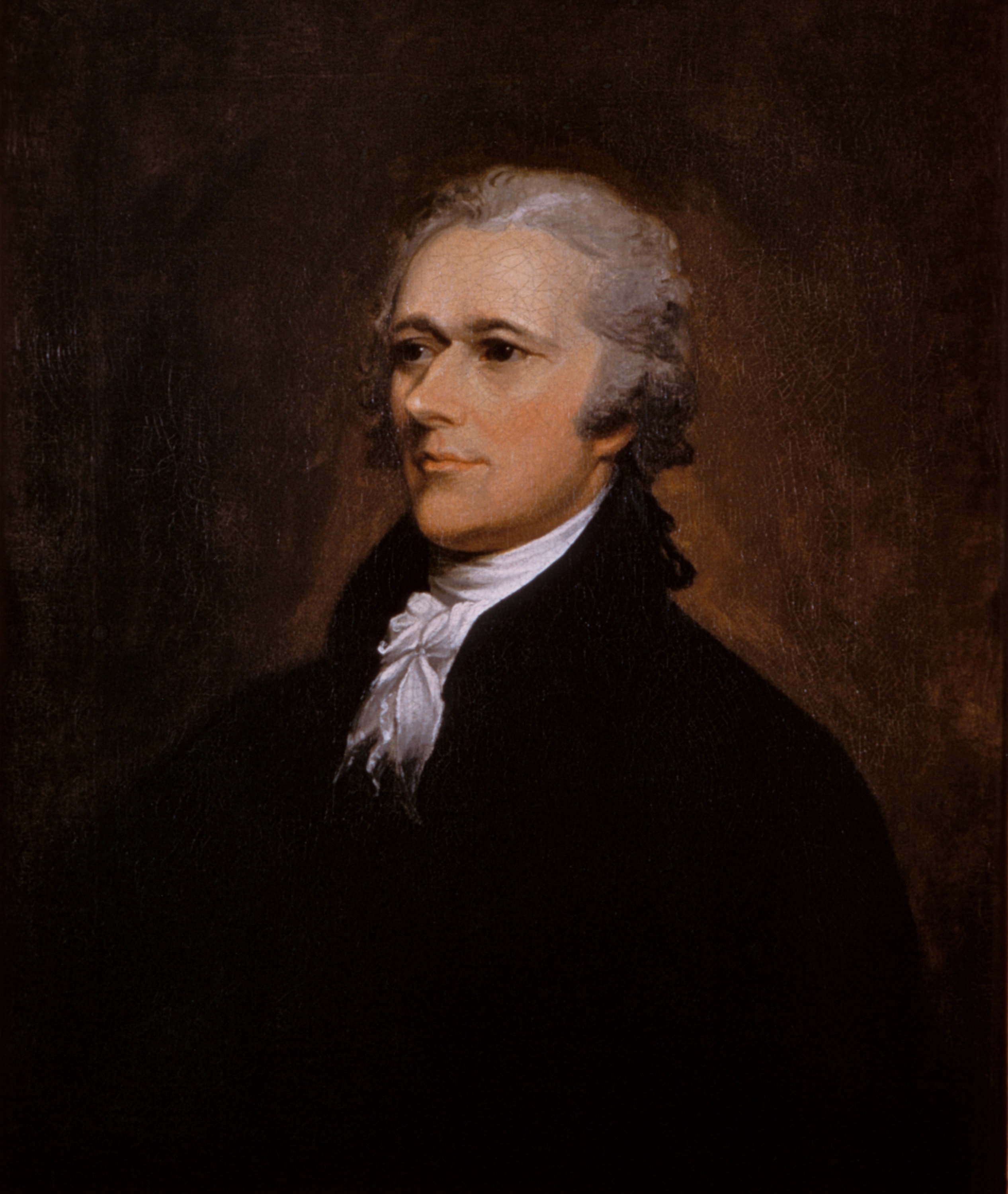
Alexander Hamilton: human rights are grounded in the common origins of humankind
- Alexander Hamilton (1775-1804), A Full Vindication, Dec. 15, 1774, published inThe Revolutionary Writings of Alexander Hamilton (Liberty Fund: 2008), pg. 6.That Americans are entitled to freedom is incontestable on every rational principle. All men have one common original: they participate in one common nature, and consequently have one common right. No reason can be assigned why one man should exercise any power or preeminence over his fellow-creatures more than another; unless they have voluntarily vested him with it.
More From Throckmorton on Barton & Unitarianism
Here are two great posts (note I'm cited in both) from Warren Throckmorton on David Barton's claim that the unitarians of the Founding era were "evangelicals."
There is a lot of great primary source material cited. Unitarians of that era believed in something that evangelicals of today could only regard as a cult like heresy. But they were far more biblical and theistic than the UUs of today.
From Jared Sparks' Unitarian miscellany and Christian monitor, circa 1821:
There is a lot of great primary source material cited. Unitarians of that era believed in something that evangelicals of today could only regard as a cult like heresy. But they were far more biblical and theistic than the UUs of today.
From Jared Sparks' Unitarian miscellany and Christian monitor, circa 1821:
Unitarians believe, that Jesus Christ was a messenger commissioned from heaven to make a revelation, and communicate the will of God to men. They all agree, that he was not God; that he was a distinct being from the Father, and subordinate to him; and that he received from the Father all his power, wisdom, and knowledge. (p. 13)
Although unitarians do not believe Christ to be God, because they think such a doctrine at variance with reason and scripture, yet they believe him to have been authorized and empowered to make a divine revelation to the world. We believe in the divinity of his mission, but not of his person. We consider all he has taught as coming from God; we receive his commands, and rely on his promises, as the commands and promises of God. In his miracles we see the power of God; in his doctrines and precepts we behold the wisdom of God; and in his life and character we see a bright display of every divine virtue. ...
Subscribe to:
Posts (Atom)