Friday, December 24, 2010
No, Mr. Beck, Our Constitution is Not Based on the Book of Deuteronomy
This is a good one from Chris Rodda. It makes an extremely important point on the Donald S. Lutz et al. study that bears repeating. I'll talk more about the Lutz study soon.

Thursday, December 23, 2010
The "No Mr. Beck" Series
Chris Rodda is guest co-blogging at Dispatches From the Culture Wars. Check out her latest No, Mr. Beck, Jefferson Did Not Date His Documents "In the Year of Our Lord Christ."
A taste:
A taste:
Now, Barton claims in his description of the form on his website that "this is the explicitly Christian language that President Thomas Jefferson chose to use in official public presidential documents," and said on Glenn Beck that "Jefferson added in the year of our lord Christ." This is a flat out lie. Actually, it's two lies. Jefferson absolutely did not choose the language on this form, and he was not the only president who signed these forms that were dated that way. So did Washington and Adams before him, and Madison and Monroe after him. While the ship's papers form remained virtually the same from 1793 until well into the late 1800s, the name Christ was eventually dropped from the date on it, but that didn't happen until somewhere in the 1820s or 1830s.
The reason Barton lies about Jefferson being the only president to sign these documents is pretty obvious. As he claims in his presentations, other early presidents only dated things "in the year of our Lord," but Jefferson -- the least religious of them all -- the man who coined the phrase "separation between church and state" -- well, he went even further and added the name Christ! And his audience, of course, believes him.
When the Puritans outlawed Christmas
During this festive time of year, it has become normal (sadly) to hear about various attempts to purge or at least tamp-down the actual word "Christmas" in the public square. From the pc-friendly greeting "happy holidays" to the effort by some to emphasize the old pagan winter celebrations to the now hip references to the Seinfeld-era faux-holiday Festivus, there seems to always be a level of consternation about using the word Christmas this time of year. You know, because it has that word in it. The new forbidden "C" word. Christ.
Well, there was a time when the ire against Christmas and its celebration here in America had to do with the last syllable of the word, the "mas" -- which is an abbreviated version of the word "Mass," a reference to the Catholic eucharistic liturgy. The Puritans who settled in New England and the Scottish Presbyterians who followed them in settling the American colonial frontier had a particular aversion to the celebration of Christmas, viewing it as a papist festival that had no place in a properly Reformed understanding of the Christian life. In addition to its Catholic roots, Christmas was also impermissibly tinged, in the Puritan view, with the earlier pagan holidays that occurred in December, as the Puritan leader Increase Mather noted:
Just how strong was the Puritan aversion to Christmas? So strong that the ACLU has an article posted on its website detailing how these devout Calvinists reviled the Christmas holiday: Puritans & Christmas. An interesting read!
Being neither a Puritan nor a member of the ACLU, though, and as a proud member of the Church of Rome, I feel completely at ease wishing all our readers a blessed and merry Christmas. I plan on celebrating the day by engaging in an overt act of papist devotion, followed by a vigorous bout of wassailing!
The Reason For the Season
According to Dicken's A Christmas Carol was NOT Christ's Atonement or Incarnation but rather man's good works and good will. I reposted it at Brayton's blog here.
Monday, December 20, 2010
Quote of the day: on the structure of our government as a guarantee of liberty

The truth is, after all the declamation we have heard, that the constitution is itself in every rational sense, and to every useful purpose, A BILL OF RIGHTS. The several bills of rights, in Great-Britain, form its constitution, and conversely the constitution of each state is its bill of rights. And the proposed constitution, if adopted, will be the bill of rights of the union. Is it one object of a bill of rights to declare and specify the political privileges of the citizens in the structure and administration of the government? This is done in the most ample and precise manner in the plan of the convention, comprehending various precautions for the public security, which are not to be found in any of the state constitutions. Is another object of a bill of rights to define certain immunities and modes of proceeding, which are relative to personal and private concerns? This we have seen has also been attended to, in a variety of cases, in the same plan. Adverting therefore to the substantial meaning of a bill of rights, it is absurd to allege that it is not to be found in the work of the convention. It may be said that it does not go far enough, though it will not be easy to make this appear; but it can with no propriety be contended that there is no such thing. It certainly must be immaterial what mode is observed as to the order of declaring the rights of the citizens, if they are to be found in any part of the instrument which establishes the government. And hence it must be apparent that much of what has been said on this subject rests merely on verbal and nominal distinctions, which are entirely foreign from the substance of the thing.-Alexander Hamilton (1755-1804), American founding father, The Federalist #84 (1788).
Will "History" Ever End?
That's the title to a post I did today at Dispatches From the Culture Wars. I'm going to reproduce the part of it that relates to the American Founding so that we might, if we wish, discuss it here as opposed to there:
But Marx wasn't the first to predict an End to History either. While I can't speak for the other religious traditions in which I am less learned, the Bible speaks of an End to History in the Book of Revelation.
Yet, the Bible is not a book of modern politics. Whatever the Christian Americanists may tell you, the Founding Fathers' idea of republicanism did NOT originate in the Bible, just as Marxism did not originate there either. Yet, the Bible did influence both systems. Certain tales in the Bible resonate with both Marxism and the American Founding.
Interestingly, the idea of "Ending History" with liberal democracy traces to America's Founding era. Liberal democracy as originally articulated by America's Founders and the philosophers who influenced them was "settled" as the final form of government with a top down, God given metaphysics. Yet, the God of the Bible is not an apparent liberal democrat.
When one therefore mixes biblical revelation with Founding era democratic-republican theory, one gets results that are "interesting" to say the least. This is what the original "history enders" (most notable among them Enlightenment unitarian Christians Joseph Priestley and Richard Price) believed: Jesus would return at the success of the French Revolution to usher in a millennial republic of "liberty, equality, and fraternity." This was part and parcel of the same line of thought that argued the Bible established a "republic" as opposed to a "Kingdom" of Heaven, that the Ancient Israelites had a "republic" instead of a theocracy and that the Romans 13 really did teach revolution was permitted, indeed demanded, to secure liberal democratic ends.
Saturday, December 18, 2010
Quote of the day: the theological roots of American religious liberty

- James Madison (1751-1836), American Founding Father, Memorial and Remonstrance against Religious Assessments (1785).
Heads Up
I'll be guest blogging at Ed Brayton's Dispatches From the Culture Wars from Dec. 19-27. My grades (for 21 credits) are due Tuesday morning, so I'm not sure how much blogging I will do till then.
Wednesday, December 15, 2010
Was America Founded as a Christian Nation? Defining Terms
by John Fea
Guest Blogger
[Great and good friend-of-the-blog Dr. John Fea of The Way of Improvement Leads Home blog has a new gig at patheos.com as a regular columnist. From his latest:]
[And I could not agree more.---TVD]
Guest Blogger
[Great and good friend-of-the-blog Dr. John Fea of The Way of Improvement Leads Home blog has a new gig at patheos.com as a regular columnist. From his latest:]
In last week's column, I argued that Americans, since the earliest days of the Republic, have believed that they were living in a Christian nation. But were they right? Was the United States founded as a Christian nation? Did the Christian nationalism espoused by educators and politicians, Unionists and Confederates, fundamentalists and modernists, and civil rights activists and the members of the Christian Right, reflect the spirit of the founding era or, perhaps more importantly, the spirit of Christianity?
The answers to these questions are complicated. How we answer them will depend on how we define our terms. What do we mean when we use terms such as "Christian," "founding," and "nation"? A close examination of these words and their relationship to one another in the context of early American history suggests that the very question, "Was America Founded as a Christian Nation?" does not do justice to the complexity of the past.
...
We may also want to examine the Christian character of the people who made up the nation at the time of the founding. Although I am skeptical of the idea that any society on this side of eternity can be truly called Christian, it does seem that a society can reflect, in a limited sense, Christian principles if the vast majority of its members are doing their best, through the power of God's grace and the work of the Holy Spirit, to live authentic Christian lives. Such an approach takes the focus away from the founders and the founding documents and places it squarely upon the religious behavior and practice of ordinary Americans. Those who argue this way might examine church membership, church attendance, or the number of communicants in a particular congregation or denomination.
...
We could ask similar questions about the words "nation" and "founded." At what point did the United States of America become a nation? Was it in 1776, when the Continental Congress declared its independence from England? Was it 1789, when the United States Constitution became the official frame of American government? Or was it sometime later?
...
These are the kinds of historical complexities that we seldom hear debated in the public square. We live in a sound-bite culture that makes it difficult to have any sustained dialogue on these historical matters. It is easy for those who argue that America is a Christian nation (and those who do not) to appear on radio or television programs, quote from one of the founders or one of the founding documents, and sway people to their positions. These kinds of arguments, often contentious, do nothing to help us unravel a very complicated historical puzzle about the relationship between Christianity and the American founding.
We need historians more than ever.
[And I could not agree more.---TVD]
Tuesday, December 14, 2010
The positive contributions of the Puritans to the American founding
One doesn't hear much in the way of praise for the Puritans nowadays, but Peter Augustine Lawler over at First Principles has posted an essay reminding us why the Puritans are important for understanding American culture, and important in a good way: Praising the Puritans. Lawler's analysis is particularly insightful, I think, in comparing the moral traditions of liberty that developed separately in New England and in Virginia. The New England variety, informed by Puritanism, was both more communitarian and egalitarian than the slavocracy that developed in Virginia. Lawler's analysis is well worth a read.
Two Notable Events Regarding Presidential Oaths
First Notable Event - on December 10, 2010 the Library of Congress updated their website entitled Inaugurals of Presidents of the United States: Some Precedents and Notable Events. Where it had previously credited George Washington with having first added "So help me God" to the presidential oath of office, it no longer does. If the reader scans down to the entry for Chester A. Arthur, the following modification appears:
September 20, 1881, and September 22, 1881 -- Chester A. Arthur
There are at least two other well-documented instances where a president-elect did not touch a Bible. A notable exception occurred at the inauguration of John Quincy Adams' inauguration where:
According to Paul Boller, in his book Presidential Inaugurations, "some people questioned the validity of the [Kennedy] oath. But the White House [spokesperson, maybe Ted Sorensen] patiently explained that the Constitution didn't prescribe the use of the Bible at the inaugural ceremony and that it was simply a tradition that had begun with George Washington."
Second Notable Event - I recently came across a forthcoming book with the title, Inventing George Washington: America's Founder, in Myth and Memory, by Edward G. Lengel . This title will be released January 18, 2011.
Lengel is chief editor of The Papers of George Washington, and a professor at the University of Virginia. The book should prove interesting.
In an early November 30, 2010 Amazon.com Customer Review (from the Amazon Vine Program), entitled When the legend becomes fact, print the legend, the author, Phelps Gates comments:
September 20, 1881, and September 22, 1881 -- Chester A. Arthur
- First time the oath of office has been taken in the Vice President's Room of the Capitol.
- Two ex-presidents (Grant and Hayes) were present at this ceremony.
- Pronounced the words "So help me, God" after taking the oath; other presidents have followed this example.
There are at least two other well-documented instances where a president-elect did not touch a Bible. A notable exception occurred at the inauguration of John Quincy Adams' inauguration where:
A March 4, 1825 diary entry by John Q. Adams says "... and pronounced from a Volume of the Laws held up to me by John Marshall, Chief Justice of the United States, the Oath faithfully to execute the office of President of the United States and to the best of my ability, to preserve, protect and defend the Constitution of the United States."
The Washington National Intelligencer reported: "The President-elect [John Q. Adams] then descended from the chair and, placing himself on the right hand of the judges' table, received from the Chief Justice [John Marshall] a volume of the laws of the United States, from which he read, in a loud and clear voice, the oath of office."Another quite visible instance occurred at John Fitzgerald Kennedy's January 20, 1961 swearing-in ceremony. See the Critical Past video, John Kennedy takes the oath of Office, and notice JFK's left arm is simply resting at his side and his family Douay-Rheims version of the Bible, which, while hidden from view, is being held by James R. Browning, clerk of the Supreme Court.
- a hat tip goes to Mathew Goldstein. See So help me God in presidential oaths.
According to Paul Boller, in his book Presidential Inaugurations, "some people questioned the validity of the [Kennedy] oath. But the White House [spokesperson, maybe Ted Sorensen] patiently explained that the Constitution didn't prescribe the use of the Bible at the inaugural ceremony and that it was simply a tradition that had begun with George Washington."
Second Notable Event - I recently came across a forthcoming book with the title, Inventing George Washington: America's Founder, in Myth and Memory, by Edward G. Lengel . This title will be released January 18, 2011.
Lengel is chief editor of The Papers of George Washington, and a professor at the University of Virginia. The book should prove interesting.
In an early November 30, 2010 Amazon.com Customer Review (from the Amazon Vine Program), entitled When the legend becomes fact, print the legend, the author, Phelps Gates comments:
One chapter is a fascinating exercise in historical detective work about the presidential oath: during the Obama inauguration, commentators, including historians, often remarked that it was Washington who added "So help me God" to the oath. Is this true? Lengel gives a thorough and convincing answer (which I won't give away here).If, on the outside chance, there's someone who is too impatient to wait for next year's release date to see the results of Lengel's "historical detective work," here's my recommended sneak peek reading list:
January 15, 2009 - "So help me God": A George Washington Myth that Should be Discarded - A January 12, 2009 History News Network article by Peter R. Henriques - posted by Ray Soller, an American Creation contributor.- and that's a wrap.
January 18, 2009 - In the Beginning - The Oath Is a President's First Act, But Everyone's Not on the Same Page by Dan Zak, Washington Post Staff Writer.
August 27, 2010 - Grisold's Only Eyewitness Account of George Washington's 1789 Inauguration posted by Raglinen.
November 4th, 2010 - Five Reasons Washington Irving is Still Important Today - posted by a contributor at myfivebest dot com.
November 16, 2010 (retrieved as of) - Rufus Wilmot Griwold Summary - Dictionary of Literary Biography - posted by BookRags dot com.
Samuel Adams, Paul Revere and "The Body of the People"
The anniversary of the Boston Tea Party on 16 December is this week.
Here is historian Ray Raphael on Samuel Adams role.
Ray Raphael theorizes on whether or not Samuel Adams really gave a "signal" for the Boston Tea Party, the real story of Paul Revere's ride, and the role of the average person in the events leading up to the American Revolution.
Monday, December 13, 2010
Quote of the day: Providence and the maintenance of the American civic order
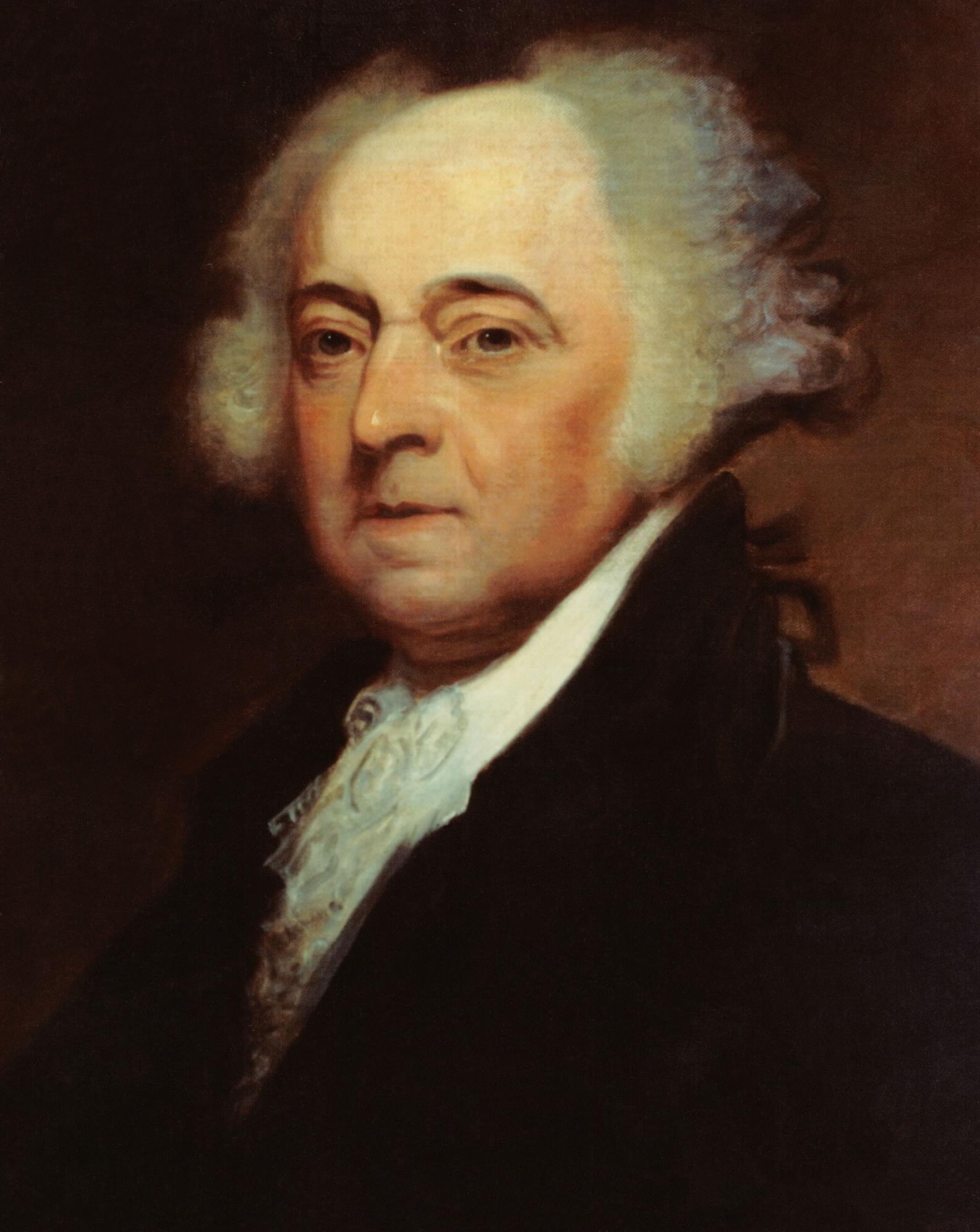
- John Adams (1735-1826), American Founding Father and second president of the United States, First Inaugural Address (1797).
Does it even matter if any of the Founders were Christians?
Here at American Creation we tend to get into discussions about the faith lives of the Founders. Were they Christians? What kind of Christians? Devout? Lax? Orthodox? Unitarian? How can anyone even coherently describe whatever Thomas Jefferson happened to believe at any given moment? This kind of questioning also shows up quite a bit in constitutional law scholarship discussing the First Amendment's religion clauses and the role of faith in public life.
Over at The American Conservative online, writer Paul Gottfried argues that that whole line of questioning is mistaken: Was George Washington a Christian? According to Gottfried's approach the relevant question isn't what did Washington believe? rather it is what kind of social and political order did Washington intend to create? Gottfried has some thoughts on both questions, and his ideas are well worth pondering. I particularly am struck by his framing of the debate about religion and the Founding.
Nothing says Christmas like George Washington's eggnog recipe
Courtesy of the Old Farmer's Almanac online, here is George Washington's very own recipe for eggnog. Be warned, it is heavy on the spirits in keeping with the tastes and customs of the day, and he doesn't specify how many eggs to use. Of course, this means you can adjust the eggs to your own taste and still claim complete colonial authenticity to your recreation of Washington's recipe:
One quart cream, one quart milk, one dozen tablespoons sugar, one pint brandy, 1/2 pint rye whiskey, 1/2 pint Jamaica rum, 1/4 pint sherry—mix liquor first, then separate yolks and whites of eggs, add sugar to beaten yolks, mix well. Add milk and cream, slowly beating. Beat whites of eggs until stiff and fold slowly into mixture. Let set in cool place for several days. Taste frequently.Love that last bit of advice from the Father of Our Country!
Sunday, December 12, 2010
Update
I know I've been less active here. I'm not done with American Creation yet. I'm happy to see Mark taking a more active role and wish more AC bloggers would as well. I know we are all (including yours truly) very busy. I don't have kids (one reason why I can produce so much output). But I do teach overloads every semester (21 credits every semester -- though 9 of them are online, which puts my blog fun right next to my "work").
One challenge I face is that I/we have uncovered quite a bit already. I know just about all of the footnotes that one is likely to see in a typical America's Founding & religion book. Taking it to the next level via for instance, original googlebooks sources can be tedious. And much of the stuff I uncovered on things like the debates on the nature of the Trinity and so on bores a lot of folks.
I'm thinking about taking a lot of the stuff I've uncovered so far and transferring it into some peer reviewed published articles and then eventually into a non-self published book. I'm still searching for my novel angle. But I think it will have something to do with America's Founding political theology thru the lens of dissent and heresy within Christendom.
In the meantime, look for more stuff in the future on late 18th Cen. and early 19th Cen. American unitarianism and universalism and how those heretical movements within Christendom influenced America's Founders.
How Thomas Jefferson Conquered America's Religion
In a sense. From Eve Tushnet. A taste:
Thomas Jefferson’s most radical declaration of independence isn’t his most famous. In 1820 Jefferson created a simplified, reasonable version of the Bible—taking out the miracles, prophecies, claims of Jesus’ divinity, and other weirdness which offended his Deism. Kenda Creasy Dean suggests that mainstream Christianity, in virtually all of its manifestations, has been similarly bowdlerized. Instead of the life-changing, culture-challenging demands of the gospel, Dean argues, American teenagers follow a mutant creed best understood as “Moralistic Therapeutic Deism.” Almost Christian, a popularization of the results of the 2002-05 National Study of Youth and Religion, attempts to help Christian parents, youth pastors, and others who are alarmed at the shakiness and incoherence of most teens’ faith.
The content of that faith is simple and as American as a smile in an airport. The tenets of Moralistic Therapeutic Deism (MTD) include belief in a god who watches over us and orders life on earth, and whose major moral concern is that humans should be nice to one another: “The central goal of life is to be happy and to feel good about oneself.” These kids aren’t hostile to religion; who would kick such a toothless cocker spaniel? Dean argues that adolescents who were able to be articulate and expressive when discussing issues they really cared about suddenly became tongue-tied when the subject of God or religion came up, falling back on phrases such as “I would imagine [God is] a very nice guy.”
Saturday, December 11, 2010
Quote of the day: American independence and the hand of Providence
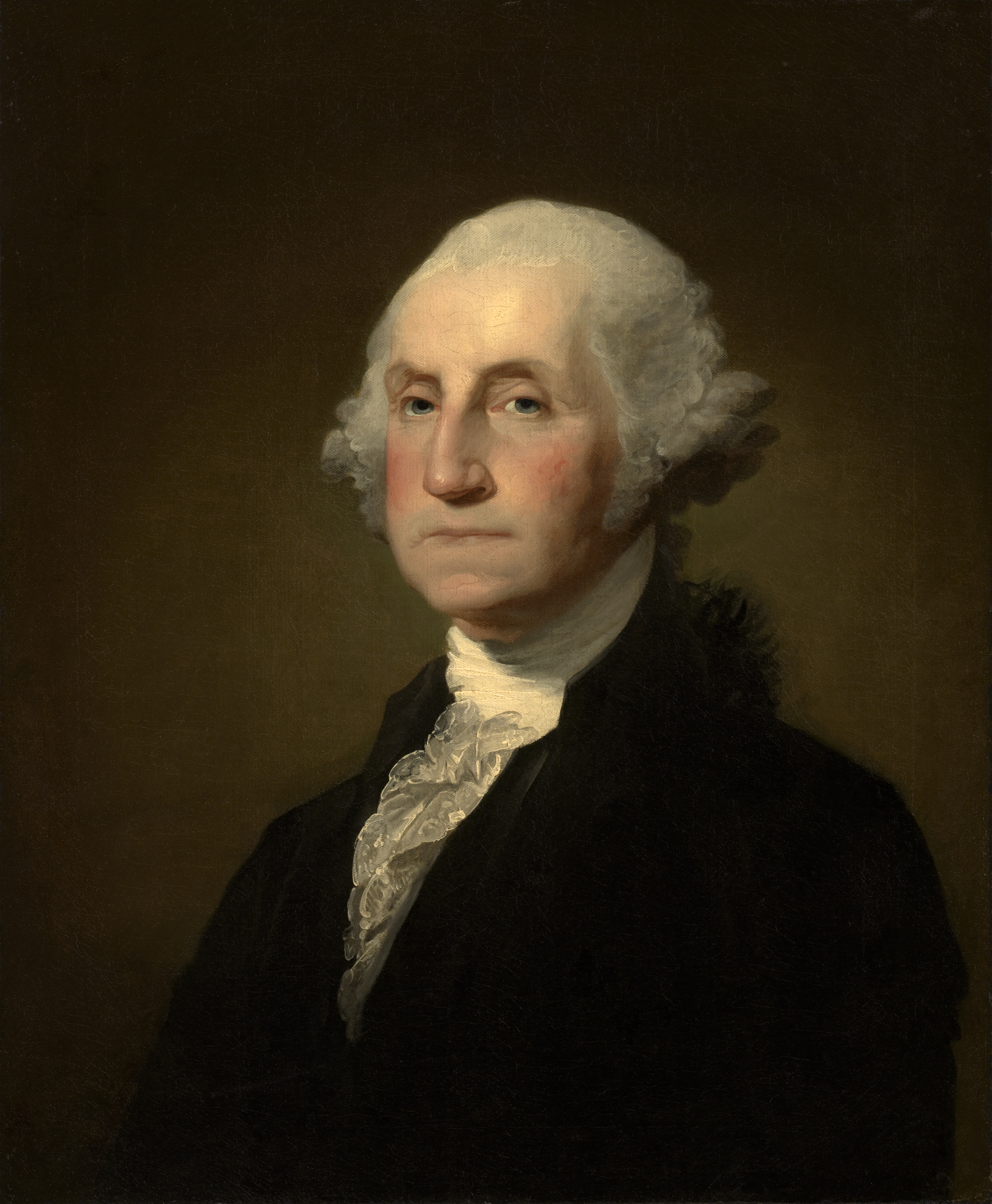
- President George Washington (1732-1799), Father of our country, First Inaugural Address, April 30, 1789.
Wednesday, December 8, 2010
Turley, Palin, GW & SHMG
One of Ray Soller's post from American Creation was referenced by Jonathan Turley here. And Chris Rodda too!
Tuesday, December 7, 2010
Is Randy Barnett's Repeal Amendment un-conservative?
Glenn Reynolds over at Instapundit has a round-up of links addressing Randy Barnett's Repeal Amendment, something that I wrote about recently on this blog. As Reynolds notes, one of the prime objections to Barnett's proposal has some from some of the left-side of the blogosphere who are proposing that there is something un-conservative about amending the Constitution. While it there is no question that a conservative approach to amending the Constitution would stress a prudential restraint in changing our fundamental charter for light reasons, the simple fact is that the Founders themselves thought that the document should be open to amendment -- that's why they put the Amendment Clause in the Constitution to begin with. Article V of the Constitution reads as follows:
George Washington, writing to anti-federalist Patrick Henry after the Constitution had been proposed, argued that the Constitution was imperfect and that the Amendment Clause should be viewed as the imperfect document's saving grace, meriting its adoption:
Washington's statement clearly asserts that the Constitution could be improved upon, and that the Amendment Clause was included to provide a mechanism for correcting its less than perfect elements. And, critically, that the Amendment Clause is what made the imperfect Constitution worthy of adoption. The nation would not be stuck with an imperfect charter, but could, over time, correct its errors.
Thomas Jefferson voiced a strong concern that the Constitution as originally drafted lacked fundamental protections against intrusive federal power. As he wrote to his protege James Madison in 1787, Jefferson objected to the Constitution's lack of critical protections, most notably the following:
Jefferson's remedy for these omissions was a Bill of Rights:
I think that a good case can be made for skepticism regarding Barnett's Repeal Amendment, but the idea that conservatives should oppose it because of some mythical conservative belief in the sacred and hallowed nature of the Constitution is just silly. The Constitution itself contains a mechanism for its Amendment, and the Founders most currently looked to by conservatives explicitly endorsed the idea that the Constitution not only could be amended, it should be amended.
[Cross-posted over at my blog Ordered Liberty.]
The Congress, whenever two thirds of both Houses shall deem it necessary, shall propose Amendments to this Constitution, or, on the Application of the Legislatures of two thirds of the several States, shall call a Convention for proposing Amendments, which, in either Case, shall be valid to all Intents and Purposes, as Part of this Constitution, when ratified by the Legislatures of three fourths of the several States, or by Conventions in three fourths thereof, as the one or the other Mode of Ratification may be proposed by the Congress; Provided that no Amendment which may be made prior to the Year One thousand eight hundred and eight shall in any Manner affect the first and fourth Clauses in the Ninth Section of the first Article; and that no State, without its Consent, shall be deprived of its equal Suffrage in the Senate.And not only did the Founders think that the Constitution should be open to Amendment theoretically, they thought that it should be amended in actuality. Let's take a took at statements from the two American Founders most commonly revered on the American Right currently, George Washington and Thomas Jefferson.
George Washington, writing to anti-federalist Patrick Henry after the Constitution had been proposed, argued that the Constitution was imperfect and that the Amendment Clause should be viewed as the imperfect document's saving grace, meriting its adoption:
I wish the Constitution which is offered, had been made more perfect, but I sincerely believe it is the best that could be obtained at this time. And, as a constitutional door is opened for amendment hereafter, the adoption of it, under the present circumstances of the Union, is in my opinion desirable.George Washington, Letter to Patrick Henry, September 24, 1787, quoted in The Essential Wisdom of the Founding Fathers, edited by Carol Kelly-Gangi (Fall River Press: 2009), pg. 33.
Washington's statement clearly asserts that the Constitution could be improved upon, and that the Amendment Clause was included to provide a mechanism for correcting its less than perfect elements. And, critically, that the Amendment Clause is what made the imperfect Constitution worthy of adoption. The nation would not be stuck with an imperfect charter, but could, over time, correct its errors.
Thomas Jefferson voiced a strong concern that the Constitution as originally drafted lacked fundamental protections against intrusive federal power. As he wrote to his protege James Madison in 1787, Jefferson objected to the Constitution's lack of critical protections, most notably the following:
[O]mission of a bill of rights, providing clearly, and without the aid of sophism, for freedom of religion, freedom of the press, protection against standing armies, restriction of monopolies, the eternal and unremitting force of the habeas corpus laws, and trials by jury, in all matters of fact triable by the law of the land, and not by the laws of nations.Thomas Jefferson, Letter to James Madison, 1787, quoted in The Essential Wisdom of the Founding Fathers, edited by Carol Kelly-Gangi (Fall River Press: 2009), pg. 47.
Jefferson's remedy for these omissions was a Bill of Rights:
I have a right to nothing which another has a right to take away. And Congress will have a right to take away trial by jury in all civil cases. Let me add that a bill of rights is what the people are entitled to against every government one earth, general or particular, and what no just government should refuse or rest on inference.Indeed, Jefferson's belief in the malleability of the Constitution via amendment was one of the lodestars of his constitutional philosophy. While strongly opposed to open-ended judicial construction of the Constitution, Jefferson derided those who thought that the Constitution should not be amended. As he wrote to Samuel Kercheval in 1816,
Some men look to Constitutions with sanctimonious reverence and deem them like the Ark of the Covenant -- to sacred to be touched.Thomas Jefferson, Letter to James Samuel Kercheval, July 12, 1816, quoted in The Essential Wisdom of the Founding Fathers, edited by Carol Kelly-Gangi (Fall River Press: 2009), pg. 47.
I think that a good case can be made for skepticism regarding Barnett's Repeal Amendment, but the idea that conservatives should oppose it because of some mythical conservative belief in the sacred and hallowed nature of the Constitution is just silly. The Constitution itself contains a mechanism for its Amendment, and the Founders most currently looked to by conservatives explicitly endorsed the idea that the Constitution not only could be amended, it should be amended.
[Cross-posted over at my blog Ordered Liberty.]
Subscribe to:
Posts (Atom)