But Marx wasn't the first to predict an End to History either. While I can't speak for the other religious traditions in which I am less learned, the Bible speaks of an End to History in the Book of Revelation.
Yet, the Bible is not a book of modern politics. Whatever the Christian Americanists may tell you, the Founding Fathers' idea of republicanism did NOT originate in the Bible, just as Marxism did not originate there either. Yet, the Bible did influence both systems. Certain tales in the Bible resonate with both Marxism and the American Founding.
Interestingly, the idea of "Ending History" with liberal democracy traces to America's Founding era. Liberal democracy as originally articulated by America's Founders and the philosophers who influenced them was "settled" as the final form of government with a top down, God given metaphysics. Yet, the God of the Bible is not an apparent liberal democrat.
When one therefore mixes biblical revelation with Founding era democratic-republican theory, one gets results that are "interesting" to say the least. This is what the original "history enders" (most notable among them Enlightenment unitarian Christians Joseph Priestley and Richard Price) believed: Jesus would return at the success of the French Revolution to usher in a millennial republic of "liberty, equality, and fraternity." This was part and parcel of the same line of thought that argued the Bible established a "republic" as opposed to a "Kingdom" of Heaven, that the Ancient Israelites had a "republic" instead of a theocracy and that the Romans 13 really did teach revolution was permitted, indeed demanded, to secure liberal democratic ends.
Monday, December 20, 2010
Will "History" Ever End?
That's the title to a post I did today at Dispatches From the Culture Wars. I'm going to reproduce the part of it that relates to the American Founding so that we might, if we wish, discuss it here as opposed to there:

Saturday, December 18, 2010
Quote of the day: the theological roots of American religious liberty

- James Madison (1751-1836), American Founding Father, Memorial and Remonstrance against Religious Assessments (1785).
Heads Up
I'll be guest blogging at Ed Brayton's Dispatches From the Culture Wars from Dec. 19-27. My grades (for 21 credits) are due Tuesday morning, so I'm not sure how much blogging I will do till then.
Wednesday, December 15, 2010
Was America Founded as a Christian Nation? Defining Terms
by John Fea
Guest Blogger
[Great and good friend-of-the-blog Dr. John Fea of The Way of Improvement Leads Home blog has a new gig at patheos.com as a regular columnist. From his latest:]
[And I could not agree more.---TVD]
Guest Blogger
[Great and good friend-of-the-blog Dr. John Fea of The Way of Improvement Leads Home blog has a new gig at patheos.com as a regular columnist. From his latest:]
In last week's column, I argued that Americans, since the earliest days of the Republic, have believed that they were living in a Christian nation. But were they right? Was the United States founded as a Christian nation? Did the Christian nationalism espoused by educators and politicians, Unionists and Confederates, fundamentalists and modernists, and civil rights activists and the members of the Christian Right, reflect the spirit of the founding era or, perhaps more importantly, the spirit of Christianity?
The answers to these questions are complicated. How we answer them will depend on how we define our terms. What do we mean when we use terms such as "Christian," "founding," and "nation"? A close examination of these words and their relationship to one another in the context of early American history suggests that the very question, "Was America Founded as a Christian Nation?" does not do justice to the complexity of the past.
...
We may also want to examine the Christian character of the people who made up the nation at the time of the founding. Although I am skeptical of the idea that any society on this side of eternity can be truly called Christian, it does seem that a society can reflect, in a limited sense, Christian principles if the vast majority of its members are doing their best, through the power of God's grace and the work of the Holy Spirit, to live authentic Christian lives. Such an approach takes the focus away from the founders and the founding documents and places it squarely upon the religious behavior and practice of ordinary Americans. Those who argue this way might examine church membership, church attendance, or the number of communicants in a particular congregation or denomination.
...
We could ask similar questions about the words "nation" and "founded." At what point did the United States of America become a nation? Was it in 1776, when the Continental Congress declared its independence from England? Was it 1789, when the United States Constitution became the official frame of American government? Or was it sometime later?
...
These are the kinds of historical complexities that we seldom hear debated in the public square. We live in a sound-bite culture that makes it difficult to have any sustained dialogue on these historical matters. It is easy for those who argue that America is a Christian nation (and those who do not) to appear on radio or television programs, quote from one of the founders or one of the founding documents, and sway people to their positions. These kinds of arguments, often contentious, do nothing to help us unravel a very complicated historical puzzle about the relationship between Christianity and the American founding.
We need historians more than ever.
[And I could not agree more.---TVD]
Tuesday, December 14, 2010
The positive contributions of the Puritans to the American founding
One doesn't hear much in the way of praise for the Puritans nowadays, but Peter Augustine Lawler over at First Principles has posted an essay reminding us why the Puritans are important for understanding American culture, and important in a good way: Praising the Puritans. Lawler's analysis is particularly insightful, I think, in comparing the moral traditions of liberty that developed separately in New England and in Virginia. The New England variety, informed by Puritanism, was both more communitarian and egalitarian than the slavocracy that developed in Virginia. Lawler's analysis is well worth a read.
Two Notable Events Regarding Presidential Oaths
First Notable Event - on December 10, 2010 the Library of Congress updated their website entitled Inaugurals of Presidents of the United States: Some Precedents and Notable Events. Where it had previously credited George Washington with having first added "So help me God" to the presidential oath of office, it no longer does. If the reader scans down to the entry for Chester A. Arthur, the following modification appears:
September 20, 1881, and September 22, 1881 -- Chester A. Arthur
There are at least two other well-documented instances where a president-elect did not touch a Bible. A notable exception occurred at the inauguration of John Quincy Adams' inauguration where:
According to Paul Boller, in his book Presidential Inaugurations, "some people questioned the validity of the [Kennedy] oath. But the White House [spokesperson, maybe Ted Sorensen] patiently explained that the Constitution didn't prescribe the use of the Bible at the inaugural ceremony and that it was simply a tradition that had begun with George Washington."
Second Notable Event - I recently came across a forthcoming book with the title, Inventing George Washington: America's Founder, in Myth and Memory, by Edward G. Lengel . This title will be released January 18, 2011.
Lengel is chief editor of The Papers of George Washington, and a professor at the University of Virginia. The book should prove interesting.
In an early November 30, 2010 Amazon.com Customer Review (from the Amazon Vine Program), entitled When the legend becomes fact, print the legend, the author, Phelps Gates comments:
September 20, 1881, and September 22, 1881 -- Chester A. Arthur
- First time the oath of office has been taken in the Vice President's Room of the Capitol.
- Two ex-presidents (Grant and Hayes) were present at this ceremony.
- Pronounced the words "So help me, God" after taking the oath; other presidents have followed this example.
There are at least two other well-documented instances where a president-elect did not touch a Bible. A notable exception occurred at the inauguration of John Quincy Adams' inauguration where:
A March 4, 1825 diary entry by John Q. Adams says "... and pronounced from a Volume of the Laws held up to me by John Marshall, Chief Justice of the United States, the Oath faithfully to execute the office of President of the United States and to the best of my ability, to preserve, protect and defend the Constitution of the United States."
The Washington National Intelligencer reported: "The President-elect [John Q. Adams] then descended from the chair and, placing himself on the right hand of the judges' table, received from the Chief Justice [John Marshall] a volume of the laws of the United States, from which he read, in a loud and clear voice, the oath of office."Another quite visible instance occurred at John Fitzgerald Kennedy's January 20, 1961 swearing-in ceremony. See the Critical Past video, John Kennedy takes the oath of Office, and notice JFK's left arm is simply resting at his side and his family Douay-Rheims version of the Bible, which, while hidden from view, is being held by James R. Browning, clerk of the Supreme Court.
- a hat tip goes to Mathew Goldstein. See So help me God in presidential oaths.
According to Paul Boller, in his book Presidential Inaugurations, "some people questioned the validity of the [Kennedy] oath. But the White House [spokesperson, maybe Ted Sorensen] patiently explained that the Constitution didn't prescribe the use of the Bible at the inaugural ceremony and that it was simply a tradition that had begun with George Washington."
Second Notable Event - I recently came across a forthcoming book with the title, Inventing George Washington: America's Founder, in Myth and Memory, by Edward G. Lengel . This title will be released January 18, 2011.
Lengel is chief editor of The Papers of George Washington, and a professor at the University of Virginia. The book should prove interesting.
In an early November 30, 2010 Amazon.com Customer Review (from the Amazon Vine Program), entitled When the legend becomes fact, print the legend, the author, Phelps Gates comments:
One chapter is a fascinating exercise in historical detective work about the presidential oath: during the Obama inauguration, commentators, including historians, often remarked that it was Washington who added "So help me God" to the oath. Is this true? Lengel gives a thorough and convincing answer (which I won't give away here).If, on the outside chance, there's someone who is too impatient to wait for next year's release date to see the results of Lengel's "historical detective work," here's my recommended sneak peek reading list:
January 15, 2009 - "So help me God": A George Washington Myth that Should be Discarded - A January 12, 2009 History News Network article by Peter R. Henriques - posted by Ray Soller, an American Creation contributor.- and that's a wrap.
January 18, 2009 - In the Beginning - The Oath Is a President's First Act, But Everyone's Not on the Same Page by Dan Zak, Washington Post Staff Writer.
August 27, 2010 - Grisold's Only Eyewitness Account of George Washington's 1789 Inauguration posted by Raglinen.
November 4th, 2010 - Five Reasons Washington Irving is Still Important Today - posted by a contributor at myfivebest dot com.
November 16, 2010 (retrieved as of) - Rufus Wilmot Griwold Summary - Dictionary of Literary Biography - posted by BookRags dot com.
Samuel Adams, Paul Revere and "The Body of the People"
The anniversary of the Boston Tea Party on 16 December is this week.
Here is historian Ray Raphael on Samuel Adams role.
Ray Raphael theorizes on whether or not Samuel Adams really gave a "signal" for the Boston Tea Party, the real story of Paul Revere's ride, and the role of the average person in the events leading up to the American Revolution.
Monday, December 13, 2010
Quote of the day: Providence and the maintenance of the American civic order
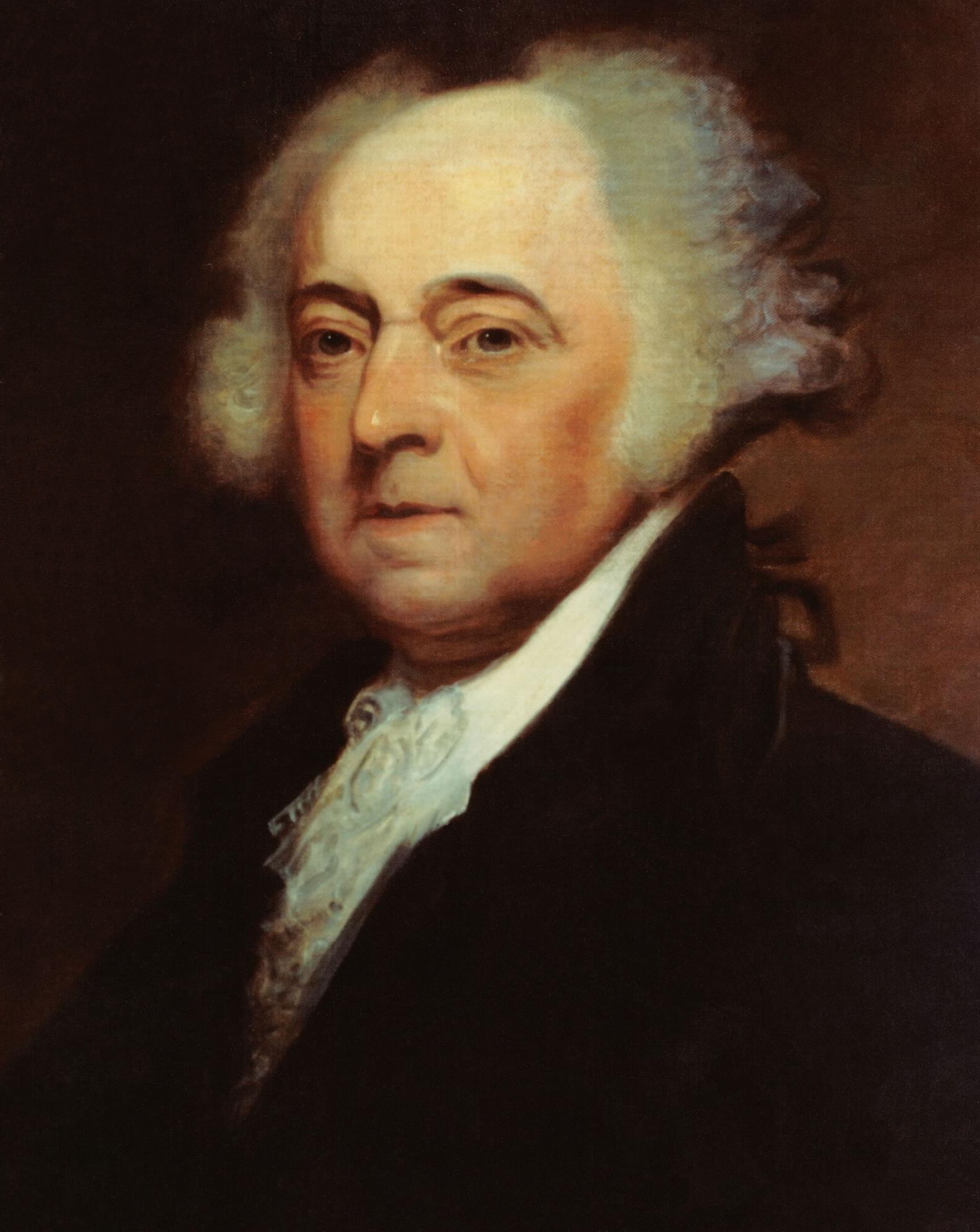
- John Adams (1735-1826), American Founding Father and second president of the United States, First Inaugural Address (1797).
Does it even matter if any of the Founders were Christians?
Here at American Creation we tend to get into discussions about the faith lives of the Founders. Were they Christians? What kind of Christians? Devout? Lax? Orthodox? Unitarian? How can anyone even coherently describe whatever Thomas Jefferson happened to believe at any given moment? This kind of questioning also shows up quite a bit in constitutional law scholarship discussing the First Amendment's religion clauses and the role of faith in public life.
Over at The American Conservative online, writer Paul Gottfried argues that that whole line of questioning is mistaken: Was George Washington a Christian? According to Gottfried's approach the relevant question isn't what did Washington believe? rather it is what kind of social and political order did Washington intend to create? Gottfried has some thoughts on both questions, and his ideas are well worth pondering. I particularly am struck by his framing of the debate about religion and the Founding.
Over at The American Conservative online, writer Paul Gottfried argues that that whole line of questioning is mistaken: Was George Washington a Christian? According to Gottfried's approach the relevant question isn't what did Washington believe? rather it is what kind of social and political order did Washington intend to create? Gottfried has some thoughts on both questions, and his ideas are well worth pondering. I particularly am struck by his framing of the debate about religion and the Founding.
Nothing says Christmas like George Washington's eggnog recipe
Courtesy of the Old Farmer's Almanac online, here is George Washington's very own recipe for eggnog. Be warned, it is heavy on the spirits in keeping with the tastes and customs of the day, and he doesn't specify how many eggs to use. Of course, this means you can adjust the eggs to your own taste and still claim complete colonial authenticity to your recreation of Washington's recipe:
One quart cream, one quart milk, one dozen tablespoons sugar, one pint brandy, 1/2 pint rye whiskey, 1/2 pint Jamaica rum, 1/4 pint sherry—mix liquor first, then separate yolks and whites of eggs, add sugar to beaten yolks, mix well. Add milk and cream, slowly beating. Beat whites of eggs until stiff and fold slowly into mixture. Let set in cool place for several days. Taste frequently.Love that last bit of advice from the Father of Our Country!
Sunday, December 12, 2010
Update
I know I've been less active here. I'm not done with American Creation yet. I'm happy to see Mark taking a more active role and wish more AC bloggers would as well. I know we are all (including yours truly) very busy. I don't have kids (one reason why I can produce so much output). But I do teach overloads every semester (21 credits every semester -- though 9 of them are online, which puts my blog fun right next to my "work").
One challenge I face is that I/we have uncovered quite a bit already. I know just about all of the footnotes that one is likely to see in a typical America's Founding & religion book. Taking it to the next level via for instance, original googlebooks sources can be tedious. And much of the stuff I uncovered on things like the debates on the nature of the Trinity and so on bores a lot of folks.
I'm thinking about taking a lot of the stuff I've uncovered so far and transferring it into some peer reviewed published articles and then eventually into a non-self published book. I'm still searching for my novel angle. But I think it will have something to do with America's Founding political theology thru the lens of dissent and heresy within Christendom.
In the meantime, look for more stuff in the future on late 18th Cen. and early 19th Cen. American unitarianism and universalism and how those heretical movements within Christendom influenced America's Founders.
One challenge I face is that I/we have uncovered quite a bit already. I know just about all of the footnotes that one is likely to see in a typical America's Founding & religion book. Taking it to the next level via for instance, original googlebooks sources can be tedious. And much of the stuff I uncovered on things like the debates on the nature of the Trinity and so on bores a lot of folks.
I'm thinking about taking a lot of the stuff I've uncovered so far and transferring it into some peer reviewed published articles and then eventually into a non-self published book. I'm still searching for my novel angle. But I think it will have something to do with America's Founding political theology thru the lens of dissent and heresy within Christendom.
In the meantime, look for more stuff in the future on late 18th Cen. and early 19th Cen. American unitarianism and universalism and how those heretical movements within Christendom influenced America's Founders.
How Thomas Jefferson Conquered America's Religion
In a sense. From Eve Tushnet. A taste:
Thomas Jefferson’s most radical declaration of independence isn’t his most famous. In 1820 Jefferson created a simplified, reasonable version of the Bible—taking out the miracles, prophecies, claims of Jesus’ divinity, and other weirdness which offended his Deism. Kenda Creasy Dean suggests that mainstream Christianity, in virtually all of its manifestations, has been similarly bowdlerized. Instead of the life-changing, culture-challenging demands of the gospel, Dean argues, American teenagers follow a mutant creed best understood as “Moralistic Therapeutic Deism.” Almost Christian, a popularization of the results of the 2002-05 National Study of Youth and Religion, attempts to help Christian parents, youth pastors, and others who are alarmed at the shakiness and incoherence of most teens’ faith.
The content of that faith is simple and as American as a smile in an airport. The tenets of Moralistic Therapeutic Deism (MTD) include belief in a god who watches over us and orders life on earth, and whose major moral concern is that humans should be nice to one another: “The central goal of life is to be happy and to feel good about oneself.” These kids aren’t hostile to religion; who would kick such a toothless cocker spaniel? Dean argues that adolescents who were able to be articulate and expressive when discussing issues they really cared about suddenly became tongue-tied when the subject of God or religion came up, falling back on phrases such as “I would imagine [God is] a very nice guy.”
Saturday, December 11, 2010
Quote of the day: American independence and the hand of Providence
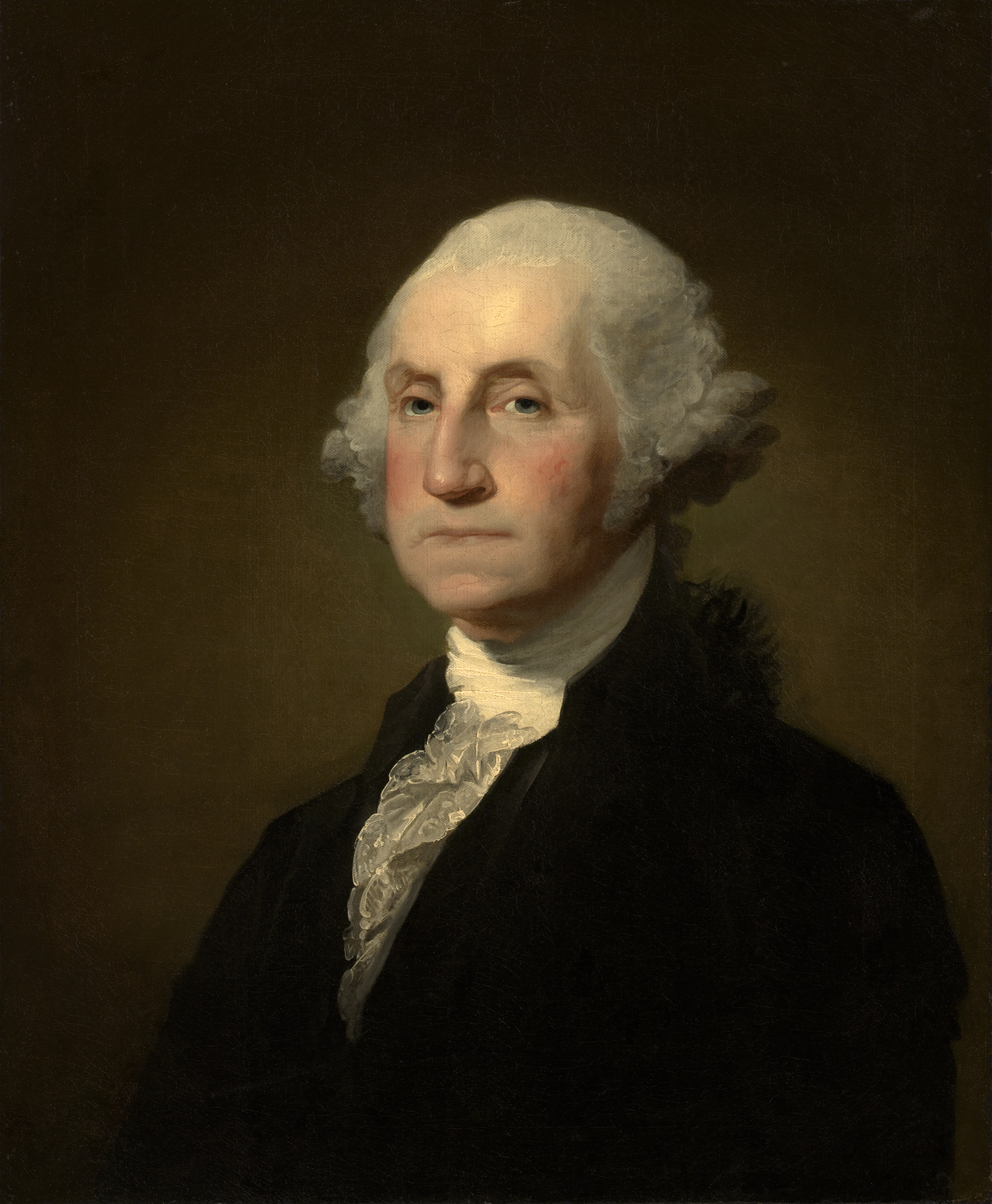
- President George Washington (1732-1799), Father of our country, First Inaugural Address, April 30, 1789.
Wednesday, December 8, 2010
Turley, Palin, GW & SHMG
One of Ray Soller's post from American Creation was referenced by Jonathan Turley here. And Chris Rodda too!
Tuesday, December 7, 2010
Is Randy Barnett's Repeal Amendment un-conservative?
Glenn Reynolds over at Instapundit has a round-up of links addressing Randy Barnett's Repeal Amendment, something that I wrote about recently on this blog. As Reynolds notes, one of the prime objections to Barnett's proposal has some from some of the left-side of the blogosphere who are proposing that there is something un-conservative about amending the Constitution. While it there is no question that a conservative approach to amending the Constitution would stress a prudential restraint in changing our fundamental charter for light reasons, the simple fact is that the Founders themselves thought that the document should be open to amendment -- that's why they put the Amendment Clause in the Constitution to begin with. Article V of the Constitution reads as follows:
George Washington, writing to anti-federalist Patrick Henry after the Constitution had been proposed, argued that the Constitution was imperfect and that the Amendment Clause should be viewed as the imperfect document's saving grace, meriting its adoption:
Washington's statement clearly asserts that the Constitution could be improved upon, and that the Amendment Clause was included to provide a mechanism for correcting its less than perfect elements. And, critically, that the Amendment Clause is what made the imperfect Constitution worthy of adoption. The nation would not be stuck with an imperfect charter, but could, over time, correct its errors.
Thomas Jefferson voiced a strong concern that the Constitution as originally drafted lacked fundamental protections against intrusive federal power. As he wrote to his protege James Madison in 1787, Jefferson objected to the Constitution's lack of critical protections, most notably the following:
Jefferson's remedy for these omissions was a Bill of Rights:
I think that a good case can be made for skepticism regarding Barnett's Repeal Amendment, but the idea that conservatives should oppose it because of some mythical conservative belief in the sacred and hallowed nature of the Constitution is just silly. The Constitution itself contains a mechanism for its Amendment, and the Founders most currently looked to by conservatives explicitly endorsed the idea that the Constitution not only could be amended, it should be amended.
[Cross-posted over at my blog Ordered Liberty.]
The Congress, whenever two thirds of both Houses shall deem it necessary, shall propose Amendments to this Constitution, or, on the Application of the Legislatures of two thirds of the several States, shall call a Convention for proposing Amendments, which, in either Case, shall be valid to all Intents and Purposes, as Part of this Constitution, when ratified by the Legislatures of three fourths of the several States, or by Conventions in three fourths thereof, as the one or the other Mode of Ratification may be proposed by the Congress; Provided that no Amendment which may be made prior to the Year One thousand eight hundred and eight shall in any Manner affect the first and fourth Clauses in the Ninth Section of the first Article; and that no State, without its Consent, shall be deprived of its equal Suffrage in the Senate.And not only did the Founders think that the Constitution should be open to Amendment theoretically, they thought that it should be amended in actuality. Let's take a took at statements from the two American Founders most commonly revered on the American Right currently, George Washington and Thomas Jefferson.
George Washington, writing to anti-federalist Patrick Henry after the Constitution had been proposed, argued that the Constitution was imperfect and that the Amendment Clause should be viewed as the imperfect document's saving grace, meriting its adoption:
I wish the Constitution which is offered, had been made more perfect, but I sincerely believe it is the best that could be obtained at this time. And, as a constitutional door is opened for amendment hereafter, the adoption of it, under the present circumstances of the Union, is in my opinion desirable.George Washington, Letter to Patrick Henry, September 24, 1787, quoted in The Essential Wisdom of the Founding Fathers, edited by Carol Kelly-Gangi (Fall River Press: 2009), pg. 33.
Washington's statement clearly asserts that the Constitution could be improved upon, and that the Amendment Clause was included to provide a mechanism for correcting its less than perfect elements. And, critically, that the Amendment Clause is what made the imperfect Constitution worthy of adoption. The nation would not be stuck with an imperfect charter, but could, over time, correct its errors.
Thomas Jefferson voiced a strong concern that the Constitution as originally drafted lacked fundamental protections against intrusive federal power. As he wrote to his protege James Madison in 1787, Jefferson objected to the Constitution's lack of critical protections, most notably the following:
[O]mission of a bill of rights, providing clearly, and without the aid of sophism, for freedom of religion, freedom of the press, protection against standing armies, restriction of monopolies, the eternal and unremitting force of the habeas corpus laws, and trials by jury, in all matters of fact triable by the law of the land, and not by the laws of nations.Thomas Jefferson, Letter to James Madison, 1787, quoted in The Essential Wisdom of the Founding Fathers, edited by Carol Kelly-Gangi (Fall River Press: 2009), pg. 47.
Jefferson's remedy for these omissions was a Bill of Rights:
I have a right to nothing which another has a right to take away. And Congress will have a right to take away trial by jury in all civil cases. Let me add that a bill of rights is what the people are entitled to against every government one earth, general or particular, and what no just government should refuse or rest on inference.Indeed, Jefferson's belief in the malleability of the Constitution via amendment was one of the lodestars of his constitutional philosophy. While strongly opposed to open-ended judicial construction of the Constitution, Jefferson derided those who thought that the Constitution should not be amended. As he wrote to Samuel Kercheval in 1816,
Some men look to Constitutions with sanctimonious reverence and deem them like the Ark of the Covenant -- to sacred to be touched.Thomas Jefferson, Letter to James Samuel Kercheval, July 12, 1816, quoted in The Essential Wisdom of the Founding Fathers, edited by Carol Kelly-Gangi (Fall River Press: 2009), pg. 47.
I think that a good case can be made for skepticism regarding Barnett's Repeal Amendment, but the idea that conservatives should oppose it because of some mythical conservative belief in the sacred and hallowed nature of the Constitution is just silly. The Constitution itself contains a mechanism for its Amendment, and the Founders most currently looked to by conservatives explicitly endorsed the idea that the Constitution not only could be amended, it should be amended.
[Cross-posted over at my blog Ordered Liberty.]
Quote of the day: God's aid and the rise of America

- Benjamin Franklin (1706-1790), Speech to the Constitutional Convention, 1787, quoted in The Essential Wisdom of the Founding Fathers, edited by Carol Kelly-Grange (Fall River Press: 2009), pg. 33.
[Cross-posted at Culby's Daily Quotebook.]
Liberals and Populism: An Uneasy History
In 1776 Philadelphia, a working-class movement seeking economic equality became key to declaring American independence. Ignored by many liberal and conservative historians alike, and therefore largely forgotten (the only big name involved is Thomas Paine), those populists allied themselves with decidedly un-populist founders like John Adams and Samuel Adams, who favored American independence. Encouraged by the Adamses, a local militia of populist radicals overthrew the anti-independence government of Pennsylvania. That uprising enabled the decisive vote for American independence in Congress on July 2.Then, with independence, the Pennsylvania populists smashed the ancient Whig connection between property and representation — the very principle the war with England was being fought to uphold. The Adamses and the populists had been using each other for separate ends. Suddenly, free white men with no property could not only vote in Pennsylvania, but also (and this really nauseated John Adams) hold elected office. New assemblymen included a weaver and a small farmer. They worked, with some success, to pass anti-monopoly laws, take bank charters back from financiers, issue paper money for foreclosure relief, and tax progressively.
Because they were intent on economic equality, we may want to claim those forgotten 18th-century American populists as liberals. But that’s reading backward. Adams was the period liberal. The populists were, precisely, illiberal. Their politics were inspired by an absolute claim on moral virtue. Many were evangelical Christians and millenialists and they instituted a religious test for holding office. Rejecting free debate and discussion, they shouted down and physically intimidated minority opposition. They exhorted their followers to avoid electing not only the rich but also the educated. This didn’t get into their constitution, but it came up for discussion: limiting by law the amount of property any one person could own.
18th-century American populists’ attitude toward the elite was an inveterate “lock and load” (and they meant it literally). John Adams, for his part, treated them with all the disdain and dismissal that liberals today hand Palin and the rest of the populist right. It’s distressing but true: America became independent in 1776 through a queasy, mutually mistrustful alliance of political convenience between populists and liberals. With some notable exceptions, populists and liberals have been trying to kill each other ever since. Now what?
Monday, December 6, 2010
Not as Straightforward As You Think
WorldNetDaily chronicles a Christian Americanist critique of National Park Services tours.
The pastor in question, Todd Dubord, is quoted as stating the information he is trying to peddle is "'straightforward biography' and not subject to conjecture or private interpretation,..." The problem is the pastor's Christian America spin is not as straightforward as he is trying sell.
What follows is an email I sent to the author of the WND piece:
I found Dubord's church's statement of doctrine here.
The question I pose to Rev. Dubord is how do you call these men "Christians" if many of them listed (Jefferson, J. Adams, Franklin, Robert Treat Paine, and others) disagreed with a great deal of these doctrines which your church endorses? Because they called themselves "Christian?" Is that the standard?
Listen, I understand the pastor's objection to certain prevailing ideas that the NPS may be parroting (some of the things the NPS is reported to have stated, on the other hand, are perfectly defensible -- for instance, just because the FFs attended a church doesn't necessarily mean they believed in the church's doctrines; or the FFs and religion issue is something, the finer details of which, folks have to research on their own and draw their own conclusions, because things can get complicated). But he and his don't get to write the tale either.
I am available, by the way, to help write a consensus oriented narrative that both sides could agree on.
But, if there is a solution to this culture war issue, that's it: Straightforward consensus oriented lowest common denominator facts that all sides can agree on. And the ME Bradford footnote is not one of them.
For Ben Franklin it would be something like:
1. Was affiliated with the Anglican and Presbyterian churches (even though he was one of Bradford's Deists!).
2. Believed in an active personal God, sometimes quoted the Bible as if he believed at least parts of it as legitimately revealed (i.e., speech at the Constitutional Convention).
3. In one letter wrote there are certain things in the Old Testament impossible to have been given by divine inspiration (i.e., didn't believe the Bible infallible).
4. In one letter doubted Jesus divinity while praising him as the greatest moral teacher.
5. Thought works were more important than faith for salvation.
6. Called himself a Deist at one point but then backtracked. Seemed comfortable with the "rational Christians" who doubted or denied Jesus' divinity (Joseph Priestley and Richard Price, the dissenters in England to whom he alluded in his letter to Ezra Stiles that doubted Jesus' divinity).
The pastor in question, Todd Dubord, is quoted as stating the information he is trying to peddle is "'straightforward biography' and not subject to conjecture or private interpretation,..." The problem is the pastor's Christian America spin is not as straightforward as he is trying sell.
What follows is an email I sent to the author of the WND piece:
Bob,
The pastor's history seems as bad as the tour guides. ME Bradford didn't "find 50, perhaps 52, of the 55 delegates to the Constitutional Convention professed to be orthodox, Trinitarian believers who were in good standing at various Christian churches." Rather he found they had some kind of affiliation with those churches. Bradford's figure is worthless. All 55 members, including his 3 Deists, had those affiliations. The problem is one could be affiliated with said churches for social network reasons and NOT believe in their official creeds and doctrines. Thomas Jefferson was Anglican and disbelieved in every single tenet of orthodox Christianity!
Likewise "Samuel Adams, Josiah Bartlett, Benjamin Franklin, Elbridge Gerry, John Hancock, Samuel Huntington, Thomas Jefferson, Thomas McKean, John Morton, Robert Treat Paine, Benjamin Rush, Roger Sherman, Richard Stockton, Thomas Stone" didn't all practice the same kind of Christianity and arguably half on that list wouldn't qualify as "Christians" according to "orthodox" standards. If Jefferson and Franklin qualify as "Christians" you are setting the bar pretty low for who gets to be a "Christian."
Feel free to forward this to Mr. DuBord.
Regards,
Jon Rowe
I found Dubord's church's statement of doctrine here.
The question I pose to Rev. Dubord is how do you call these men "Christians" if many of them listed (Jefferson, J. Adams, Franklin, Robert Treat Paine, and others) disagreed with a great deal of these doctrines which your church endorses? Because they called themselves "Christian?" Is that the standard?
Listen, I understand the pastor's objection to certain prevailing ideas that the NPS may be parroting (some of the things the NPS is reported to have stated, on the other hand, are perfectly defensible -- for instance, just because the FFs attended a church doesn't necessarily mean they believed in the church's doctrines; or the FFs and religion issue is something, the finer details of which, folks have to research on their own and draw their own conclusions, because things can get complicated). But he and his don't get to write the tale either.
I am available, by the way, to help write a consensus oriented narrative that both sides could agree on.
But, if there is a solution to this culture war issue, that's it: Straightforward consensus oriented lowest common denominator facts that all sides can agree on. And the ME Bradford footnote is not one of them.
For Ben Franklin it would be something like:
1. Was affiliated with the Anglican and Presbyterian churches (even though he was one of Bradford's Deists!).
2. Believed in an active personal God, sometimes quoted the Bible as if he believed at least parts of it as legitimately revealed (i.e., speech at the Constitutional Convention).
3. In one letter wrote there are certain things in the Old Testament impossible to have been given by divine inspiration (i.e., didn't believe the Bible infallible).
4. In one letter doubted Jesus divinity while praising him as the greatest moral teacher.
5. Thought works were more important than faith for salvation.
6. Called himself a Deist at one point but then backtracked. Seemed comfortable with the "rational Christians" who doubted or denied Jesus' divinity (Joseph Priestley and Richard Price, the dissenters in England to whom he alluded in his letter to Ezra Stiles that doubted Jesus' divinity).
Sunday, December 5, 2010
Waldron on Issues with Imago Dei
Jeremy Waldron is probably the foremost authority on the need to give human rights a theological grounding. This paper explores issues with using "Imago Dei" to ground human rights.
A taste:
It's surprising how many otherwise informed and intelligent folks are so quick to conflate their theological desires with America's Founding Fathers. The syllogism works something like this:
1. The Bible/Christian Religion/Calvinism is true;
2. Therefore I am a reformed Protestant in that sense;
3. The American Founding was a great event, one in which I'd like to believe my personal religious tradition gave us;
4. Therefore, the political-theological basis for the American Founding must have been the same as Calvinism (or whatever my religion is).
This syllogism works with anyone's personal religion. Though the further one's personal religion from that of the actual American Founding, the more of a stretch it becomes.
For instance, beginning with "Hinduism is true" results in an especially absurd syllogism. But ultimately, the entire syllogism, no matter what one begins with is an error. As I've said before, the political theology of the American Founding offers a little for everyone (including the Hindus!) and a little for no one.
If one doesn't take one's personal religion that seriously, the syllogism seems a harmless error. The more seriously one takes one's religion and values it over politics, the more dangerous the syllogism. America's Founders could have been wrong on how they understood theology and how it ought to apply to politics. If they were wrong on Romans 13 (which there is good reason to believe, from a strict literal textual interpretation, they were) the Bible says, "they that resist shall receive to themselves damnation."
It's only your soul that is on the line. Don't let America's Founders, and your desire to claim them, confuse you into making a soul damning error.
A taste:
Second, there are questions about what imago Dei means in the light of doctrine of the fall into sin. What is the relation between imago Dei and our fallen sinful nature? What can human rights theory do with Calvin’s doctrine that the image of God in us is now but a “relic” or Martin Luther’s teaching that since the Fall we are more “like” the devil than “like” or “in the image of” God? When we use this doctrine in the context of human rights, are we committing ourselves to saying that Luther and Calvin were wrong?
It's surprising how many otherwise informed and intelligent folks are so quick to conflate their theological desires with America's Founding Fathers. The syllogism works something like this:
1. The Bible/Christian Religion/Calvinism is true;
2. Therefore I am a reformed Protestant in that sense;
3. The American Founding was a great event, one in which I'd like to believe my personal religious tradition gave us;
4. Therefore, the political-theological basis for the American Founding must have been the same as Calvinism (or whatever my religion is).
This syllogism works with anyone's personal religion. Though the further one's personal religion from that of the actual American Founding, the more of a stretch it becomes.
For instance, beginning with "Hinduism is true" results in an especially absurd syllogism. But ultimately, the entire syllogism, no matter what one begins with is an error. As I've said before, the political theology of the American Founding offers a little for everyone (including the Hindus!) and a little for no one.
If one doesn't take one's personal religion that seriously, the syllogism seems a harmless error. The more seriously one takes one's religion and values it over politics, the more dangerous the syllogism. America's Founders could have been wrong on how they understood theology and how it ought to apply to politics. If they were wrong on Romans 13 (which there is good reason to believe, from a strict literal textual interpretation, they were) the Bible says, "they that resist shall receive to themselves damnation."
It's only your soul that is on the line. Don't let America's Founders, and your desire to claim them, confuse you into making a soul damning error.
Friday, December 3, 2010
Cracking the American Civil Religion
I did it in a comment at First Things here. I wrote:
The American Civil Religion is actually somewhere between “all faiths are equally valid” and “Christ is the only way, all other faiths are false.”
It holds that all faiths are VALID paths to God, but that Christianity is the quickest path up the mountain of salvation because of the superiority of Jesus of Nazareth’s moral teachings. As it were, Jesus of Nazareth was not (knowably) God Incarnate, 2nd Person in the Trinity. Rather, the greatest moral teacher man had ever known.
Subscribe to:
Posts (Atom)