Sunday, May 2, 2010

Lets Stay On Topic

I appreciate all the Jon Rowe wrote in response to my last post but I think much of it is getting us off topic. The topic is whether the Declaration of Independence was a document of interpositon or not. Jon Rowe stated his case that it was not and called his main witness, John Calvin. My last post clearly shows that Calvin is not a reliable witness in this case because his own words contradict themselves.


Jon's response to this was:

"KOI claims the Othniel example a contradiction in Calvin's writings. Personally, I don't see it. Calvin teaches God sometimes raises up individuals to deliver from tyranny. AND that sometimes the means those individuals use is righteous, sometimes sinful. Likewise, this accords with Gregg Frazer's understanding that, yes, it was God's will that the American Revolution resulted as it did. But that George Washington et al. used SINFUL MEANS to accomplish that end. Indeed, Frazer and Calvin both teach God sometimes uses the sinful means of man to accomplish his will. I can't tell from Calvin's context whether he thought Othniel was one righteously raised up or rather God using "the fury of [a man] who ha[d] other thoughts and other aims," to accomplish His ends. But in any event, there is no apparent contradiction."

First things first. It is abudantly clear in Calvin's text that Othniel was "righteously" raised up.  Here is Calvin again:

"At one time he raises up manifest avengers from among his own servants and gives them his command to punish accursed tyranny and deliver his people from calamity when they are unjustly oppressed; at another time he employs, for this purpose, the fury of men who have other thoughts and other aims. Thus he rescued his people Israel from the tyranny of Pharaoh by Moses; from the violence of Chusa, king of Syria, by Othniel; and from other bondage by other kings or judges. Thus he tamed the pride of Tyre by the Egyptians; the insolence of the Egyptians by the Assyrians; the ferocity of the Assyrians by the Chaldeans; the confidence of Babylon by the Medes and Persians"

Jon does a great job with studying the history associated with the founding and religion. But I have cautioned him more than once to make sure he reads and understands the biblical stories that are mentioned for himself and not just read what other's write about it. If you know the stories that Calvin cites here it is clear that Othniel is paired up with Moses as those who were "commanded to punish tyranny." The other stories below were of one pagan power against another and illustrate the ill intent of a group or individual being used of God to bring about His will that Frazer talks about.  This is clear and undisputable if one understands these stories from the bible.

With that stated, if Calvin acknowledges that Othniel's actions "to punish tyranny" were valid he thus endorses the taking up of arms against a standing king in one breath and in the next limits one's actions against a tyrant king to what Frazer states is something akin to our modern impeachment. His biblical example does not mesh with his historical examples. It is that simple. All the rest of the talk about hermeneutics and revelation is just smoke and mirrors.  The simple fact is that Mr. Rowe's chief witness has been discredited and thus his case against the Declaration of Independence being a document of interposition should be dismissed.  That is unless he has other witnesses.

As for me, I call John Ponet to the stand...

Why John Adams is important

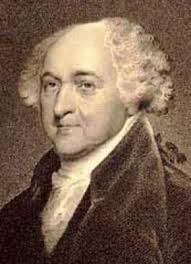
A little while ago I posted some thoughts on the men I thought were the top 4 American Founders.  One of those men was John Adams, and my choice of Adams resulted in some puzzlement.  Why Adams?  Well, I was going to write up a big blog post on my own summarizing why I think that Adams is probably the second most important American founder, but I found a very concise and complete statement by historian John Patrick Diggins, and I thought that it would be a bit more decisive coming from him rather than me:
America's second president, John Adams, was the first political leader who had to face democratic politics as we know it today, whereas his predecessor, George Washington, enjoyed an unchallenged charismatic authority as the glorious hero of the Revolution.  But what Washington won on the battlefield as a general, Adams won at the conference table as a diplomat:  a vital loan that helped finance the Revolution and the favorable peace terms of the Treaty of Paris in 1783.  As president, Adams dealt with international relations, civil liberties, and domestic rebellion with a keen sense of power, fairness, and justice.  He had a better grasp of where America was heading than did Thomas Jefferson, and had it not been for the political institutions Adams defended -- a strong executive, the Supreme Court, the Senate, the military -- America's democratic ideals would have had no means of realization.  This is Adam's legacy.
John Patrick Diggins, John Adams (American Presidents Series, vol. 2, Times Books:  2003).

I would also add my original observation that Adams was the first president in American history to lose a re-election bid and retire peacefully to his home.  And being first matters.

Some Footnotes on Frazer v. KOI on the Absoluteness of Submission to Rulers

In my last post, I pointed to this post (and the thread below it) where I think Dr. Frazer properly answered all of KOI's claims about the Bible and its absolute command on submission to government, no matter how potentially tyrannical. Again that post and the comments section are especially informative.

I note two claims of KOI's in that thread and question their logical soundness and the assumptions that he and more orthodox biblicists might have when discussing them.

In the first, KOI writes:

If God uses special deliverers to rebel against the authorities as Othniel did then is God not endorsing rebellion? Your original position was that this was a sinful action that God used. ...

It seems that you are stating that all "rebellion" is wrong except when God tells someone to do it. That is inconsistent.


Except according to orthodox biblical hermeneutics, it isn't inconsistent. By way of analogy, incest. Orthodox biblicists believe that brother sister incest is, in the present era, absolutely prohibited. Yet, many of these same biblicists believe in a literal Adam/Eve creation story. As it were, by logicality necessity Cain and Abel either procreated with their mother Eve or their sisters (or some other close relatives, who by logical necessity, would have had to have engaged in incest that the Bible, as a current rule, categorically prohibits).

Now, orthodox biblicists can rationally explain why incest was okay in Genesis, but not shortly thereafter, having to do with the more degenerated genetic nature of Adam and Eve's offspring, the damage to our genes the Fall took on said subsequent generations (i.e., by the time of Moses). And if B/S incest marriages were permitted shortly thereafter the Fall, it would greatly damage the gene pool in a way that Cain and Abel's procreation with their close relatives did not.

But it remains a categorical moral prohibition -- brother/sister incest marriages -- could get a special exception by God for God's own particular reasons and then subsequently be absolutely prohibited.

Secondly, KOI wrote:

I disagree over how you use revelation. ... I believe we can receive specific revelation from God now. I think Washington probably did. ...


This is also very important. Orthodox biblicists believe that revelation stopped with the final book of the biblical canon. Therefore, accordingly, George Washington could NOT, as a matter of TRUTH, have received revelation from God excepting him as Othniel may have (or, accordingly, Othniel may have sinned like Lot when he had sex with his daughters, again to use a biblical example of God using man's sin to validate His will).

Yet, if God continues to reveal, leading to all sorts of potential possible books or additions to the biblical canon (like Mormonism), KOI has a point.

The premise matters tremendously; it is key.

King Of Ireland, The Problem of Othniel, and Biblical Hermeneutics

At American Creation, my co-blogger King of Ireland has a good post that responds to me and Dr. Gregg Frazer and puts much on the table.

Let me sort some of this out. First there are differences among the personal religious convictions of Jon Rowe, Gregg Frazer, Joe Winpisinger (aka KOI) and John Calvin. Further, the Bible says what it says regardless.

We need to keep that in mind because I see KOI sometimes improperly conflating these things.

Gregg Frazer's notion that submission to government is absolute (even if it's Hitler or Stalin), obedience is conditioned on not sinning against God while doing your best to obey the civil magistrate, is NOT derived from John Calvin's authority, but from the Bible's alone (or, if you will, how Dr. Frazer understands the Bible as the inerrant infallible Word of God).

Likewise, Calvin asserted his teachings were derived from the Bible alone. And indeed, what Calvin believes and what Frazer believes sometimes strikingly parallel. But to (supposedly) find a flaw or contradiction in Calvin's understanding of the Bible is not to find a flaw in Frazer's. Indeed, Dr. Frazer believes in only four of five of Calvin's points. And, surprise, it's because Frazer says the Bible disagrees with Calvin's notion of limited atonement (the L in Calvin's TULIP) that Frazer rejects it.

On a personal note, I am an open minded, hopeful agnostic with deistic, theistic and universalistic tendencies. My rational mind says I don't know if there is a God. My heart says everyone gets into Heaven eventually. Who knows, maybe that temporary punishment for the sins that we do on Earth requires subsequent reincarnation where bad shit happens to you (the question, "what did I do in a past life...?").

My mind is only so open, however. It's not open to Zeus, it's not open to the idea that those 19 highjackers did God's will and were rewarded with virgins and it's not open to the idea that human beings, as a result of the barest or original sin, (eating an apple when God said not to, or coveting, stealing a candy bar) deserve either the horrors that many humans experience on earth (i.e., the holocaust, childhood cancer) or eternal misery.

The first idea (Zeus) is ridiculous -- something in which virtually no one currently believes -- though the last two notions have more than a nominal number of believers. But they are just wrong. They are wrong because I know they are wrong. I don't care what you think the Bible or Koran says. I can and have formed logical arguments as to why they are wrong and sharp minded apologists for either notion (eternal miserable damnation as a default desert for the original or barest sin or Allah sending 19 highjackers into the WTC and rewarding them with virgins) have rationalized why those notions are just and true.

But in the end, they are just plain wrong and I am going to either 1) reject the authenticity of "revelation" that teaches otherwise, or 2) explain why such revelation, properly understood, doesn't teach these things. [Keep 1) and 2) as rationals in mind because they relate to the overarching theme of this post.]

And indeed, some/many Muslims who believe the Koran God's holy and revealed word rationally and vociferously reject such interpretations of the Koran. Just like "Bible believing Christians," some unitarian like Charles Chauncy and John Adams, some Trinitarian like John Murray and Benjamin Rush argue, God's Word in the Bible, properly understood, does not teach eternal damnation, rather temporary punishment, universal salvation. [Interestingly, many early church fathers believed this as well.]

Though, I can't say that I've found evidence that Rush, Murray and Chauncy simply wrote off parts of the biblical canon as "interpolations." John Adams (and Franklin, and of course, we know Jefferson) however did. To Jefferson, most of the Bible was "interpolation," hence fit for his cutting room floor.

One beef some readers -- American Creation's Tom Van Dyke notably -- have with Dr. Frazer's interpretation of America's Founding political theology, is it stands for "reason trumps revelation" -- or man's reason judging what parts of scripture are not true and jettisoning them. Clearly, J. Adams, Jefferson and Franklin did this and said they did.

But did Rush, Chauncy, Mayhew, and others? Well, I can't tell if they said they did like Jefferson, J. Adams and Franklin. But what they did, among other things, was reject the Trinity and eternal damnation. And, the logic goes, since the Bible clearly teaches both those doctrines, anyone who rejects them subjects the Bible to man's razor of reason and edits from it like what Jefferson knew he did (regardless of whether Mayhew, Chauncy, et al. consciously did this).

I don't have personal issues with Romans 13, because like Jefferson, I don't believe St. Paul's words were God's (the Holy Spirit writing inerrant, infallible scripture through Paul's hand) but rather were Paul's and Paul's alone.

However, when I do approach this issue -- biblical hermeneutics -- as a thought experiment, I act as though the Bible were inerrant and infallible. As such, all of the competing texts have to be harmonized so as to not contradict one another (if that is indeed possible).

One argument against the Bible as Truth is that it contradicts itself more than hundreds, but thousands, if not tens or hundreds of thousands of times. I used to argue this. But I discovered it a half truth. It is indisputable that the Bible appears, on the surface, to contradict itself many times over. But a good, smart biblicist can "smooth out" the apparent contradictions.

We are left with what the Bible says, plus a hermeneutical explanation of why it doesn't contradict itself. And that results in Sola Scriptura Protestantism, with thousands of [the Bible + why it doesn't contradict itself], from smart theologians, that contradict one another.

For instance, orthodox Trinitarian evangelicals who believe the Bible inerrant, infallible, argue over, among other things, every single letter of Calvin's TULIP. Outside of historic orthodoxy, biblicists argue the Trinity, Incarnation, Atonement on biblical grounds alone.

Knowing this, I better understood the Roman Catholic case for Papal Infallibility. It's not that the Pope is in fact infallible, but rather that someone has to have the final say on what the Bible means or else the Church is subject to Sola Scriptura Schizophrenia, which in my opinion, accurately describes how Protestantism was destined to be from Luther onwards.

Likewise, the Supreme Court says "we are not final because we are infallible, rather we are infallible because we are final." That is, someone has to have the final say or else we get thousands of schizophrenic, contradictory results of what an inerrant, infallible Bible (or constitution) really says. Such is Protestantism.

I outlined all this because it relates to this specific discussion on Romans 13 and revolt, as well as the broader discussion I've engaged in over the past few years on America's Founding political theology.

But back to the specifics on Calvin, Romans 13 and resisting the civil magistrates. Calvin's teachings seem quite clear that lower magistrates have the privilege of removing a tyrannical king only pursuant to some legally recognized mechanism. The examples he gave were akin to Congress impeaching a President, not revolt against tyrants.

Elsewhere in the same passage in Book IV, Chapter 20 of Calvin's "Institutes of the Christian Religion" Calvin notes:

Herein is the goodness, power, and providence of God wondrously displayed. At one time he raises up manifest avengers from among his own servants, and gives them his command to punish accursed tyranny, and deliver his people from calamity when they are unjustly oppressed; at another time he employs, for this purpose, the fury of men who have other thoughts and other aims. Thus he rescued his people Israel from the tyranny of Pharaoh by Moses; from the violence of Chusa, king of Syria, by Othniel; and from other bondage by other kings or judges.


KOI claims the Othniel example a contradiction in Calvin's writings. Personally, I don't see it. Calvin teaches God sometimes raises up individuals to deliver from tyranny. AND that sometimes the means those individuals use is righteous, sometimes sinful. Likewise, this accords with Gregg Frazer's understanding that, yes, it was God's will that the American Revolution resulted as it did. But that George Washington et al. used SINFUL MEANS to accomplish that end. Indeed, Frazer and Calvin both teach God sometimes uses the sinful means of man to accomplish his will. I can't tell from Calvin's context whether he thought Othniel was one righteously raised up or rather God using "the fury of [a man] who ha[d] other thoughts and other aims," to accomplish His ends. But in any event, there is no apparent contradiction.

And, contrary to KOI's assertion that Dr. Frazer refuses to answer his Othniel claim, Gregg has done so repeatedly. For instance here when Dr. Frazer wrote:

... [T]here are plenty of tyrants in the history of Israel after Saul who are not removed despite pleas from the people. If it’s as “simple” as you’ve made it, God should have interceded on behalf of all of the others. Also, God does not only recognize kings of Israel (His people) who’ve gone through a special anointing ceremony to be His “anointed.” Romans 13 says that all rulers are “ministers of God” and “servants of God.” And God refers to pagan civil rulers as His “servants,” His “shepherds,” and His “anointed” (see e.g. Jeremiah 25:9; 27:6; 43:10; Isaiah 44:28; 45:1). So, what applied to David re Saul applies to all civil rulers AS FAR AS TAKING OUR OWN INITIATIVE IS CONCERNED. GOD may remove a ruler or even raise up a deliverer to remove a ruler or use the sinful rebellion of people to remove a ruler – but we have no authority or permission to do so on our own initiative. It isn’t up to us to decide, but rather God. You talk of having “a time to have the Spirit come upon you” -- as if that were up to you to generate. As if you were in control of the Spirit of God!!! God can send His Spirit; God can raise up a deliverer; God can determine that it’s time for a tyrant to fall – but that doesn’t mean we can or that we can simply decide that we are such deliverers!

You say that “’appointed’ authority can come under judgment themselves and their former slaves can even be the ones to take them out.” True. What is NOT true is the notion that WE get to decide when that time has arrived or that, contrary to clear command from God, we can do it our own way on our own timetable. You ask why the Declaration of Independence can’t be an example of this – BECAUSE THERE WAS NO REVELATION TO THE AMERICAN REVOLUTIONARIES TO TRUMP THE BIBLICAL COMMAND NOT TO REBEL. God did not reveal to them that this was an Othniel situation and He did not reveal to them that He had appointed an Othniel to deliver them! Othniel didn’t decide on his own – He received revelation from God.


Likewise Frazer's orthodox understanding of the Bible teaches God's actual revelation stopped with St. John's Book of Revelation. Therefore, whereas Othniel received revelation, George Washington, did not because, accordingly, he could not have. Unless that is you are a Mormon and you believe revelation continues after the end of the biblical canon.

Finally, let me said a word on what I think motivates KOI and many other Christians who refuse to accept Dr. Frazer's understanding of the Bible. It parallels my 1-2 explanation for why I reject eternal damnation (especially if eternal damnation is as bad as some claim). I wrote it's wrong because I know it's wrong. And therefore, I either 1) reject the authenticity of "revelation" that teaches otherwise, or 2) explain why such revelation, properly understood, doesn't teach these things.

In other words, it's an a-priori. On this Romans 13 issue, the reaction in the mind of the Bible believer is NOT "what does the Bible really teach, putting all of the competing texts together so they don't contradict one another?" but rather, "that interpretation CAN'T be true, because it would mean I couldn't rebel against Stalin or Hitler."

And the believer is therefore left with two options: Either disregard as authentic revelation those texts of the Bible that contradict your a-priori as false revelation (hence Adams' notion of interpolations in the Bible or Jefferson's cutting room floor where everything St. Paul said ended up) OR try to explain why the Bible, properly understood, cannot possibly teach this, with the outcome already determined.

King of Ireland in this sense, operates entirely in the tradition of America's Founders who argued rebellion against tyrants is obedience to God, regardless of what you think the Bible says. Regardless of what verses and chapters of the Bible you could throw at them, the Whigs' minds were already made up on the matter.

Whether this constitutes "reason trumping revelation" I'll let the readers judge.

Saturday, May 1, 2010

Book review: The Americanization of Benjamin Franklin

"Of making many books," the Hebrew Bible warns us, "there is no end"  (Ecclesiastes 12.12b, Revised Standard Version).  In the last 10 or 15 years, that seems to be the case regarding biographies of Benjamin Franklin.  Top tier American historians like Brand and Morgan have solid overviews of Franklin's life and work, and popular writers like Walter Isaacson have written books on him as well.  Editions of Franklin's Autobiography are numerous.  One recent biography from the last 10 years stands out, though, both in its tone and its approach to Franklin: Gordon Wood's book The Americanization of Benjamin Franklin.  A comprehensive yet reasonably sized volume, Wood's book recounts Franklin's life through the lens of his shift from a dedicated proponent of the British Empire to one of the pivotal Founding Fathers of the American Republic.  Wood uses Franklin's intellectual and emotional journey from loyalist to revolutionary as a template for understanding Franklin's life and accomplishments.  It is a fascinating way for Wood to approach his subject.

Wood looks at Franklin's intellectual history through the prism of Franklin's various life experiences.  From his extremely humble origins as a workingman printer's apprentice to the heights he reached as a diplomat and founding father, Franklin's shifts of opinion, of conviction and of purpose are not only well-documented by Wood, but perhaps most importantly, well-explained.  Franklin is a remarkably difficult figure to understand, for the most part.  Part of this is due to his own practice of not revealing his own inner thoughts, part of it is due to the remarkable length of his career, a career that saw massive social, economic and political changes in Pennsylvania, the British Empire, and the American nation.  Wood's approach to Franklin helps to clarify and make sense of much of Franklin's work, both as a businessman, diplomat and politician.  While not every mystery about Franklin is resolved via Wood's approach, it does shed a great deal of light on the consistent aspects of Franklin's ideas, ideals and beliefs over time.

Some examples of the topics that Wood explores and brings light to are:  
  • Franklin's early efforts -- prior to the French and Indian War -- to facilitate the creation of a Union of the English colonies in the New World;
  • Franklin's devotion of the British Empire, grounded in a belief that the American colonists were full participants and members of that Empire;
  • Franklin's loyalty to the King, and his happiness at the elevation of George III to the throne of the Empire;
  • Franklin's growing disillusionment with the King and the Empire as it became increasingly clear that the British would never consent to the full equality of the colonists within the Empire;
  • Franklin's diplomatic efforts in France as an outgrowth of his love of Europe.
In addressing all of these topics (and several more, it should be said), Wood examines the consistencies in Franklin's thought over time, as well as the events that caused Franklin to change his views as circumstances around him changed.  What Wood really makes clear is that most of Franklin's fundamental principles remained constant throughout his life.  While Franklin was fluid when it came to the means and methods that he employed to achieve the realization of those principles, the principles themselves remained remarkable stable over a long career. In fact, much of the value of Franklin's career as a teaching tool revolves around his willingness to be flexible in the methods he used to pursue his goals. 

In addition to exploring Franklin's life, Wood also devotes space to exploring Franklin's reputation, both during Franklin's own life but also after Franklin's death. 

This is one of the most insightful and helpful books about Franklin that I've read in quite some time -- it may in fact be the best single-volume book about Franklin available in English.  That is not to say that the book is perfect.  Wood spends relatively little time discussing Franklin's religious beliefs and his discussion of Franklin's troubled family life is uneven and lacks the kind of revelatory insight that Wood brings to bear on Franklin's professional history. 

That said, Wood's biography of Franklin is top notch and well worth a read.  As the lazy days of summer appear on the horizon, this would be a good book to have as one plans a July beach vacation or August bank holiday.

Calvin, Interposition, and "the Problem of Othniel"

With all the talk about the Arizona law and state protests against healthcare reform it is important to trace where many of the arguments for interposition originated:

A while back, Jon Rowe replied to my post that claimed that the Declaration of Independence was a document of interposition by stating: "The DOI is NOT a Document of Interposition." He lays out the heart of his and Dr. Gregg Frazer's case for Christianity "properly understood" with the following:

"To Calvin, the Bible categorically forbids revolt. No exceptions. Calvin did discuss the ability of intermediate magistrates to interpose and remove a tyrannical King; but he stressed it must be done pursuant to some positive legal mechanism, like the Congress impeaching the President pursuant to the provisions in the US Constitution. Again, revolt is still forbidden. Therefore if the Continental Congress could make the argument, which they seemingly did in parts of the DOI, that King George and Parliament were violating British law AND if there were some recognized legal method under British law for declaring independence, perhaps what the FFs did could "fit" with such a notion of "interposition."

The problem with this argument is the, "AND if there were some recognized legal method under British law for declaring independence, perhaps what the FF's did could fit with such a notion as interposition." This quote is grounded in John Calvin's narrow view of what qualifies as a valid form of interposition. The problem is that Calvin is not a reliable source on this topic because his own words on resistance to tyranny contradict themselves. With that said, I think it would be helpful to examine the writings of Calvin to see why his definition of what is a valid reponse to tyranny is not Christianity "properly understood." 

In Institutes on the Christian Religion Book Four Chapter 20, Calvin emphatically endorses the idea that government is instituted by God. Frazer and Rowe are also correct that Calvin exhorts people to submit to good and evil rulers alike. He then goes on to say that when one finds himself under the rule of a tyrant his first assumption should be that he is under God's curse. Here is Calvin:

"But it we have respect to the word of God, it will lead us farther, and make us subject not only to the authority of those princes who honestly and faithfully perform their duty toward us, but all princes, by whatever means they have so become, although there is nothing they less perform than the duty of princes. For though the Lord declares that ruler to maintain our safety is the highest gift of his beneficence, and prescribes to rulers themselves their proper sphere, he at the same time declares, that of whatever description they may be, they derive their power from none but him. Those, indeed, who rule for the public good, are true examples and specimens of big beneficence, while those who domineer unjustly and tyrannically are raised up by him to punish the people for their iniquity. Still all alike possess that sacred majesty with which he has invested lawful power.  I will not proceed further without subjoining some distinct passages to this effect. We need not labour to prove that an impious king is a mark of the Lord's anger, since I presume no one will deny it, and that this is not less true of a king than of a robber who plunders your goods, an adulterer who defiles your bed, and an assassin who aims at your life, since all such calamities are classed by Scripture among the curses of God."

Calvin then goes on to bring some balance to the discussion and acknowledges that oppression is not always the curse of God. He allows that oppression often occurs when kings violate the God given responsibillities that go along with their delegated authority.  He also cites examples of both lawful and unlawful exceptions that allow for resistance to tyrants. Here is Calvin again:

"Wherefore, if we are cruelly tormented by a savage, if we are rapaciously pillaged by an avaricious or luxurious, if we are neglected by a sluggish, if, in short, we are persecuted for righteousness' sake by an impious and sacrilegious prince, let us first call up the remembrance of our faults, which doubtless the Lord is chastising by such scourges. In this way humility will curb our impatience. And let us reflect that it belongs not to us to cure these evils, that all that remains for us is to implore the help of the Lord, in whose hands are the hearts of kings, and inclinations of kingdoms (Prov. 21:1). "God standeth in the congregation of the mighty; he judgeth among the gods." (Ps. 82:1). Before his face shall fall and be crushed all kings and judges of the earth, who have not kissed his anointed, who have enacted unjust laws to oppress the poor in judgement, and do violence to the cause of the humble, to make widows a prey, and plunder the fatherless Herein is the goodness, power, and providence of God wondrously displayed. At one time he raises up manifest avengers from among his own servants and gives them his command to punish accursed tyranny and deliver his people from calamity when they are unjustly oppressed; at another time he employs, for this purpose, the fury of men who have other thoughts and other aims. Thus he rescued his people Israel from the tyranny of Pharaoh by Moses; from the violence of Chusa, king of Syria, by Othniel; and from other bondage by other kings or judges. Thus he tamed the pride of Tyre by the Egyptians; the insolence of the Egyptians by the Assyrians; the ferocity of the Assyrians by the Chaldeans; the confidence of Babylon by the Medes and Persians, - Cyrus having previously subdued the Medes, while the ingratitude of the kings of Judah and Israel, and their impious contumacy after all his kindness, he subdued and punished, - at one time by the Assyrians, at another by the Babylonians. All these things however were not done in the same way. The former class of deliverers being brought forward by the lawful call of God to perform such deeds, when they took up arms against kings, did not at all violate that majesty with which kings are invested by divine appointment, but armed from heaven, they, by a greater power, curbed a less, just as kings may lawfully punish their own satraps. The latter class, though they were directed by the hand of God, as seemed to him good, and did his work without knowing it, had nought but evil in their thoughts."
 
Later, Calvin adds that one should not rebel against unjust tyranny but should look to God for his deliverance. He then goes on to the say that he is speaking only to private men and begins to expound on the impeachment-like exception given to lower magistrates: 
 
"But whatever may be thought of the acts of the men themselves, the Lord by their means equally executed his own work, when he broke the bloody sceptres of insolent kings, and overthrew their intolerable dominations. Let princes hear and be afraid; but let us at the same time guard most carefully against spurning or violating the venerable and majestic authority of rulers, an authority which God has sanctioned by the surest edicts, although those invested with it should be most unworthy of it, and, as far as in them lies, pollute it by their iniquity. Although the Lord takes vengeance on unbridled domination, let us not therefore suppose that that vengeance is committed to us, to whom no command has been given but to obey and suffer. I speak only of private men. For when popular magistrates have been appointed to curb the tyranny of kings, (as the Ephori, who were opposed to kings among the Spartans, or Tribunes of the people to consuls among the Romans, or Demarchs to the senate among the Athenians; and, perhaps, there is something similar to this in the power exercised in each kingdom by the three orders, when they hold their primary diets.) So far am I from forbidding these officially to check the undue license of kings, that if they connive at kings when they tyrannise and insult over the humbler of the people, I affirm that their dissimulation is not free from nefarious perfidy, because they fraudulently betray the liberty of the people, while knowing that, by the ordinance of God, they are its appointed guardians."
 
So Calvin, Jon, Dr. Frazer, and I all agree that the bible states that government is something that God instituted among men, that tyrants do exist, that tyranny results from both the curse of God and kings that claim the God given authority of their station and yet deny the responsibilities, and that God desposes tyrant kings.  The controversy is what constitutes a proper response to tyranny.
 
Rowe and Frazer endorse Calvin's view that seems to limit these responses to an impeachment-like scenario. It seems that they believe that the bible teaches that private men should just "obey and suffer" under tyranny. My concern is in how they pronounce Calvin's teaching on this subject more sound than others. This concern is rooted in him placing Othniel among the "class of deliverers being brought forward by the lawful call of God to perform such deeds, when they took up arms against kings" in one breath and then limits responses to tryanny to impeachment in the next. I call this the "problem of Othniel."

Here is the story:
 
"The Israelites did evil in the eyes of the LORD;  they forgot the LORD their God and served the Baals and the Asherahs. The anger of the LORD burned against Israel so that he sold them into the hands of Cushan-Rishathaim king of Aram Naharaim, to whom the Israelites were subject for eight years.  But when they cried out to the LORD, he raised up for them a deliverer, Othniel son of Kenaz, Caleb's younger brother, who saved them. The Spirit of the LORD came upon him, so that he became Israel's judge and went to war. The LORD gave Cushan-Rishathaim king of Aram into the hands of Othniel, who overpowered him. So the land had peace for forty years, until Othniel son of Kenaz died."

Does this sound like an impeachment?  If not then the great John Calvin completely contradicts himself! What is going on here?

I think we see a conflict within Calvin himself here that sheds some light on the struggle that God fearing colonists had many years later when trying to decide the best possible remedy for dealing with the their own tyrant king.  It is the same struggle we see with Paul in Romans 13. The struggle is for balance between two competing concepts: 1. the sovereignty of God 2. free will of man. An over-emphasis on the former ends in a fatalistic outlook that tells people to just "obey and suffer" and let God take care of it. A over-emphasis on the latter can end in rebellious anarchy that leads to mob rule.

I think Calvin, Paul, and at least one key founder feared both extremes and allowed for ways to check tyranny while also guarding against anarchy. This is why we see use of the doctrine of interposition in its many forms repeatedly throughout the history of the Christian West all the way up to today. My question to Jon Rowe and Dr. Frazer is why they ignore "the problem of Othniel" and continue to elevate the contradictory teachings of John Calvin over others on the proper form that interposition should take?

Friday, April 30, 2010

George Washington's Inaugural Sermon

On this day (April 30) in 1789, George Washington took the oath of office to become the first President of the United States of America under the newly ratified Constitution of the United States.

**See "Facts About George Washington's Inauguration" over at The American Revolution & Founding Era blog.

After taking the oath, Washington delivered a speech, a custom each President has since followed -- a speech that we know as the Inaugural Address. A portion of Washington's First Inaugural could accurately be described as a "sermon."

That portion of the speech follows:

"Such being the impressions under which I have, in obedience to the public summons, repaired to the present station, it would be peculiarly improper to omit in this first official act my fervent supplications to that Almighty Being who rules over the universe, who presides in the councils of nations, and whose providential aids can supply every human defect, that His benediction may consecrate to the liberties and happiness of the people of the United States a Government instituted by themselves for these essential purposes, and may enable every instrument employed in its administration to execute with success the functions allotted to his charge. In tendering this homage to the Great Author of every public and private good, I assure myself that it expresses your sentiments not less than my own, nor those of my fellow-citizens at large less than either. No people can be bound to acknowledge and adore the Invisible Hand which conducts the affairs of men more than those of the United States. Every step by which they have advanced to the character of an independent nation seems to have been distinguished by some token of providential agency; and in the important revolution just accomplished in the system of their united government the tranquil deliberations and voluntary consent of so many distinct communities from which the event has resulted can not be compared with the means by which most governments have been established without some return of pious gratitude, along with an humble anticipation of the future blessings which the past seem to presage. These reflections, arising out of the present crisis, have forced themselves too strongly on my mind to be suppressed. You will join with me, I trust, in thinking that there are none under the influence of which the proceedings of a new and free government can more auspiciously commence."


Dictionary.com defines as Sermon as follows:

1.a discourse for the purpose of religious instruction or exhortation, esp. one based on a text of Scripture and delivered by a member of the clergy as part of a religious service.
2.any serious speech, discourse, or exhortation, esp. on a moral issue.
3.a long, tedious speech.


I have to chuckle at #3. Hopefully, my congregation wouldn't describe MY sermons that way. :-) And whether one wishes to think of Washington's first inaugural as "long" or "tedius" is for another discussion.

While the overall purpose of the inaugural address wasn't "religious instruction or exhortation," the portion provided above was definitely included for that reason. Washington clearly wanted to weigh in on a "moral issue" (see description #2 of Sermon) and was very much interested in providing some "religious instruction" (see #1).

The religious portion of Washington's Inaugural was not overtly Christian. In fact, it was broad enough to appeal to Protestant, Catholic, Jewish, Unitarian, Deist, and even some Freethinking audiences. But it would NOT have appealed to atheists, what few there were at the time. And its content certainly doesn't resonate with atheists or agnostics today, try as they might to ignore this part of Washington's speech.

George Washington clearly and unmistakably staked out monotheistic tenets in his Inaugural Address. He unequivocally embraced the existence of God, humbled himself before God, emphasized the crucial importance of prayer, and declared that the American people were "bound to acknowledge and adore" God.

These words were no mere rhetorical flourish. They reflect similar themes echoed in other speeches and writings, including his Thanksgiving Proclamation (which he would issue later that same year). What's more, Washington's sentiments were agreeable to the overwhelming majority of the American people and the vast majority of its leaders. The American people of the eighteenth century had no objection to and little discomfort in expressing their belief in, love for and dependence on God. That some do today is not, in the opinion of this author, a sign of progress.

**See "Dependence on God: An American Tradition" (a previous post here on American Creation).

Other than perhaps Thomas Paine, no American Founding Father would've even considered opposing the religious content of Washington's First Inaugural. In fact, some Founders such as John Jay (Washington's first appointee to the Supreme Court) would go even further.

Washington's Inaugural Address is clear evidence of what the late Supreme Court Justice William O. Douglas once said: "We are a religious people, whose institutions presuppose a Supreme Being."

Thursday, April 29, 2010

On John Adams: "This Awful Blasphemy," Extraterrestrials [no lie!], and the Jews too

And a little at the end
on John Quincy Adams
by Tom Van Dyke

American Creation contributor Jonathan Rowe recently received an inquiry from a nuclear fusion scientist about a puzzling quote from John Adams:


It's from John Adams' letter to Thomas Jefferson of January 22, 1825, when the two ex-presidents were both octogenians.

"Your university [of Virginia]is a noble employment in your old age and your ardor for its success does you honor but I do not approve of your sending to Europe for tutors and professors. I do believe there are sufficient scholars in America to fill your professorships and tutorships with more active ingenuity and independent minds than you can bring from Europe. The Europeans are all deeply tainted with prejudices both ecclesiastical and temporal which they can never get rid of. They are all infected with episcopal and presbyterian creeds and confessions of faith. They all believe that great Principle which has produced this boundless universe, Newton's universe and Herschell's universe, came down to this little ball to be spit upon by Jews. And until this awful blasphemy is got rid of, there never will be any liberal science in the world."


Our esteemed commenter JL Bell replies:

Looks to me like the “awful blasphemy” isn’t exactly the Trinity but the Incarnation—the idea that Jesus was [born] both divine and of human flesh.

Adams scoffed at the belief that the universe’s divine power (“that great Principle”) had become human (“down to this little ball”) and suffered for humanity (“spit upon by Jews“—not a metaphor for Jewish theology but an allusion to Jesus’s punishment and execution, as described in the Christian Gospels).


That's solid. But what of the rest? What the hell is Adams on about this time?


Adams' diary, April 24, 1756:

"...all the unnumbered Worlds that revolve round the fixt Stars are inhabited, as well as this Globe of Earth."


Aha. He's talking some serious E.T. here.


No, really---some serious ET, and it's not surprising.

The extraterrestrial thing had been in the air for at least a century. Life on other worlds would completely blow orthodox Christianity out of the water, or so men like John Adams believed.

The 18th century was a time of transition for the West, from a Christianized culture to a secularized culture. Deism, standing midway between Christianity and atheism, was the religion of transition.

To be more exact, deism was the religion of the Newtonians. At the end of the 17th century, Newton had used the materialist atomism, ultimately rooted in the thought of Epicurus and Lucretius, as a foundation for his geometrical account of nature. As a result, the closest Newton could come to Christianity was deism, in which a distant god created the atoms and gave them an initial shove. The Incarnation was simply jettisoned as cosmologically incompatible and therefore irrelevant.

Deist poet laureate Alexander Pope composed "The Universal Prayer," which praised the deist god as the creator of multiple worlds and was intended by Pope to replace the all-too-provincial Lord's Prayer. The works of the archdeist Voltaire, who called himself the new Lucretius, were shot through with multiple worlds peopled by extraterrestrials. On America's own shores, Benjamin Franklin included such cosmic pluralism in his personal articles of belief, even claiming that the plurality of extraterrestrials included a plurality of gods to watch over each of the suns.

Perhaps more clearly than anyone else of the time, the deist Thomas Paine realized that the existence of a multitude of worlds (and, thus, of extraterrestrials) was entirely incompatible with Christianity: "[T]o believe that God created a plurality of worlds at least as numerous as what we call stars, renders the Christian system of faith at once little and ridiculous and scatters it in the mind like feathers in the air." For those who attempted a reconciliation of such plurality with Christianity, Paine warned that "he who thinks that he believes in both has thought but little of either." Paine, convinced of plurality, chose deism.

Many eminent figures agreed. The existence of extra­terrestrials made belief in the particularity of Christianity an embarrassment. The poet Percy Bysshe Shelley found it easy to believe in extraterrestrials but, as a consequence, "impossible to believe that the Spirit that pervades this infinite machine begat a son upon the body of a Jewish woman." John Adams wrote to warn Thomas Jefferson against hiring anyone at the University of Virginia who holds the "awful blasphemy" that the "great Principle which has produced... Newton's universe... came down to this little ball, to be spit upon by the Jews."


There's an irony there, that Adams is being as dogmatic about life on other worlds as those he condemns. But that's typical of Adams---as with his own unitarianism, his life's studies tended toward the confirmation of his earlier-in-life prejudices rather than a questioning of them. He left his "free inquiry" for ideas he'd already rejected, the ones he accepted were left unexamined.

But that's John Adams. In attempting to understand him as he understood himself, it seemed too sophisticated for him to be aware of Ørsted's proof of electro-magnetism or the influence of Kant and Schelling's philosophy on him.

On the other hand, it seemed too foolish for even John Adams to flatly exclude Trinitarians from being able to do good science. But in this one area, because of the theological forces aligned at that time, his criticism would be apt: Few if any European orthodox were open to a universe without the Incarnation at the center of it. There is no meaning or purpose to life without Christ.

As for Adams' speaking of the Jews "spitting on" Jesus, it has to be understood in terms of Adams' own non-Trinitarian Christianity, known as "unitarianism."

He wasn't a bigot, really, nor was he being hostile to the Jews here really. He was writing to Jefferson, who spoke of the Jews less kindly, and John Adams was more than a bit of a chameleon to his audiences.


Most interesting is a letter to a prominent Jew, Mordacai Noah, which reveals a bit of Adams' theological [if not sectarian] agenda, a commercial for Adams' own brand of Christianity, non-Trinitarian "Unitarian Christianity," which I feel comfortable putting under the umbrella of the clumsy term "Judeo-Christianity" in describing the God of the Founding:


I believe [that] . . . once restored to an independent government & no longer persecuted they [the Jews] would soon wear away some of the asperities and peculiarities of their character & possibly in time become liberal Unitarian Christians for your Jehovah is our Jehovah & your God of Abraham Isaac and Jacob is our God.


Add a little non-divine Jesus to Judaism, not be bigoted toward Jews for "spitting on Jesus," and we're all just one big happy "liberal" Unitarian Christian family.

That was John Adams, especially in his later life, after his public life. In the same year as this letter---all the sound and fury of his presidency, signifying nothing---and Adams himself described it that way, as a tale told by an idiot---had faded away from relevance and importance.

What was left, what Adams is saying here at the end of his 80th decade is that he's pretty deaf, denies he gives much of a damn whether his son John Quincy wins the upcoming Electoral College controversy that's been thrown into the House of Representatives, [still] hates religious authoritarianism, thinks the Jews might be OK with a little [but too much] of Christianizing [but need some Zionism], and he believes in E.T.

That's John Adams, folks.

I hope y'all will permit me to enter my own opinion of Mr. John Adams here, after all much frankly painful and careful and close reading of his writings---his own tale of his life and beliefs are those of an idiot told by an idiot. He was a good man, but a smallish man, not a great man---first clinging to his cousin Samuel Adams' coattails in igniting the American Revolution, then to George Washington's. When he was on his own, he destroyed Washington's Federalist party with his pettiness and the tyranny of the Alien and Sedition Acts, which permitted little political dissent, and downright made it illegal.

The American public couldn't wait to be done with him. Even his own party couldn't wait to be done with him, barely opposing Jefferson's takeover of the government.

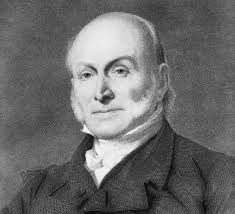
Still, I like John Adams, irritating as he was to most everybody. We have that much in common, anywayz. But give me his son John Quincy anyday, who returned to the House of Representatives after he won, then lost, the presidency [yes, he won the election controversy of 1825, only to lose to Andrew Jackson in the rematch of 1830]; the John Quincy Adams who argued Amistad.


In that, John Adams truly fulfilled the American Dream: The father raised a better man than he. No higher praise could be given to any man.

[Or woman either, Abigail Adams. It takes two. But Abigail is yet another story, and she earns her own place in the history of America in her own right...]

John Adams and the "Awful Blasphemy" Quote

I got an email from Joe Talmadge, a physicist at UW-Madison on the context of the following letter from John Adams to Thomas Jefferson which features the "awful blasphemy" quote that is sometimes/often repeated.

Recently I came across this quote from John Adams and I am genuinely puzzled as to what it means.

It's from Adams' letter to Jefferson, January 22, 1825.

"Your university is a noble employment in your old age and your ardor for its success does you honor but I do not approve of your sending to Europe for tutors and professors. I do believe there are sufficient scholars in America to fill your professorships and tutorships with more active ingenuity and independent minds than you can bring from Europe. The Europeans are all deeply tainted with prejudices both ecclesiastical and temporal which they can never get rid of. They are all infected with episcopal and presbyterian creeds and confessions of faith. They all believe that great Principle which has produced this boundless universe, Newton's universe and Herschell's universe, came down to this little ball to be spit upon by Jews. And until this awful blasphemy is got rid of, there never will be any liberal science in the world."

I know who Herschel and Newton are, but I am puzzled what Adams is driving at. Here are a few questions:

1- What "great Principle" is Adams talking about?
2- How would Adams characterize Newton's and Hershel's universe?
3- I presume that "this little ball" is the Earth. How did this "great Principle" come down to the Earth.
4- Why in the world would it be "spit upon by Jews"? How would Adams characterize Jewish theology?
5- What prejudices does Adams perceive of Europeans, that they are so tainted with?
6- Am I wrong in perceiving that Adams is sympathetic with Newton and Hershel?
Then why would Europeans be so opposed to their ideas? Why would American scholars be more sympathetic?
7- What "awful blasphemy" is Adams talking about?
8- What is "liberal science"? As opposed to ....?


I'm not sure how to answer all 8 questions (perhaps I'll let my readers do some of the work for me). However, I always assumed the "awful blasphemy" refers to the Trinity, because many other scholars read the passage that way. And apparently (?) Adams is worried that the Europeans Jefferson is trying to recruit will be too orthodox? I would have thought Adams -- a more moderate unitarian than Jefferson -- might be worried that Jefferson's European recruits would be too deistic. But it seems Adams is going in the other direction.

I don't know anything about Hershel but Adams and company loved Issac Newton (one of the first Enlightenment figures) and the rational scientific unitarian Christianity that Newton stood for.

The reader followed up with two other messages:

What I find puzzling is that if "awful blasphemy" refers to the Trinity, then it doesn't seem to have anything to do with the sentence before it. To me it appears he is contrasting the boundless universe of Newton and Herschel to a worldview that focuses only on what is happening on the Earth. Maybe I'm just not seeing how the Trinity folds into this. And why would Jews spit on this view? Did Jews of his time have a more expansive view of the universe? I can't imagine so. If the blasphemy was about the Trinity, then yes, Jews wouldn't agree with a Trinitarian view of religion. But they would reject all of Christian doctrine anyway --- why just pick on the Trinity? The whole thing is quite puzzling to me.


And:

Going back to the quote, "They all believe that great Principle which has produced this boundless universe, Newton's universe and Herschell's universe, came down to this little ball to be spit upon by Jews. And until this awful blasphemy is got rid of, there never will be any liberal science in the world."

William Herschel
was a brilliant astronomer and musician. But he had his quirks. One of them was his belief that the universe was full of life -- that life existed even on the surface of the sun.

Could Adams be possibly saying that Europeans believe that in this great and infinite universe brimming with life everywhere, god, the great principle which made all this, picked of all places this little speck of dust, Earth, that lies in the great vastness, to send his son to be spit upon by Jews? The blasphemy is the concept that god would pick this one spot to show up in mortal form. And until this blasphemy is removed, the progress of science will be hindered.

I admit that this is far-fetched, doesn't accord with anything else I know of Adams, but yet it seems to be an explanation that makes sense (to me) based on what I'm reading. I'd be interested to hear what you think.


Honestly I don't know other than it seems J. Adams is ranting about disagreements he had with orthodox Christians in Europe. Doctrines like the Trinity, Incarnation, Atonement and Eternal Damnation really rubbed Adams the wrong way.

Monday, April 26, 2010

Competing Traditions

What's clear is that there are competing traditions. Just look here and here. Even here, over at Explicit Athiest, where Mathew Goldstein, has written a blog in response to Jonathan Rowe's blog entry of a week ago. His thoughts follow:

Jon Rowe understands history, but not non-establishment


In his recent blog Competing Traditions & Abstract Ideals that Trump Dominant Historical Practice [Monday, April 19, 2010], Jon Rowe made the following misdirected comments regarding the recently federal court decision that the National Day of Prayer Act "has taken sides on a matter that must be left to individual conscience.”

The harder questions are how to get there in a 1) constitutional and 2) policy sense (the two aren't always supposed to be the same).

Do we need a naked public square where the state is always silent on religious beliefs? Or perhaps a more open pluralistic public square where the state, in its public supplications, sometimes says things that you or I agree with, sometimes not.

I'm willing to endorse the latter position as long as its understood that if the pious Christians get the state chaplain microphone, sometimes the Hindus and the atheists get it too.

And I think that pluralism perfectly "fits" with the ideals of the American Founding.


Regarding the question about whether we need a "naked public square where the state is always silent on religious beliefs?": There are two major misconceptions in that one sentence. The first falsehood is the adjective "naked," the second falsehood is the phrase "always silent".

It should be obvious that a public square where government is silent on the truth of, or need for, religious beliefs would not be "naked." Such a public square would be fully clothed with the associated partisan voices of the individuals who are citizens of this country. This court decision does not strip the public square of any individual belief or expression. Government employees, including elected officials, can go to any public square and add their voices on any subject as free individuals on the same terms as everyone else, just like everyone else. What government employees don't get to do is speak on behalf of government on matters of religious beliefs just because they are government employees or elected officials. That makes the public square equitable, it doesn't render the public square naked. There is a critical distinction here that Jon Rowe, and other opponents of non-establishment of monotheism and theism, keep failing to acknowledge. A President’s statements of his own beliefs about prayer are less likely to be viewed as an official endorsement than a permanent statement from the government in the form of a statute encouraging all citizens to pray to "God" every year.

This court decision does not require that the state be "always silent on religious beliefs." Again, there is a critical distinction here that Jon Rowe, and other opponents of non-establishment of monotheism and theism, keep failing to acknowledge. In her decision, U.S. District Judge Barbara Crabb asserted that government involvement in prayer could be constitutional provided that it does not call for religious action, which the prayer day does. "It goes beyond mere 'acknowledgment' of religion because its sole purpose is to encourage all citizens to engage in prayer, an inherently religious exercise that serves no secular function in this context," Crabb wrote. "In this instance, the government has taken sides on a matter that must be left to individual conscience." Exactly right. Why is this distinction between acknowledgement and promotion so difficult for those who oppose non-establishment of monotheism and theism to acknowledge? Could it be that their reasoning is clouded by anti-atheism animus? Maybe there is a prevailing anti-atheist bias in this country as evidenced by Judge Scalia's attitude? Have you considered that possibility and its implications for this discussion, Jon Rowe?

Regarding Jon Rowe's final prescription for a policy of inviting non-Christians and atheists to the state chaplain microphone: How does that comment apply in the context of the NDOP Act? The NDOP Act allows for no accommodation of atheists and atheists don't want a National Day of Blasphemy Act. Multiple competing establishments of religion are not better than no establishment of religion and the constitution calls for the latter. In any case, there is no justification for a state chaplain microphone. There is no chaplain at my place of work, indeed there is no chaplain microphone at the workplace of anyone I know. I guess that means we all have naked workplaces where the state is always silent on religious beliefs. Can Jon Rowe explain why there is this need for introducing a chaplain microphone into official business at government workplaces?

While it is true that 'pluralism perfectly "fits" with the ideals of the American Founding', it is also an irrelevant, trite, one-sided statement. Anything ranging from every citizen has a different belief to every citizen has the same belief fits with the ideals of the American Founding. It is not true that pluralism of beliefs is a goal of government according to the constitution, and an active government role in sponsoring a diversity of beliefs is what Mr. Rowe appears to favor. The constitution no more permits the government to promote a diversity of different beliefs then it permits the government to oppose a diversity of different beliefs. Furthermore, it is not the role of government to select which beliefs it will favor and which it will not favor regardless of the quantity or diversity of the beliefs it theoretically could choose to favor. People can pray individually and in voluntary groups before and after business and during breaks, privately or publicly. Why is that insufficient? Why must government sponsor prayers and assert in laws that a single God exists?

As Jon Rowe knows, the constitution was written by refugees seeking freedom of conscience and freedom from religious tyranny. They wanted a land where government would not tell them which church to support, what religious rituals to engage in or what to believe or disbelieve. They knew there can be no true religious liberty without the freedom to dissent. Whether to pray, or believe in a god who answers prayer, is an individual decision protected under our First Amendment as a paramount matter of conscience. Jon Rowe is mistaken in his refusal to acknowledge that the NDOP, which annually compels partisan religious speech on the president of the United States as an act of government, is a direct, and rather blatant, violation of the Bill of rights, just like Judge Scalia is mistaken when he says the constitution permits the disregard of atheists and polytheists.

What we hear from Coulter is how tolerant everyone is of everyone else's beliefs, that they respect atheists, that they favor pluralism and diversity, but the atheists are not tolerant, they are the problem. When I compare the NDOP Act with Coulter's words there is complete mismatch. The NDOP Act declares that a God exists and we should all pray to that God. The NDOP Act compels the president to annually issue a proclamation to that effect. Where is the pluralism and diversity here? There isn't any, its monotheism only. Where is the respect for atheists and polytheists here? There isn't any, we should all believe in a God and pray to that God. Who is being intolerant here? Its the monotheistic majority, not the atheist or polytheist minorities.

Religion and Reason in the 21st Century, Philosophically Speaking

Stanley Fish on religion, but from a philosophical viewpoint, not a theological one. Not precisely about the Founding, but outlines the issues that underlie most of our discussions here, especially where this leaves us in 2010.

[For the record, I'm more with Habermas in his "post-secularism," but Dr. Fish does a fine job of outlining the parameters. To my mind, Habermas ends up paraphrasing George Washington: "And let us with caution..." The more things change, the more they remain the same.]

Sunday, April 25, 2010

The Rev. John Joachim Zubly on Romans 13, Calvinism, and Slavery


The most interesting---and liberating---thing about the Protestant Reformation was that each man must read and interpret the Bible for himself. Sola scriptura, the Bible only. The extra words of men have no authority above the Word of God as each man reads it, not the Pope or the "Magisterium" or the "Church" or even fellow Protestants and their churches either.

Friend-of-the-blog Dr. Jeremy Dupertuis Bangs, author of the new Strangers and Pilgrims, Travellers and Sojourners, sends along an interesting excerpt from his upcoming book for the University Press of New England---about a Founding-era fellow who was apparently in agreement with contemporary Calvinist theologico-historians Rev. John F. McArthur and another friend-of-the-blog, Dr. Gregg Frazer.

Somedays, a "proper" Christian just can't win, but then again, The Bible never said that one will:


Approaching Savannah on February 6, 1778, at Zubly’s ferry by Purisburg, they were surprised to meet Rev. John Joachim Zubly and his son coming away from the city. Zubly had been Savannah’s most renowned preacher, a Presbyterian, and his pamphlets supporting the American cause were read not only in the colonies but also in England.

At the second Continental Congress in Philadelphia in 1774 he had represented Georgia, arguing for moderation. He demanded representation in Parliament for the colonies, but he hoped for reconciliation rather than revolution.

In a sermon from 1775 to the Provincial Congress of Georgia (published as a tract in Philadelphia), Zubly preached that “A people that claim no more than their natural rights, in so doing, do nothing displeasing unto God; and the most powerful monarch that would deprive his subjects of the liberties of man, whatever may be his success, he must not expect the approbation of God, and in due time will be the abhorrence of all men.”[1]

Moreover, he proclaimed that the idea “that government and tyranny are the hereditary right of some, and that slavery and oppression are the original doom of others, is a doctrine that would reflect dishonor upon God; it is treason against all mankind.”

His audience heard a criticism of the king but did not interpret this as an inexorable call to free their slaves. Zubly wrestled with biblical attitudes towards established authority: “The Christian religion, while it commands due respect and obedience to superiors, nowhere requires a blind and unlimited obedience on the part of the subjects; nor does it vest any absolute and arbitrary power in the rulers.”

Then he remarked, “We should fain obey our superiors, and yet we cannot think of giving up our natural, our civil and religious rights, nor acquiesce in or contribute to render our fellow creatures or fellow citizens slaves and miserable.”

Once again, his listeners understood that as a Presbyterian he opposed the claims of the Church of England to privilege and established superiority, and that as a colonist he objected to laws and taxes unjustly imposed. But they were not inspired to free their slaves, no matter how repugnant Zubly thought participation in enslavement would be to their freedom-loving souls.

In contrast to human laws, “The law of the Lord is perfect” (Psalm 19:7), Zubly quoted, and he repeated that “The Gospel is the law of liberty” – referring to James 2:12 (“So speak ye, and so do, as they that shall be judged by the law of liberty.”) No one, he thought, “can transgress [the law of the Lord] with impunity.” And as a Calvinist believing that the world and all its social hierarchy was predestined to be as it was, he could not avoid a literal application of Romans 13: 1-2 ( “Let every soul be subject unto the higher powers. For there is no power but of God: the powers that be are ordained of God. Whosoever therefore resisteth the power, resisteth the ordinance of God: and they that resist shall receive to themselves damnation.”)

Zubly’s unavoidable conclusion was unpalatable to the rebels: “Never let us lose out of sight that our interest lies in a perpetual connection with our mother country.” According to Zubly, a Christian was not permitted to rebel against the king, nor could a faithful Christian “acquiesce in or contribute to render our fellow creatures or fellow citizens slaves.”

Zubly’s fellow citizens of Savannah, in rebellion against the king and not wanting to hear that slavery was sin, had that very day banished him and his son from Georgia and had confiscated Zubly’s property, including his library of over a thousand volumes. The books were eventually tossed into the Savannah River.
_____________
[1] This and the following quotations are from Zubly’s sermon before the Provincial Congress of Georgia, 1775 with the title, “The Law of Liberty.” The Law of Liberty. A Sermon on American Affairs, Preached at the Opening of the Provincial Congress of Georgia. Addressed to the Right Honourable The Earl of Dartmouth. With an Appendix, Giving a Concise Account of the Struggles of Swisserland [sic] to Recover their Liberty. By John J. Zubly. Philadelphia: Printed and Sold by Henry Miller, 1775.

Jon Meacham: The Religious Case for Church-State Separation

Jon Meacham, editor of Newsweek Magazine and author of the books American Gospel and American Lion (for which he won the Pulitzer Prize last year) has chimed in with an interesting article on the never-ending culture war over church-state separation and why religion should embrace the distinction rather than fight against it. He writes:
Here we go again. On April 15 a federal judge in Wisconsin ruled that the National Day of Prayer, slated for May 6, was unconstitutional. The usual voices have been heard rising in objection (Sarah Palin and Franklin Graham among them) and, proving yet again that President Obama is no radical, the administration announced its own plans to challenge the decision. One can make a reasonable case that the weight of custom puts the fairly banal idea of an occasionless, generic day of prayer (how many of you even knew that we have had such a day every year since 1952?) on the safe side of the Establishment Clause. But the right is, as ever, taking things a beat too far. Lest anyone try to convince you that God should be separated from the state, Palin said, our Founding Fathers, they were believers.

Governor Palin's history is rather shaky. Religious liberty—the freedom to worship as one chooses, or not to worship—is a central element of the American creed. Yes, many of the Founders were believing, observant Christians. But to think of them as apostles in knee breeches or as passionate evangelicals is a profound misreading of the past. In many ways their most wondrous legacy was creating the foundations of a culture of religious diversity in which the secular and the religious could live in harmony, giving faith a role in the life of the nation in which it could shape us without strangling us. On the day George Washington left Philadelphia to take command of the Continental Army, the Rev. William Smith preached a sermon at the city's Christ Church, saying: "Religion and liberty must flourish or fall together in America. We pray that both may be perpetual."

Arguments about the connection between religion and politics, church and state, have surely been perpetual. The civil and legal cases against religious coercion are well known: human freedom extends to one's conscience, and by abolishing religious tests for office or mandated observances, Americans have successfully created a climate—a free market, if you will—in which religion can take its stand in the culture and in the country without particular help or harm from the government.

There is a religious case against state involvement with matters of faith, too. Long before Thomas Jefferson, Roger Williams, the founder of Rhode Island, called for a "hedge or wall of separation between the garden of the church and the wilderness of the world," believing, with the Psalmist, that human beings were not to put their trust in princes. The principalities and powers of a fallen world represented and still represent a corrupting threat to religion: too many rulers have used faith to justify and excuse all manner of evil.

The idea of separation began, in fact, with Jesus. Once, when the crowds were with him and wanted to make him a king, he withdrew and hid. Before Pilate, Jesus was explicit: "My kingdom is not of this world," he said. Later in the New Testament, Paul argues that God shows no partiality among nations or peoples, meaning nations cannot claim blessed status, and says that "there is neither Jew nor Greek, there is neither slave nor free man, there is neither male nor female; for you are all one in Christ Jesus," which means the Lord God of Hosts is concerned with larger matters than whether one is an American or a Norwegian. A Christian nation, then, is a theological impossibility, and faith coerced is no faith at all, only tyranny. If God himself gave human beings free will—the choice to love him or not, to obey him or not—then no believer should try to force another to confess a faith.

The Founders understood this. Washington said we should give "to bigotry no sanction, to persecution no assistance"; according to the 1797 Treaty of Tripoli, ratified by the Senate and signed by John Adams, "the government of the United States is not, in any sense, founded on the Christian religion." Jefferson said that his statute for religious freedom in Virginia was "meant to comprehend, within the mantle of its protection, the Jew and the Gentile, the Christian and the Mohammedan, the Hindoo and Infidel of every denomination." There are many precedents for the National Day of Prayer, but serious believers, given the choice between a government-sanctioned religious moment and the perpetuation of a culture in which religion can take its own stand, free from the corruptions of the world, should always choose the garden of the church over the wilderness of the world. It is, after all, what Jesus did.

Slavery and the Christian Nation Thesis

Chattel Slavery presents a damned if you do damned if you don't dilemma for the Christian Nation thesis.

I've read the texts that deal with slavery in the Bible and I have concluded that the Bible does not abolish chattel slavery. When confronted with proof-texts like Colossians 3:22 -- "Slaves, obey your earthly masters in everything; and do it, not only when their eye is on you and to win their favor, but with sincerity of heart and reverence for the Lord." -- I am unconvinced by the responses that such really wasn't chattel slavery, but something else. They strike me as "weasel out" responses.

And Colossians 3:22 isn't the only place the Bible seems to indicate it's "okay" with slavery. I don't read the Bible as commanding slavery. But rather, not abolishing it, that is permitting it.

The anti-liberationist view of orthodox Christianity does provide a rational response. Look, life is a vapor and what matters is where you spend eternity. If you are a slave and a Christian and your master is unsaved, in terms of cosmic reality, you are in a FAR better position than him.

The anti-slavery biblical position strikes me as a liberationist reading of the Bible. And I see biblical liberationism using more of a "loose" hermeneutic (that is, not the proof texting, the Bible is the inerrant infallible Word of God hermeneutic).

Benjamin Rush is a good example of an orthodox Christian Founding Father who was a biblical liberationalist. Not only did Rush believe Christianity, properly understood, abolished slavery and commanded republicanism, but also that the Bible taught universal salvation and abolished the death penalty in the New Testament.

But...there are uber-orthodox, proof texter types who do believe the Bible does not support slavery. Gregg Frazer (of John MacArthur's church and university) is one. Now one could argue, in this modern age where the question of slavery is "settled," they are trying to do PR work for the Bible/orthodox Christianity.

Yet, not all of the anti-slavery biblicists from the Founding era were Benjamin Rush types or unitarians. In fact, some very notable anti-slavery activists of that era were uber-orthodox.

Tom Van Dyke points me to a resource of biblical arguments historically used against slavery.

And that brings us to the damned if you do damned if you don't aspect of slavery and the Christian Nation thesis. The Founding Fathers -- not all but a good number of notables -- owned slaves. And the Founding made concessions with slavery. If permitting slavery is an authentic "Christian principle," then so much for "Christian principles."

And if it's not, then that's one glaring aspect of the American Founding that contradicts "Christian principles."

In fact, one of the uber-orthodox Calvinist covenanter types -- Rev. James Renwick Willson -- who decried the godlessness of the US Constitution and the infidelity of America's Founding Fathers, was an anti-slavery activist. And he used the fact that the Founding Fathers practiced and made concessions with slavery as a key argument for why America didn't have a "Christian" Founding.

As he wrote, in 1832:

6. Millions of men are held in bondage, under the most solemn sanction of the United States Constitution. Slaves had been introduced into the colony of Virginia, by a Dutch slave trader, many years before the commencement of the Revolution. The planters of the southern colonies, had formed the habit of executing their labor by slaves. Many, indeed a great majority of the people of the northern and middle states, were always adverse to Negro slavery. The members of the convention from the north were opposed, generally, to the slave trade. Yet some of the Boston and Rhode Island merchants had embarked a large capital in this traffic. The members from the south refused to accede to the formation of a permanent bond of union, unless their right both to hold slaves and to import them, was guaranteed by the constitution. Perhaps no topic excited in the convention a deeper interest than this one. Notwithstanding all that had been taught in the Declaration of Independence, all the treasure that had been expended, and all the blood that had been shed in the cause of freedom, yet the convention did guarantee the right of importing slaves, from the time of the adoption of the constitution until the 1st of January, 1808—a period of twenty years, three months, and thirteen days. I am thus particular, for every one of these days and even the hours must be accounted for to Messiah the Prince, "who came to proclaim liberty to the captives, and the opening of the prison to them that are bound."

The constitution says:—"The migration, or importation of such persons as any of the states now existing shall think proper to admit, shall not be prohibited by Congress prior to the year 1808." Art. I, Sec. IV, Specification I. The Convention blushed to name the Negro slaves and the slave trade, and used a circumlocution, as if a figure of speech would conceal that iniquity for which conscience was chiding them, when the article was penned and ratified. It will not avail to say, that the deed was merely passing it by. It was much more. The slave ships, with cargoes of African slaves, were as much under the protection of the American stars and stripes, as the flannel of Britain, or the bar iron of Sweden. It was a national slave trade.

As this species of property was acquired, under the sanction of the constitution, so it is retained under a solemn national guaranty. The United States are the slave holders, as well as the several states, and the individual masters. "Direct taxes," says the constitution, "shall be apportioned among the several states, according to their respective numbers, which shall be determined, by adding to the whole number of free persons, three-fifths of all other persons." U. S. Con. Art. 1. Sec. II. Specification II. These "other persons" are slaves, an abominable term, which they were as before ashamed to employ, while they sanctioned the evil. These slaves are then taxable property, by the letter and spirit of the constitution. So the article is expounded by Federalist, written by Messrs. Hamilton, Jay, and Madison, and by all writers on the national jurisprudence, who are quoted as the best authority. "The federal constitution, therefore decides, with great propriety, on the case of our slaves, when it views them in the mixed character of persons and property." Imported under the protection of the American flag, and secured to their owners by the plighted faith of the nation, as property, they are now held by the nation, as a part of its wealth; "when," to use the words of Mr. Jay in The Federalist, "a tariff of contribution is to be adjusted." Fed. No. LV, p. 296.

This doctrine is more distinctly laid down in other parts of the Constitution. "The United States shall protect each of them (the states) against domestic violence." Art. IV, Sec. IV. "Domestic violence" is a phrase, which, in this connection can neither be misunderstood, nor explained away. Since the slaves are taxed as the property of the nation, the constitution pledges the power of the U. States to sustain the master against any violent measures that the slave may employ to recover his freedom.

Again, "No person held to service or labor, in one state, under the laws thereof; escaping into another, shall, in consequence of any law or regulation therein, be discharged from such service or labor, but shall be delivered up on claim of the party to whom such service or labor may be due." U. S. Con., Art. I., Sec. IV. If the slave escapes from the state where he is enslaved, to another, where there are no slaves; that other is bound by the Constitution to deliver him up to the master who claims him.

Slavery indeed, is made one of the pillars of the government. "Representatives shall be apportioned among the several states, according to their respective numbers, which shall be determined by adding to the whole number of free persons, three-fifths of all other persons." Hence, the holding of Africans in bondage, is made one of the pillars, on which the fabric of American freedom is made to rest; thus committing the twofold evil of making slavery essential to the constitution, and of violating the holy and benign doctrine of representation, which is the palladium of religious and civil liberty.

That slave property is guaranteed by the constitution, has been solemnly decided by the representatives of the nation, in many legislative acts. After protracted argument, in Congress, on the question of admitting Missouri, with her slave holding constitution, into the Union, it was decided in favor of her admission, on the ground that slaves are held under constitutional guaranty.

Congress has passed many laws, on the subject of slavery. By one act, the United States courts are vested with jurisdiction, in questions arising under the slave trade. By another, the mode is prescribed in which runaway-slaves shall be reclaimed and restored to their masters in the non-slave-holding states. By the several acts of Congress, fixing the ratio for representation, the doctrine and the practice of slavery are recognized (See Gorden’s and Brown’s Digests of the laws of the United States.). Many laws passed for the government of Louisiana, Alabama, and Mississippi, before they became states; all of the Floridas, and District of Columbia, now under territorial regime, respect slaves.[4]

In all the territories, the United States government is the slave-holder; for the political sovereignty of the territory, is vested in no intermediate authority. All the slave laws of the District of Columbia are enacted by the federal legislature. No jurist in the nation has ever presumed to maintain, however adverse many of them are to slavery, that these legislative acts of Congress are unconstitutional.

In addition to all this mass of evidence, it may be added, that numerous cases have been, and are every year decided in the courts, in applying these acts; and every judge holds himself bound, by his oath of office, to apply the laws against the African slave, whenever any question arises, on the right of tenure between him and his master.

The late insurrection of the slaves in North Carolina and Virginia, has been quelled by the United States troops, ordered out by the President, as executor of the laws of the United States. So then, we have; 1st, the convention that framed the Constitution, embodying slavery in several parts of the fundamental law of the commonwealth. 2. The federal legislature enacting laws, under the provisions of the constitution. 3. The judiciary applying the law in adjudications of slave questions. 4. The chief executive magistrate enforcing slavery by the army of the United States.

Slavery is interwoven with the whole web and texture of the federal government. All this is in direct opposition to the 4th amendment to the constitution, which provides, that:—

"No person shall be deprived of life, liberty, or property, without due process of law." By what "due process of law" has the African been deprived of his liberty? Was it a "due process of law" to make war on the unoffending tribes of Africa, waste and destroy whole populous nations, and seize, bind in chains, and sell to the southern planters, a shipload of MEN? In 1830, there were in the United States 2,010,575 Africans, deprived of their liberty, by no other process of law, than that of wasting and destroying countries; and of binding and selling the unoffending children of poverty.

The United States legislature has passed sentence on their own doings. By a law passed since 1808, the slave trade is declared to be piracy.

In the whole annals of legislation, where shall we find any thing analogous to this? After prosecuting this trade nationally, for twenty years, three months, and thirteen days, Congress declares the doings of slave traders piracy; though they had traded under the protection of the national flag. What are we to infer, respecting him who holds property which he acknowledges to have been acquired by piracy? But there has been no national acknowledgment of the sin against God and man—no asking of pardon from God—no restitution. It is not wonderful that the United States Senator from Rhode Island, who had amassed a large estate by trading in slaves, always voted in the negative on the passage of the piracy bill through the Senate. We may well believe, that he saw before his mind’s eye, the pirate’s gibbet.

On the subject of the evil thus sanctioned by the highest human authority in this nation, Mr. Jefferson, in his Notes on Virginia, pp. 240-1, makes the following, among other very impressive observations:—"The whole commerce, between master and slave, is a perpetual exercise of the most boisterous passions, the most unremitting despotism on the one part, and degrading submission on the other."—"The man must be a prodigy who can retain his manners and morals, undepraved by such circumstances."—"Can the liberties of a nation be thought secure, when we have removed their only firm basis, a conviction in the minds of the people that these liberties are the gift of God?"—"That they are to be violated but with his wrath?" The following sentiment, though a thousand times quoted, will bear to be many times yet repeated:—"Indeed, I tremble for my country, when I reflect that God is just; and that his justice cannot sleep forever; that considering numbers, nature and natural means only, a revolution of the wheel of fortune, an exchange of situation is among probable events: that it may become probable by supernatural interference. The Almighty has no attribute which can take part with us in such a contest."—"With what execration should the statesman be loaded, who permitting one half the citizens thus to trample on the rights of the other, transforms those into despots, and these into enemies, destroys the morals of the one part, and the amor patriae of the other?" Twelve states do all this now, solemnly, deliberately, and under the forms of law. The convention that framed the National Constitution have done this. The United States Congress, Senate, and Executive, have been doing this, for more than forty-four years. They have thus dishonored Messiah the Prince, who is the friend of liberty; for he came to "proclaim Liberty to the captive, and the opening of the prison to them that are bound."

These moral evils embodied in the doctrines of the fundamental law of the empire, have produced practical results, over which every true disciple of Christ, and Christian patriot, will mourn.


Right after that Rev. Willson explains why the "key Founders" were not Christians but infidels, not more than "unitarians."

1st. Ungodly men have occupied, and do now occupy, many of the official stations, in the government.[5] The clause of the Constitution, barring all moral qualifications, has not been a dead letter. There have been seven Presidents of the United States—and of each of them it may be said, as Jehovah says of the kings of Israel, after the revolt of the ten tribes, "He did that which was evil in the sight of the Lord."

Washington was raised up, in the providence of God, like Cyrus of Persia, and qualified for great achievements.—He was an able captain, and an instrument of much temporal good, as a statesman. Few, if any, prominent men, in any nation, have been endowed by the common gifts of the Spirit, with more ennobling qualities than the first President of this nation. His fame fills the civilized world. It is to the honor of the Protestant Religion, that this country produced such a man. What was Bolivar compared with Washington? All this praise may be awarded to one who, like the amiable young man in the gospel, "went away from Jesus sorrowful, because he had great possessions."

There is no satisfactory evidence that Washington was a professor of the Christian religion, or even a speculative believer in its divinity, before he retired from public life.[6] In no state paper, in no private letter, in no conversation, is he known to have declared himself a believer in the Holy Scriptures, as the word of God. General eulogy, by a Weems, or a Ramsey, will not satisfy an enlightened enquirer. The faith of the real believer in the word of God, is a principle so powerfully operative, that you cannot conceal "its light under a bushel." "It works by love." "Out of the abundance of the heart, the mouth speaketh." Is it probable that he was a true believer in Jesus Christ and his Bible, when in times so trying, and in a Christian nation, he wrote thousands of letters, and yet never uttered a word, from which it can be fairly inferred that he was a believer? Who ever questioned whether Theodosius or Charlemagne believed the Bible? "He that is not against us is for us." And it is as true, that he who is not for us, is against us.