Showing posts sorted by date for query sherman on morris. Sort by relevance Show all posts

Wednesday, July 11, 2018

Who Were the Founders?

We get a lot about certain "key" Founders, especially John Adams and Thomas Jefferson and their copious--and often post-presidential--writings, although much of their stature rests on becoming president after the US government was established by the Constitution, of which neither of them were "Framers." Nor did either actually fight in the Revolution. [Hamilton was a Revolutionary general and was one of the authors of the Federalist Papers; Madison of course is the "Father of the Constitution; and Washington won the war and chaired the Constitutional Convention!]   

With a HT to Mark David Hall, from Daniel Dreisbach of American University, Founders Famous and Forgotten:

Consider the political career of Roger Sherman of Connecticut (1721-1793), a largely self-taught man, devout Calvinist, and lifelong public servant. He was one of only two men who signed all three of the great documents of American organic law: the Declaration of Independence, the Articles of Confederation, and the Constitution. He was a delegate to the First and Second Continental Congresses. He was a member of the five-man committee formed to draft the Declaration of Independence and a member of the committee of thirteen formed to frame the Articles of Confederation. At the federal Constitutional Convention of 1787 he delivered more speeches than all but three delegates and was a driving force behind the Great (Connecticut) Compromise. He was a member of the first U.S. House of Representatives (1789-1791) and later of the U.S. Senate (1791-1793), where he played key roles in deliberations on the Bill of Rights and the creation of a national bank. If any man merits the mantle of “founding father,” surely it is Roger Sherman.

Yet few Americans recall, let alone mention, Sherman’s name when enumerating the founding fathers; even among those familiar with his name, most would be hard pressed to describe his role in the founding.


...

When asked to identify the “founding fathers,” Americans typically respond with a short list of a half dozen or so notables who have achieved iconic status in the American imagination and collective memory. This is true of even serious students of American history. The small fraternity of “famous founders” typically includes (in no particular order) Benjamin Franklin, George Washington, John Adams, Thomas Jefferson, James Madison, and Alexander Hamilton. To this short list, individual historians occasionally add a favorite figure or two.
There is, however, a much larger company of statesmen who made salient contributions in thought, word, and deed to the construction of America’s republican institutions. Unfortunately, many among the founding generation, whose contributions and sacrifices were consequential in the creation of a new nation, have slipped into unmerited obscurity, exiles from the elite fraternity of the famous. Why are some individuals, whose well-documented contributions were valued by their peers and celebrated in their time, largely forgotten in our time? Why are a few founders “famous” and others now “forgotten”?

...


According to a well-worn axiom, history is written by the victors. The reputations of several important founders have been damaged, one suspects, because they were on the losing side of great debates or controversies, especially the bitter debates over the declaration of American independence and ratification of the proposed national constitution. Consider, for example, the Quaker John Dickinson of Delaware and Pennsylvania (serving both states as the elected chief executive), who championed the cause of American liberties in aseries of brilliant “Letters from a Farmer in Pennsylvania” (1767-1768), and who was a delegate to the Stamp Act Congress where he drafted the “Declaration of Rights and Grievances” (October 1765), a member of the First and Second Continental Congresses where he was the principal draftsman of the “Declaration of the Causes and Necessity of Taking Up Arms” (6 July 1775), and one of Delaware’s delegates to the Constitutional Convention of 1787. In 1776, however, he spoke eloquently against and refused to sign the Declaration of Independence because he thought it premature and intemperate, and his reputation and public career suffered for it, despite commendable subsequent service to the nation. It has been said of George Mason that “His opposition to ratification of the federal Constitution— a document whose shape he helped mightily to craft—started his fall from the national memory.” The public standing of other vocal critics of the proposed Constitution was arguably diminished by their controversial stances in this most important national debate, despite the fact that some later became ardent admirers of the charter. Among the critics were Patrick Henry, Richard Henry Lee, Elbridge Gerry, Samuel Adams, George Clinton, Luther Martin, and John Francis Mercer. Other founders may have similarly fallen from public favor because of their advocacy of positions and causes that later proved unpopular.
The stature of some founders has risen and fallen with the vagaries of subsequent politics. As political parties emerged in the late eighteenth century and carved out well defined identities in the nineteenth century, partisans often appropriated selected founders as precursor spokesmen for, or ideological models of, their party perspectives, or as avowed opponents of some partisan position. The Jacksonian Democrats of the 1820s and succeeding decades, forexample, described themselves as inheritors of the Jeffersonian tradition and demonized Federalist party stalwarts, such as Alexander Hamilton, John Adams (an especially inviting target because his son, John Quincy Adams, was Andrew Jackson’s immediate foe), and John Marshall, for their opposition to Jeffersonian politics. (The reputations of other prominent Federalists— such as Fisher Ames, John Jay, Rufus King, Gouverneur Morris, and C.C. Pinckney—may have similarly suffered in the wake of their party’s demise and Republican ascendancy at the turn of the century.) Thus, Jefferson’s reputation as a founder flourished and Federalist founders’ reputations floundered as Jacksonianism ascended. The War Between the States and its aftermath prompted a reappraisal of Hamilton’s staunch advocacy of a strong national government, and, in the North at least, Hamilton eclipsed the states-rights Jefferson as a “revered figure in the minds of most Americans.” According to Merrill D. Peterson, “Jefferson’s reputation merely survived the War; Hamilton’s was remade by it.” In summary, political partisans of succeeding generations have promoted or demoted selected founders in the public mind depending on whether a founder’s views and associations advanced or impeded the goals of these latter-day partisans.
Another explanation focuses on certain founders’ unappealing personal traits, quirks or eccentricities, or alleged moral failings. George Mason’s truculent temperament and general aversion to public life almost certainly diminished his profile in the history of the founding era. He was a most reluctant public figure, eschewing the limelight and declining to pursue high office (although reluctantly accepting public office when called). An abrasive, egotistical personality did little to enhance Thomas Paine’s reputation, and pious Americans from his day to the present have reviled him for his heretical views on Christianity. John Adams described the radical pamphleteer as “the lying rascal,” and Teddy Roosevelt denounced him as that “filthy little atheist.”

And so the most influential polemicist of the age, renowned on both sides of the Atlantic, died in relative obscurity in 1809 without a eulogy from his former compatriots in the struggle for American independence. Gouverneur Morris’s well earned reputation as a profligate rake and lecher may have diminished his standing among prudish nineteenth-century Americans. In a very different vein, Aaron Burr’s widely publicized roguish, even “murderous,” and allegedly treasonous conduct has kept him alive in the public memory, but it has also demoted him from the pedestal of a venerated founder.

There is the tragic case of James Wilson, who died in ignominy in 1798 at age 56, fleeing from creditors for failed land speculation. He was buried in an obscure country graveyard in Edenton, North Carolina. Today, Wilson is virtually unknown to the American public, but he was among the most trenchant and influential minds at the Constitutional Convention (making more speeches than any other delegate, save Gouverneur Morris), and he stamped an indelible mark on American legal theory through his influential law lectures and tenure on the U.S. Supreme Court. Robert Morris, a signer of the Declaration of Independence, Articles of Confederation, and Constitution, a member of the first federal Congress, and the indispensable “financier of the Revolution”—a man who by any measure should be remembered as a founding father—similarly borrowed heavily and failed miserably in western land speculation. He languished for three and a half miserable years in a debtors’ prison and his reputation has never recovered.


Finally, there seems to be an inclination among modern scholars to dismiss, discount,or ignore the views of pious founders whose ideas and actions were shaped by deeply held religious convictions. Trained in the rationalist traditions of the academy, some scholars are unfamiliar or uncomfortable with or closed to religiously informed arguments and rhetoric; thus, they dismiss as serious thinkers or otherwise decline to engage founders whose worldview was profoundly religious. Founders steeped in the rationalist traditions of the Enlightenment are more familiar and accessible, and their exploits are advanced in modern scholarship. John Witherspoon’s faith based perspectives may have scared off more than one secular scholar; moreover, his clerical collar may have symbolically entangled church and state too excessively for modern sensibilities. The profiles of Samuel Adams, Roger Sherman, Oliver Ellsworth, John Jay, Elias Boudinot, and Isaac Backus, among others, may have been similarly diminished by modern scholars on account of their profoundly religious identities and perspectives.


Read the whole thing.

Sunday, June 28, 2015

Our Religious Founders: Forgotten or Intentionally Neglected?

From the invaluable Daniel Dreisbach, with a HT to friend-of-the-blog Mark David Hall:

Consider the political career of Roger Sherman of Connecticut (1721-1793), a largely self-taught man, devout Calvinist, and lifelong public servant. He was one of only two men who signed all three of the great documents of American organic law: the Declaration of Independence, the Articles of Confederation, and the Constitution. He was a delegate to the First and Second Continental Congresses. He was a member of the five-man committee formed to draft the Declaration of Independence and a member of the committee of thirteen formed to frame the Articles of Confederation. At the federal Constitutional Convention of 1787 he delivered more speeches than all but three delegates and was a driving force behind the Great (Connecticut) Compromise. He was a member of the first U.S. House of Representatives (1789-1791) and later of the U.S. Senate (1791-1793), where he played key roles in deliberations on the Bill of Rights and the creation of a national bank. 
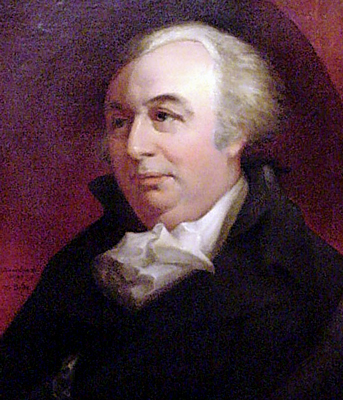
If any man merits the mantle of “founding father,” surely it is Roger Sherman. Yet few Americans recall, let alone mention, Sherman’s name when enumerating the founding fathers; even among those familiar with his name, most would be hard pressed to describe his role in the founding. Why is it that a man of such prodigious contributions to our country is today an all but forgotten figure? 
The same question could be asked about many other patriots— John Dickinson, Elbridge Gerry, John Jay, Richard Henry Lee, George Mason, Gouverneur Morris, Charles Pinckney, Benjamin Rush, John Rutledge, James Wilson, and John Witherspoon, just to name a few—who labored diligently to establish an independent American republic.
When asked to identify the “founding fathers,” Americans typically respond with a short list of a half dozen or so notables who have achieved iconic status in the American imagination and collective memory.
This is true of even serious students of American history. The small fraternity of “famous founders” typically includes (in no particular order) Benjamin Franklin, George Washington, John Adams, Thomas Jefferson, James Madison, and Alexander Hamilton. To this short list, individual historians occasionally add a favorite figure or two.  There is, however, a much larger company of statesmen who made salient contributions in thought, word, and deed to the construction of America’s republican institutions. Unfortunately, many among the founding generation, whose contributions and sacrifices were consequential in the creation of a new nation, have slipped into unmerited obscurity, exiles from the elite fraternity of the famous.
Why are some individuals, whose well-documented contributions were valued by their peers and celebrated in their time, largely forgotten in our time? Why are a few founders “famous” and others now “forgotten”? Separating the famous from the now forgotten founders may erroneously convey the notion that the founders were a much more single-minded, monolithic fraternity than they really were. Our understanding of the delicate balance of personalities, perspectives, and experiences so vital to the success of the founding generation is obscured when we train our sights on a select few famous founders and disregard the rest. 
As previously noted, for example, the most orthodox Christians among the founders (Samuel Adams, Elias Boudinot, Oliver Ellsworth, Patrick Henry, John Jay, Roger Sherman, and John Witherspoon) are rarely counted among the company of famous founders, despite their substantial contributions to the new nation, suggesting, perhaps, that the founders (and, more important, their ideas) were more heterodox than they really were. The contributions of traditional Christian thought to the American founding are, in large measure, diminished in the process.
These distortions, unfortunately, are sometimes translated into modern law and policy. Judicial interpretations of the First Amendment illustrate the potential problems. The U.S. Supreme Court’s near exclusive reliance on the views of Thomas Jefferson and James Madison, two purported advocates of church-state separation, to divine the original understanding of the First Amendment, while ignoring the input of others who, in the deliberative process, championed an essential role for religion in public life, has arguably resulted in a distorted construction of the First Amendment.
Mark David Hall has recently documented that, in its recourse to legislative history, the U.S. Supreme Court has given inordinate attention to Jefferson and Madison. The focus on these two Virginians is odd, if not counter-historical, because Jefferson was, at most, only indirectly involved in framing the First Amendment (he was serving as the American Minister to France when the First Congress framed the amendment) and Madison suffered decisive defeats in his efforts to shape the content of the religion provisions. As Cushing Strout observed: “Madison did not carry the country along with Virginia’s sweeping separation of churches from the state: indeed, the country in some degree carried him.”

Read the whole thing.

Friday, April 24, 2015

Hall on Stewart's "Nature's God"

Mark David Hall has published a piece for the Spring 2015 issue (pp. 285-291) Christian Scholars Review entitled "A Failed Attempt at Partisan Scholarship." It reviews Matthew Stewart, Nature’s God: The Heretical Origins of the American Republic.

We get an exclusive preview. See below:
Matthew Stewart is upset.  It seems there have been many attempts, “most of them misinformed, some shamelessly deceitful,” to deny the “basic fact” that America’s founders embraced a version of deism that is “functionally indistinguishable from what we would now call ‘pantheism’; and pantheism is really just a pretty word for atheism” (4-5).  “Christian nationalists” such as David Barton, Gary DeMar, John Eidsmoe, and “Tim La Haye” [sic] who challenge this reality not only “misread the American Revolution . . . they betray it” (445).  
Given this complaint, one might think that Stewart would engage books written by these men.  But he ignores them.  Instead, he points to four volumes that provide “a good start on exposing the deceitful historiography of Christian nationalism” (445).  Of these books, Michelle Goldberg’s Kingdom Coming (2007), Jeff Sharlet’s The Family (2008), Rob Boston’s Why the Religious Right is Wrong about the Separation of Church and State (2003), and Chris Rodda’s Liars For Jesus (2006), only the latter—a self-published screed—comes close to meeting this description.  The others make occasional references to David Barton but are far more interested in revealing theocratic conspiracies by leaders of the religious right.
            In addition to popular Christian authors, “new Christian nationalists” are also a “powerful force” within the academy (445).  The only example Stewart gives of such a work is a volume I co-edited with Daniel L. Dreisbach and “Jeffery” [sic] Morrison entitled The Forgotten Founders on Religion and Public Life (University of Notre Dame Press, 2009).  We, in cooperation with contributors Mark Noll, Edith Gelles, Gary Scott Smith, William Casto, Gregg Frazer, Thomas Buckley, Jonathan Den Hartog, David Voelker, Kevin Hardwick, Robert Abzug, and Rosemarie Zaggari, succeed in “creating the illusion of a debate where in substance there is none” (445).  That Stewart considers any of these scholars to be “Christian nationalists,” new or otherwise, should give anyone familiar with the literature on religion and the American founding pause.  Many of these scholars have also written well-received books and articles on the subject, yet these are completely ignored by Stewart.  So are relevant works penned by Jane Calvert, Thomas Curry, John Fea, Nathan Hatch, James Hutson, Thomas Kidd, Donald Lutz, George Marsden, Vincent Philip Muñoz, Ellis Sandoz, and Barry Shain.   
            Stewart does mention books by Alan Heimert, Steven Waldman, Patricia Bonomi, T.H. Breen, and Jack Rakove that contend, in his estimation, that “the American Republic owes its independence and its individual freedom to its Protestant Christian legacy” (72, 460).  But he dismisses this view as getting “the history of ideas almost exactly wrong” (73).  These authors miss, in Stewart’s mind, the central truth that the “Reformed religion brought carnage to Britain and Germany in the seventeenth century and madness to America in the eighteenth because it was a symptom of modernity, not a cause—a pathology, not a theory” (73).[1]
            In contrast to “new Christian nationalists” and others who see the relationship between religion and the American founders as complex, Stewart much prefers the clarity of R.R. Palmer, who “could still write” as late as 1959 that, “[a]s for the leaders of the American Revolution, it should be unnecessary to demonstrate that most of them were deists” (445).  Those were the good old days.
Or were they?  It seems to me that it is still quite common for writers to echo Palmer’s assertion.  Included among their number are Brooke Allen, Edwin Gaustad, Steven Green, Richard Hughes, Susan Jacoby, Harvey Kaye, Steven Keillor, Isaac Kramnick, Frank Lambert, William Martin, R. Laurence Moore, Geoffrey Stone, John Wilsey, and Gordon Wood.[2]  If these authors bother to defend their claims, something R.R. Palmer did not do, they follow a distressingly common and problematic path.  In most cases they focus on the religious views of some combination of the following men: Benjamin Franklin, George Washington, John Adams, Thomas Jefferson, James Madison, Thomas Paine, and Alexander Hamilton.  On rare occasions they reach beyond this select fraternity to include another founder, and almost inevitably they concede that not all founders were as enlightened as the ones they profile.  However, they leave the distinct impression that most founders, and certainly the important ones, were deists.
            Stewart departs little from this pattern.  The vast majority of the examples he gives of founders rejecting orthodox Christian views come from five men: Franklin, Jefferson, Paine, Ethan Allen and Thomas Young.  Virtually no one—including popular Christian authors—denies that these men came to embrace heterodox views.  The first three are well known and are regularly discussed in books of this sort.  Stewart’s relatively minor deviation from the common approach is his heavy reliance on Allen and Young.
Ethan Allen is reasonably well known as the hero of Fort Ticonderoga, an important advocate for Vermont statehood, and the author of the first American book advocating deism, Reason the Only Oracle of Man (1785).  Even admirers recognize that Allen was a poor writer, that the book sold fewer than 200 copies, and that it had almost no influence.  After its publication he played virtually no role in American politics, which perhaps helps explain why writers who argue that America’s founders were deists do not spend a great deal of time discussing him.
          One contribution of Nature’s God is to introduce the deist founder Thomas Young.  Young is not unknown to students of religion and the founding, but he is usually described in passing as Ethan Allen’s mentor and the unacknowledged coauthor of Reason the Only Oracle of Man.  Stewart contends that Young was not, in fact, the volume’s coauthor.  As well, he does a good job of highlighting Young’s underappreciated contributions such as advocating resistance to perceived acts of British tyranny in Boston and helping to craft the Pennsylvania Constitution of 1776.  Yet Young died in 1777 and so played little role in the creation of America’s constitutional order. 
          No reasonable student of religion and the founding denies that the five founders regularly quoted by Stewart rejected orthodox Christian beliefs.  But the case is far more questionable with the other important founders Stewart claims as radical deists: Washington and Madison.  Indeed, Stewart gives no evidence that they rejected orthodox Christian ideas, to say nothing of embracing deism or pantheism.  Like other texts in this genre, the proof he offers is highly selective or misleading.
          For instance, Stewart writes: “Jefferson, Dr. Benjamin Rush, Gouverneur Morris, and possibly the Reverend Ashbel Green, Washington’s own minister . . . were convinced” that Washington was “a deist, not a Christian” (31).  As evidence he cites Jefferson’s diary entries for February 1, 1800, where he recalled that Rush told him that Green observed that Washington was not forthright about his religious views and a second entry where he reported that Morris told him that Washington was not a Christian.  It is noteworthy that there is no mention of anyone even suggesting that Washington was a deist, and contrary to Stewart, it is not clear from Jefferson’s “tone” what the Sage of Monticello thought (452).[3]  Using second and third hand accounts is inherently problematic, but if Stewart is going to do so, he should engage competing accounts.  For example, John Marshall, the great jurist who served on Washington’s staff during the War for Independence, wrote that the general was a “sincere believer in the Christian faith, and a truly devout man.”[4]  Similarly, a Frenchman who knew Washington said that “[e]very day of the year, he rises at five in the morning; as soon as he is up, he dresses, then prays reverently to God.”[5]  Yet Stewart ignores these accounts.
          Even more troubling, Stewart quotes Washington selectively and uses ellipses to remove problematic words in his quest to prove him to be a child of the Enlightenment.  Consider his use of Washington’s famous Circular to the States (1783), which he quotes to show that America’s first president joined the radical deistical project of discarding, in Stewart’s words, “the politically dangerous delusions that arise from the common religious consciousness” (389).  In a footnote to this sentence he concedes that Washington also gives credit for America’s progress to “the pure and benign light of revelation,” but dismisses this as “a characteristic gesture of Washington and the deistic Enlightenment—to give credit for pacifying the rebarbative masses…” (528).  But consider the sentence in full (passages quoted by Stewart in bold):
The foundation of our Empire was not laid in the gloomy age of Ignorance and Superstition, but at an Epocha when the rights of mankind were better understood and more clearly defined, than at any former period, the researches of the human mind, after social happiness, have been carried to a great extent, the Treasures of knowledge, acquired by the labours of Philosophers, Sages and Legislatures, through a long succession of years, are laid open for our use, and their collected wisdom may be happily applied in the Establishment of our forms of Government; the free cultivation of Letters, the unbounded extension of Commerce, the progressive refinement of Manners, the growing liberality of sentiment, and above all, the pure and benign light of Revelation, have had a meliorating influence on mankind and increased the blessings of Society.[6]
Given Stewart’s argument, it would seem reasonable for him to address Washington’s claim that “the light of Revelation” has had an influence “above all” other factors. 
          But things get worse (at least for Stewart’s argument) if one reads the last sentence in the Circular: 
I now make it my earnest prayer, that God would have you, and the State over which you preside, in his holy protection, that he would incline the hearts of the Citizens to cultivate a spirit of subordination and obedience to Government, to entertain a brotherly affection and love for one another, for their fellow Citizens of the United States at large, and particularly for brethren who have served in the Field; and finally that he would most graciously be pleased to dispose us all to do Justice, to love mercy, and to demean ourselves with that Charity, humility, and pacific temper of mind, which were the Characteristics of the Divine Author of our blessed Religion, and without an humble imitation of whose example in these things, we can never hope to be a happy Nation.[7]   
Do popular Christian authors make too much of this paragraph with its prayer, paraphrase of Micah 6:8, and reference to Jesus Christ (“the Divine Author of our religion”)?  Perhaps.  But a scholar interested in presenting an accurate account of Washington’s views should engage this part of the text, not simply ignore it.  It is ironic that Stewart’s use of primary sources, here and elsewhere, bears a strong resemblance to the worst practices of the popular Christian authors that he criticizes. 
          Stewart makes a weak case that Washington is a deist, and he offers even less reason to believe that Madison is appropriately labeled as such.  He does mention in passing a few other founders who held heterodox views, e.g., John Adams, Gouverneur Morris, Joel Barlow and Philip Freneau.  But rejecting some tenets of orthodox Christianity is not the same thing as embracing deism, a distinction that seems lost on Stewart.  Indeed, it is shocking how little evidence Stewart offers to support this affirmative claim.  
          Those who argue that America’s founders were deists often limit their claims to “key,” if unrepresentative, founders, but Stewart also contends that deism “spread in America far beyond the educated elite” (5).  He provides few examples of such deists, but he does offer several contemporary accounts.  For instance, he quotes the following passage from a 1785 evangelical petition against Patrick Henry’s general assessment bill: “Deism with its ballefull Influence is spreading itself over the state” (31).  But again, consideration of the full text from which Stewart is quoting tells a different story.  The full sentence reads: “But it is said Religion is taking its flight, and that Deism with its banefull Influence is spreading itself over the state.”[8]  Note that the authors are not themselves making the claim; they are referring to someone else, presumably supporters of the general assessment bill.  Advocates of government subsidies have an obvious incentive to exaggerate the problems they seek to address with taxpayer dollars.
          Many scholars who contend that the founders were deists understand the god of deism to be, in Stewart’s words, “a ‘watchmaker God’ who fashions a world of mechanical wonders and then walks away to the sound of ticking noises.  Deism, according to this line of interpretation, was just a watery expression of the Christian religion…” (5).  Stewart rejects this conventional view.  Instead, he contends that America’s founders embraced a form of deism that is “functionally indistinguishable from what we would now call ‘pantheism,’ and pantheism is really just a pretty word for atheism” (5).  America’s founders as functional atheists; now there is an interesting claim. 
          Stewart spends a good portion of Nature’s God examining the philosophical roots of America’s heretical origins.  He traces them to Epicurus and Lucretius, who developed a rationalist, materialist philosophy that looks to nature, not God, for guidance.  Their quest was embraced by modern thinkers such as Thomas Hobbes, John Locke, and Isaac Newton, but critical to this enterprise is the work of Benedict de Spinoza.  Spinoza, it turns out, is the “principal architect of the radical political philosophy that achieves its ultimate expression in the American republic” (147-48).  Stewart concedes that “[t]here was—and is—no meaningful evidence at all in revolutionary America” of Spinoza’s influence (3).  But this doesn’t matter as Locke embraced Spinoza, and Locke is “the single greatest intellectual influence on America’s revolutionaries” (141). We know this because Carl Becker told us so in 1922 (141).  Ah, the good old days.
          Stewart recognizes that Locke can be read as being more or less compatible with Christianity, but he dismisses this debate with the unsupported assertion that “by the time his work reached American ears, only the radical interpretation [of Locke’s works] mattered” (241).  Making almost no reference to what the founders (elite or otherwise) actually read or cited, he argues for a clear line of influence from Epicurus to Hobbes to Spinoza to Locke to the American founders.
          Stewart regularly makes sweeping statements that leave the impression America’s founders were radical deists who wanted to create a godless republic, but he occasionally offers the qualification that many Americans were traditional Christians and that intellectual traditions not antithetically opposed to Christianity may have had some influence as well (e.g. 32, 352).  But these qualifications are too few, faint, and far between.  By focusing on a handful of founders with radical religious views, some important—Franklin, Jefferson, and Paine—and others relatively unimportant—Allen and Young—he grossly distorts the founders’ religious views and political commitments.  Even brief consideration of a wider range of founders reveals a very different picture.[9]
          Before concluding, I should observe that Stewart’s grasp of basic political and constitutional issues in the era leaves much to be desired.  To give just a few examples, Pennsylvania’s Constitution of 1776 did not contain a “bristling array of checks and balances” (376).  James Wilson was the only delegate to the federal convention of 1787 to argue for the direct, popular, and proportional election of members of the House and Senate and the President, yet Stewart labels him the “personification of the ‘conservative’ side of the Revolution” (387).  Presumably to convince readers that Wilson was a conservative, Stewart notes that he was “the architect of the ‘three-fifths’ compromise that embedded the institution of slavery in the new Constitution” (387).  Wilson did propose this compromise in Philadelphia, but scholars have long debated who, exactly, should be considered its “architect.”  And if Wilson’s association with slavery makes him “conservative,” it should perhaps be noted that he voluntarily manumitted the one slave he owned, whereas “radical deists” such as Jefferson, Madison, and Washington felt no need to do the same (at least during their lifetimes) for their hundreds of slaves.  
          Nature’s God suffers from a number of serious flaws.  Stewart virtually ignores the vast literature on the role of religion in the American founding and he utterly fails to engage scholars whose works challenge his thesis.  He misuses and misconstrues primary sources and largely ignores founders (key and otherwise) who do not fit his thesis.  Alan Ryan, in a friendly blurb, describes the book as “partisan scholarship.”  It seems to me that Ryan is half right.  Readers interested in a polemical account of religion in the American founding almost completely ungrounded in history may enjoy this book, but anyone interested in a serious treatment of religion in the era should look elsewhere.

Mark David Hall
Herbert Hoover Distinguished Professor of Politics
Faculty Fellow William Penn Honors Program
George Fox University


[1] John Adams apparently made the same mistake when he wrote “I love and revere the memories of Huss Wickliff Luther Calvin Zwinglius Melancton and all the other reformers how muchsoever I may differ from them all in many theological metaphysical & philosophical points.  As you justly observe, without their great exertions & severe sufferings, the USA had never existed.”  John Adams to F. C. Schaeffer, November 25, 1821.  Quoted in Mark David Hall, Roger Sherman and the Creation of the American Republic (Oxford, 2013), 24, wherein I argue that Reformed political thought had a significant influence on large number America’s founders.
[2] Citations supporting this claim available upon request: mhall@georgefox.edu.

[3] Paul Leicester Ford, ed. Works of Thomas Jefferson, (G.P. Putnam’s Sons, 1905), 1: 352-53.  As Stewart acknowledges, Green later denied every questioning Washington’s orthodoxy (452).

[4] Marshall, The Life of George Washington (James Crissy, 1832), 2: 445
[5] Quoted in Gilbert Chinard, ed. George Washington as the French Knew Him: A Collection of Texts (Princeton University Press, 1940), 119
[6] Daniel L. Dreisbach and Mark David Hall, The Sacred Rights of Conscience: Selected Readings on Religious Liberty and Church-State Relations in the American Founding (Liberty Fund Press, 2009), 296-97.
[7] Ibid., 298.
[8] Ibid., 308.
[9] See, for instance, the approximately thirty-three founders and traditions profiled in Dreisbach, Morrison, and Hall, eds., The Founders on God and Government (Rowman & Littlefield, 2004), Dreisbach, Morrison, and Hall, The Forgotten Founders on Religion and Public Life, and Dreisbach and Hall, eds, Faith and the Founders of the American Republic (Oxford, 2014).

Saturday, May 18, 2013

Christianity and prudence in the political theory of Gouverneur Morris

The always-interesting Imaginative Conservative blog has posted a solid essay by one of the great modern historians of the Founding period, Forrest McDonald, exploring the political theory of one of the most important Founders who is usually overlooked today:  The Political Thought of Gouverneur Morris.  While Morris has been largely ignored when compared to other major Founders, his impact on the Constitution and on the political debates of his day were crucial.  As McDonald notes, at the core of Morris's political theory was his Christian faith, although like most of the Founders he was not sectarian in his approach to religion:
The most pervasive influence on Morris’s thinking was the Christian religion. That statement would have met with shocked disbelief among his many enemies, if for no other reason than that his womanizing was well known. John and Samuel Adams and other New England arch-republicans despised him, and the rigidly puritanical Roger Sherman went so far as to say that “with regard to moral character I consider him an irreligious and profane man.” But no irreligious and profane man could have written, as Morris did to his Loyalist mother from whom he was separated during the war, “Let me earnestly recommend to you so much of religion, as to bear inevitable evils with resignation.” As for himself, he told her, “I look forward serenely to the course of events, confident that the Fountain of supreme wisdom and virtue will provide for the happiness of his creatures.” 
In the same vein, he wrote to a woman whose daughter had died, “Religion offers higher and better Motives for Resignation to the Will of our Almighty Father. Infinite Wisdom can alone determine What is best to give What to leave and What to take away. . .. Grief . . . turns our Affections from the World to fix them more steadily and strongly on the proper Objects and bends our Will to the Will of God.” Elsewhere he made numerous specific references to Jesus Christ as “Our Saviour.” 
Morris cared little for rituals and forms of religion, however, and he was extremely tolerant. Early in his career, in the convention that drafted the New York Constitution of 1777, he frustrated John Jay’s attempt to exclude Roman Catholics from a religious freedom clause. From France he wrote to Robert Morris that “I like real Piety as much as I detest the Grimace of that which is false. I think I have more Religion than formerly since I have been in Paris: perhaps because the People here have or appear to have so little.” He added that he did not consider himself “of sufficient Consequence to share in the immediate Attention of divine Providence,” but was confident of his own “good Fortune,” which, he said, was “but another Name for the same Thing.” In conversation with a Frenchman who insisted that every country had an established religion. Morris assured him that it was not so in America, and went on to “tell him that God is sufficiently powerful to do his own Business without human Aid, and that Man should confine his Care to the Actions only of his fellow Creatures,” leaving it to God “to influence the Thoughts as he may think proper.” 
As McDonald details, Morris believed that religion played a vital role in stabilizing the political order by instilling values and virtues in the people, as well as necessitating education of the populace.  Critically, religion reinforces the principle that rights and duties -- the constituent components of human liberty -- come not from the State but from a source transcendent to it. Liberty is not a gift from the government but from the hand of God.  As McDonald explains, for Morris there was a clear distinction between political liberty and civil liberty, public public government and private concerns. The ties that held the two in balance rest, in Morris' view, on "Obedience to the moral Law," a moral law that was geared towards human flourishing:
Morris believed that God gives every man the right to liberty (hence his regarding slavery as an abomination), and he believed that legitimate government derives its authority from the consent of the governed; but to these largely Lockean notions he added some fine distinctions to minimize their threat to political stability. He conceived of liberty as being of two orders. One was political liberty, meaning participation by the people in the enactment of legislation and in holding government accountable. The other was civil liberty, the right of individuals to be left alone, and especially to do with their property what they choose without interference from government. He saw political liberty as being necessary for the protection of civil liberty, but also as posing a danger to it: “Political Liberty considered seperately from civil Liberty can have no other Effect than to gratify Pride”; ”Where political Liberty is in Excess Property must be insecure and where Property is not secure Society cannot advance”; and ”A Nation of Politicians, neglecting their own Business for that of the State, would be the most weak miserable and contemptible Nation on Earth.” The remedy was to limit political liberty by checking the power of the legislative through the establishment of independent executive and judicial branches. This sounds quite Montesquieuan until one recalls that Montesquieu thought that free commerce would totally undermine a republic, whereas Morris believed that commerce, as the most dynamic part of civil liberty, was an indispensable agent promoting the advancement of civilization. Commerce, he said, “requires not only the perfect Security of Property but perfect good Faith,” and thus its effects were “to encrease civil and to diminish political Liberty.- For those reasons, and because the standards of behavior in commercial transactions were so high when conducted honorably, commerce could make possible an increase in the general stock of virtue and “Obedience to the moral Law,” which were “the best Means of Promoting human Happiness.”
Because human beings and human societies are different, there can be no one universal type of government for Morris.  Diversity in organization and political forms are a hallmark of human life, and thus no one form of government can be prescribed to guarantee human flourishing. Thus, Morris did not display reflexive hostility to monarchy, although like most of the Founders he did display misgivings about democracy's tendency for the population to be bought off by the powers that be. The corruption of government power to loot and redistribute wealth, whether from the few to the many or from the many to the few drew Morris's disdain. Honorable government and honorable individuals, acting in accord with virtue, were as McDonald explains, a key concept of political practice for Morris, and this concept linked Morris's ideas with those of Federalist Founders like Washington and Hamilton:
Morris, like Washington, Hamilton, and many another High Federalist. had as a polestar a principle that has generally been given rather short shrift by historians, namely honor, in the sense in which Joseph Addison used the term in his popular play Cato. True honor, Addison explained, operates out of desire for “the esteem of wise and good men.” He elaborated, “Religion embraces virtue, as it is enjoined by the laws of God; honour, as it is graceful and ornamental to human nature.” As a religious man as well as a man of honor. Morris was impelled by both. Hence he could write, in a letter to Senator Oliver Ellsworth thanking him for supporting the appointment as minister to France. “the favorable Sentiment of virtuous and judicious Men has ever appeared to me (next to an approving Conscience) the highest earthly Reward for our Exertions.” He could refuse to join a speculative enterprise that was certain to be profitable because it was based on inside information, say to one who talked of legal obligation that ‘There is a moral Obligation anterior and paramount to Law,” and tell another who was torn between the dictates of duty and conscience that he knew of “no Duty but that which Conscience dictates.” The sanctity of contracts, of giving one’s word, was integral to the concept of honor; early on. Morris wrote that among the French “there is one fatal Principle which pervades all Ranks. It is a perfect Indifference to the Violation of Engagements.”
McDonald's essay serves as a delightful short introduction to the thought of this important and yet overlooked American Founder.  Read it all.

Friday, June 15, 2012

Comment I Left Categorizing Religious Beliefs of America's Founders

Co-blogger Tom Van Dyke is arguing the controversy at Warren Throckmorton's blog here. This is a long comment I left:
Dave,

You might want to check out American Creation where we feature news about Dr. Gregg Frazer's new book (and other things as well, including news on Drs. Throckmorton and Fea).

The "key Founders" -- the first 4 Presidents, Ben Franklin, James Wilson, G. Morris and A. Hamilton -- were not "strict Deists" in the absentee Landlord sense.  Yet, they weren't "Christians" in the orthodox sense either.  They were, as Dr. Frazer categorizes them, "theistic rationalists" which is somewhere in between.  The theistic rationalists were theological unitarians.  So others might term them "unitarians."  There are smoking guns that prove this the case with Jefferson, J. Adams and Franklin.  The others rely more on circumstantial evidence.  They were all theists (that is believed in an active personal God).  Hamilton was not provably an orthodox Christian until the end of his life (after his son died in a duel).  The other FFs were not provably orthodox Christians during any time in their adult life when they did the work "Founding" the nation.  I'm not aware of other key Founder than Hamilton having an end of life conversion to orthodox Christianity.  George Washington, for instance, died a Stoic death where he asked for no ministers and said no prayers.  But you never know what's going on in someone's head and heart before they take their last breath.

David Holmes prefers to term the key Founders "Christian-Deists," as opposed to the non-Christian deism of Ethan Allen, Thomas Paine and Elihu Palmer.  But those three were the only notable "strict Deists" among the Founders.  (It's debatable whether Palmer was a notable Founder).

There were a lot of orthodox Christians among the 2nd and lower tier Founders.  They include John Witherspoon, John Jay, Roger Sherman, Samuel Adams and Patrick Henry.

With regards to the rest, well, we just don't know.  Proving they had some kind of formal affiliation with an orthodox Church -- which THEY ALL DID -- really proves nothing other than they had some kind of formal affiliation with an orthodox Church.

It would be error to assume, as some do, the rest were "all" something.  Elias Boudinot and Fisher Ames were probably orthodox Christians.  Benjamin Rush was an orthodox Christian Universalist who believed in the doctrine of universal salvation, believing all would be saved through Christ's universal, as opposed to limited Atonement.  Timothy Pickering was a unitarian, and William Livingston may have been.  John Marshall was a unitarian who converted to orthodoxy shortly before he died.  Joel Barlow was either a strict deist or perhaps an atheist.

Wednesday, March 16, 2011

Liberality and Its Limits

In this delightful article (hat tip: Jon Rowe below) Philip Hamburger explores liberality as a sentiment at the time of our founding. The article is quite lengthy but it raises interesting questions, some of which Tom deals with below.


The liberal sentiment is put forth as another factor in contrast to individual rights and republican civil virtue. There is some notion that these factors conflict even as the author mentions in his concluding section (p1284) “ ... few Americans yet had reason to question the essential compatibility between liberality and virtue ... “ So we have in addition to the supposed conflict between individual property rights and civil republicanism the pull of liberal sentiment.


Liberal sentiment is described as “generosity” as opposed to “selfishness”, open and broadminded instead of “prejudiced”, seeing the greater interest over the “narrow interest” or “parochial interests”, etc. Liberality in religion is more ecumenical, not merely tolerant. Appeals to Christian charity encourage going “beyond the ‘vulgar Attachments of Family and Friends’ to embrace ‘the whole human Species.’” (p1230).


It is not too surprising that appeals to liberal sentiment abound during the ratification of the constitution. The “more perfect union” requires a less parochial, less narrow focus. The narrow interests on the state level led to tariff and trade wars. I’d argue that this is proof of the failure of liberal sentiment and the need for the protection of objective law. Also, where was this sentiment in the period leading up to the revolution? Wasn’t it Britain that saw Americans as parochial ingrates unwilling to shoulder their share of the Empire’s burden after England protected the Colonies by fighting the French and Indian War?


Liberality seems more in the eye of the beholder. Hamilton played to such sentiments when he saw the greater good of the union overcoming narrow parochial interests. However once in power he rediscovered parochial self-interest when he opposed calls for America to repay the French by joining them in their revolutionary struggle. Liberality, it seems, can go to far.


Hamburger notes that during “the 1787 Constitutional Convention ... Roger Sherman opposed a motion to prohibit religious tests. Hesitating to object on the merits, this Connecticut politician ... argued that the prohibition was ‘unnecessary, the prevailing liberality being a sufficient security against such tests.’ ... In voting for the motion prohibiting religious tests, most framers probably understood that religious dissenters might not always be amble to count upon the liberality of others ...”


One might also see Madison’s initial rejection of the Bill of Rights as an appeal to the liberality of the people. Such a “Parchment Barrier” would be worthless if the people failed to embody the virtues and values therein. In the end Americans favor law over sentiment. Indeed, we have a written constitution unlike Britain. The fashionable schools of moral sentiment had a clear effect in the colonies but I still see the dedication to explicit law, rights, and principles as dominant. Besides, leaders of the Scottish school of moral sentiment, like David Hume, were Tories who opposed our Independence. Sentiment is fine but there's nothing like solid law.


Aristotle, like Cicero, discussed the virtue of liberality. For Aristotle one can fall short of the mark or exceed the mark. Hamburger’s following passage brings this to mind (P1261):

“the moral dangers of an undefined liberality could be a metaphor for the associated political risks. When, in the Constitutional Convention, Gouverneur Morris proposed that fourteen years of citizenship should be one of the qualifications for senators, james Madison objected because ‘it will give a tincture of illiberality to the Constitution’ ... Morris expostulated: ‘Liberal & illiberal--The terms are indefinite ... The Indians are the most liberal, because when a Stranger comes among them they offer him their wife and Daughters for his carnal amusement.” Morris defended his fourteen-year qualification ... “We should cherish the love of our country--This is a wholesome prejudice and is in favor of our Country--Foreigners will not learn our laws & Constitution under 14 years.”

Saturday, September 11, 2010

Tempest at Dawn: Who Wrote the US Constitution?

[I recently had the pleasure of reading Jim Best's historical novel about the framing of the Constitution, and a glowing review is forthcoming. In the meantime, while you're waiting for your copy to arrive after you've ordered it here, a few words from Mr. Best himself. Enjoy.---TVD]


Who Wrote the United States Constitution?
by James D. Best
Guest Blogger

 
"The infant periods of most nations are buried in silence, or veiled in fable, and perhaps the world has lost little it should regret. But the origins of the American Republic contain lessons of which posterity ought not to be deprived."—James Madison

The Articles of Confederation proved barely adequate during the imperative of war and a failure after independence. It looked as if the American experiment was doomed. Then in May of 1787, delegates came to Philadelphia with a congressional charter to revise the Articles of Confederation. They didn’t revise the Articles. Instead, they wrote a constitution from scratch for a totally new government. These men carried out a bloodless coup that replaced an existing government without a shot.

Who were these men? Who wrote the Constitution of the United States?

The short answer is that Gouverneur Morris wrote the Constitution, with editing help from other members of the Committee of Style. In truth, all of the delegates, to a greater or lesser degree influenced the substance of the Constitution. There were fifty-five men that attended the Federal Convention, what we now call the Constitutional Convention. When Thomas Jefferson read the list of attendees, he called them an “assembly of demi-gods.”

Not exactly, but they were staunch revolutionaries and patriots. They were also highly successful, well educated, and unswerving in their support of the republican form of government. They came to Philadelphia committed to rescuing American from its slide into anarchy.

A few are household names. George Washington presided over the convention. James Madison, Roger Sherman, Benjamin Franklin, Alexander Hamilton, James Wilson, and George Mason were all key delegates. Many of the rest have been forgotten.
 
Most of these men knew each other from years of politicking or war. Twenty-nine served in a military capacity during the Revolution and another twenty-three risked their fortunes and lives by taking an active political role during the war. Eight committed treason by signing the Declaration of Independence.
 
In colonial America, college degrees were rare, yet twenty-nine held college degrees and many others were self-educated in the classics and modern political thought. Almost all of the delegates were knowledgeable about Aristotle, Locke, Hume, and Montesquieu. Ten had degrees from the College of New Jersey (later to become Princeton), six from European universities, four from Harvard, four from Yale, four from William and Mary, two from the College of Philadelphia, and one from Kings College (later to become Columbia University).

Forty-five delegates were rich. Thirty-one had the good fortune of being born to wealthy or prominent families. Twelve were self-made and two married into money. Ten struggled to make ends meet and to support their families. Eight were born in other counties and many were second generation. Eleven were businessmen, eight owned large plantations, three were physicians, one was a professor, and six could be called professional politicians.
 
Thirty of the delegates were lawyers in an age that revered the rule of law and reason. All of them had extensive political experience and many went on to take substantial roles in the government they created. Two became president, twenty-five served in Congress, five gained appointments to the Supreme Court, four became foreign ministers, and four held cabinet positions.
 
Not every delegate went on to further success. Six wealthy delegates died impoverished, fleeing creditors. One was indicted, but not tried, for treason. One barely escaped impeachment from the Supreme Court and another was expelled from the Senate. Two died in duels, another mysteriously disappeared in the middle of New York City, and another was rumored murdered by a grandnephew impatient for his inheritance.

These were not demi-gods, but real men with human frailties and weaknesses. The story of the Constitution’s creation is incredible, but what makes this work as a novel is the cast of characters. The Founding Fathers were bigger than life, but they were also real human beings—--men and women that I wanted to bring into the reader’s living room.

It was fun getting to know them as I researched and wrote Tempest at Dawn—well, all of them except for possibly Elbridge Gerry.---JDB

http://www.jamesdbest.com/

Sunday, August 22, 2010

Gouverneur Morris, Theistic Rationalist

Another repost from The One Best Way here.

This is from Gregg Frazer on Morris' "kinky" behavior:

There is another factor separating Morris from Christianity, or at least highly inconsistent with Christian faith – Morris’s immoral conduct. As to reputation, when he was nominated to be minister to France, Roger Sherman said of Morris that “with regard to moral character I consider him an irreligious and profane man.” James Monroe said: “Upon the grounds of character he was twice refused as a member of the Treasury Board.” Though he publicly defended his appointment of Morris, George Washington wrote to Morris about his “imprudence of conversation and conduct” and asked him to display “more caution and prudence” and “more circumspection.” A few years later, Monroe referred to Morris as “a man without morality.” Of course, this could have simply been a matter of political partisanship or personality conflict, but, in Morris’s case, the reputation was well-earned. Morris once threatened to kill a man if he spoke disrespectfully of him, and he frequently got “very drunk” while in France. His most conspicuous moral problems concerned women, however.

Morris had numerous illicit affairs with married and unmarried women and, by his own admission, was constantly trying to initate new ones. One of his earliest dalliances may have cost him one of his legs. One account of the loss of the leg, which is reported as fact by most biographers, is that it happened as a result of a cart accident. There is a good chance that this was merely a cover story, however. There is reason to believe that Morris lost his leg jumping from a window to escape a jealous husband. John Jay joked about it in a letter of consolation to Morris and Lord Palmerston testified that Morris told him the whole story at breakfast a decade later. There is also circumstantial evidence surrounding the woman involved which lends credence. Morris denied the story in a letter to Jay, but not very convincingly. If true, the unfortunate event did not dissuade Morris from similar activity in the future. In fact, he used the curiosity afforded by his one-legged status to attract and seduce other women.

Morris’s diary entries during his time in France are filled with sexual escapades. He had an ongoing affair with Madame de Flahaut for more than three years. She and Morris were eventually so “wanton and flagrant” that they engaged in intercourse “in the passage … at the harpsichord … downstairs … the doors are all open,” and in a coach with the coachman staring straight ahead. They became so shameless that they engaged in intercourse inside a convent and even tried to conceive a child while she denied her husband conjugal rights. Morris’s diary contains at least eighteen references to their sexual liaisons, but Morris claimed that they had made love “several hundred” times. In addition to Madame de Flahaut, Morris reported having affairs with Madame Simon, an unnamed “damsel,” Madame de Lita, Madame de Crayen, Miss Matthiesen and her “young sister,” Miss Gehrt, and Mrs. Perez Morton. According to the diary entries, he tried to seduce – or thought of doing so – Madame de Flahaut’s niece, Lady Webster, the “daughter of a Frenchman,” Madame Foucault, the daughter of his landlord, Madame de Nadaillac, Madame de Fontana, and even Dolley Madison! Everyone except Jesus sins, but the extent, duration, and brazenness of Morris’s immoral conduct must call into serious question the idea that he was a Christian. Jesus said that a tree is known by its fruit.